Digital Technologies Driving Efficiency in Ship Operations

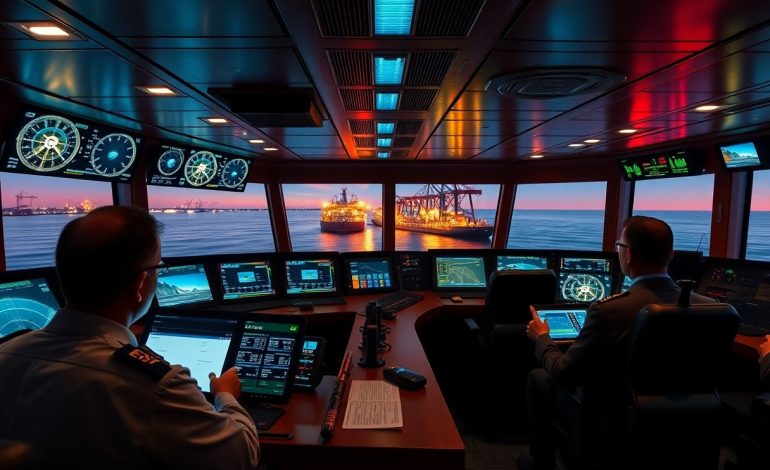
Digital systems give you real-time visibility into vessel performance, enabling predictive maintenance and route optimization that cut downtime and costs while improving safety; you must balance these gains against cybersecurity threats that can jeopardize navigation and onboard systems, and you can harness fuel savings and emissions reductions through integrated automation and analytics to meet compliance and operational goals.
Types of Digital Technologies
You will encounter a spectrum of systems onboard and ashore that together drive efficiency: Automation & Control Systems for propulsion and navigation, Data Analytics and Machine Learning for predictive operations, IoT / Sensor Networks for real‑time monitoring, Digital Twins for simulation, and Cybersecurity to protect OT/IT convergence. Vendors like ABB, Kongsberg, Wärtsilä and MAN are deploying integrated stacks that can deliver 3-8% fuel savings and cut unplanned engine downtime by up to 30% when combined with process changes and crew training.
Your adoption profile should map technologies to measurable KPIs: fuel consumption, emissions (CO2, NOx), time‑in‑port, and maintenance cost. For example, voyage optimization plus weather routing routinely yields 2-6% fuel reduction on long routes; predictive analytics that surface early bearing faults have lowered overhaul frequency in trials by 10-20%. Cyber risk and integration gaps remain the most dangerous operational exposures, while well‑implemented digital twins are a highly positive enabler for scenario planning.
- Automation & Control Systems
- Data Analytics & Machine Learning
- IoT / Sensor Networks
- Digital Twins
- Cybersecurity & Secure Connectivity
| Automation & Control Systems | Integrated bridge systems, DP, engine automation – reduces fuel burn and manual workload, example: DP systems on offshore vessels increase station‑keeping reliability. |
| Data Analytics & Machine Learning | Predictive maintenance, voyage analytics – cuts unplanned downtime by up to 30% in case studies; models run ashore and at the edge. |
| IoT / Sensor Networks | Condition sensors, flow meters, fuel metering – streams millions of telemetry points per voyage to enable real‑time decisions and anomaly detection. |
| Digital Twins | Physics‑based and data‑driven replicas for testing trim, hull fouling, and system failures; pilots show maintenance cost reductions of 10-15%. |
| Cybersecurity & Secure Connectivity | Segmented OT/IT, secure gateways, certificate management – mitigates the most dangerous attack vectors as fleets become more connected. |
Automation and Control Systems
You will see automation across the powertrain and bridge: engine governors, distributed control systems (DCS), and integrated bridge systems that combine radar, ECDIS and autopilot inputs. In practice, modern PID and model‑predictive controllers can keep engines operating at optimal specific fuel oil consumption (SFOC) points and, when paired with shaft power optimization, have delivered consistent single‑digit percentage fuel savings in field deployments.
When you implement these systems, plan for human factors and redundancy: autopilot and DP reduce manual workload but increased reliance can erode manual handling skills, which is a dangerous operational gap if fallback procedures aren’t drilled. Vendors such as Kongsberg and ABB provide certified solutions with Class approvals and integrated alarm management, and combining automation with periodic manual validation is a best practice to preserve safety margins.
Data Analytics and Machine Learning
You will use analytics to turn telemetry into actionable insight: supervised models for component life‑prediction, unsupervised methods for anomaly detection, and ensemble regressors for fuel‑consumption forecasting. On a typical VLCC or container ship, streaming sensor data (engine parameters, shaft torque, fuel flow, GPS, weather) generates millions of records per voyage; apply edge preprocessing to filter noise and reduce bandwidth before you send aggregated features ashore for model training.
In deployments, fleets that adopted ML‑based predictive maintenance reported fewer unscheduled engine stops and smoother spare‑parts planning-one operator reduced unscheduled downtime by roughly 30% in pilot trials. You should also validate models against physics‑based thresholds to avoid false positives that increase workload; combining data‑driven alerts with simple threshold checks improves trust and fleet adoption.
Further, you must consider model lifecycle: train with representative operating regimes, version models, and maintain explainability so your engineers can interpret alerts; use edge inference to cut cloud traffic by up to 90% and keep latency low while ensuring outputs are reconciled with onboard alarms and class society requirements. After you validate models through parallel testing, integrate them with your operations and secure them within your OT network.
Tips for Implementing Digital Solutions
Phase your rollout: start with a pilot on 1-2 vessels for 3-6 months to validate sensors, data pipelines and crew workflows before fleetwide deployment. When you pilot, track baseline KPIs-daily fuel burn, mean time between failures (MTBF), and hours of unscheduled downtime-and aim for measurable targets (industry pilots commonly report 3-8% fuel savings or a 20-30% reduction in unscheduled engine downtime after successful deployments). Add a dedicated onshore support team and nominate a shipboard digital champion to close the gap between tech providers and crew.
- Run interoperability tests and require open APIs from vendors.
- Mandate data governance policies and encryption for telemetry.
- Define SLAs for real-time monitoring and incident response.
- Schedule phased training: e-learning, simulator drills, then supervised live use.
- Budget for cybersecurity hardening and offline fallback procedures.
Insist on measurable integrations: map each system to a KPI, and verify end-to-end data flows from sensor to analytics to decision support. For example, require that your IoT engine-monitoring feed deliver RPM, vibration and temperature every 30-60 seconds and that alerts trigger an actionable workflow in your maintenance system; this approach reduced service response times in one operator’s program from 48 hours to under 8 hours. Pay special attention to cyber risks-segmented networks and multi-factor authentication on bridge systems are non-negotiable.
Assessing Current Operations
Begin with a gap analysis that inventories hardware (PLC, sensors, ECDIS), software (maintenance, fleet management) and human tasks; list what you have, what data each system produces, and how often it is currently reviewed. You should log at least 6 months of voyage- and engine-level data to build a true baseline-track fuel consumption per voyage leg, average speed, ballast versus laden performance, and monthly unscheduled downtime hours to identify high-impact candidates for digitization.
Perform targeted time-motion studies on critical workflows such as bunker operations, engine-room checks, and maintenance loops to quantify savings potential. For instance, automated fuel-tracking plus route-optimization can cut consumption by 2-6% on feeder routes; use those projected savings to build ROI models and prioritize systems where predictive maintenance or automation will yield the fastest payback.
Training and Development for Crew
Design training as a blended program: short e-learning modules (2-4 hours) for theory, followed by simulator or VR sessions (4-12 hours) for hands-on practice, and then supervised onboard mentorship for the first 30-90 days of live operation. You should assign roles-operator, analyst, and cyber steward-and certify competence with practical assessments tied to performance metrics such as alarm response time and correct fault diagnosis rate.
Invest in train-the-trainer programs so each vessel has at least one qualified instructor; having a shipboard trainer reduces rollout time and keeps knowledge in-house. Use scenario-based drills that combine real-time monitoring alerts with manual procedures to lower human error; operators that implemented scenario training reported fewer procedural failures during equipment faults and faster fault isolation.
Supplement formal courses with microlearning and an on-demand knowledge base accessible via tablet or offline server, and track training effectiveness with quarterly skills assessments tied to operational KPIs such as reduced unscheduled downtime and compliance with safety checks.
Thou must establish a continuous feedback loop that measures system performance, crew proficiency and cyber posture every quarter and updates training, SOPs and vendor contracts accordingly.
Step-by-Step Guide to Digital Integration
| Integration Roadmap | |
|---|---|
| Phase | Actions & Outcomes |
| Discovery (0-3 months) | Asset inventory, baseline KPIs (fuel burn, MTBF, downtime hours), stakeholder map, pilot selection |
| Pilot (3-12 months) | Deploy sensors/gateways on 1-2 vessels, run analytics, validate KPIs (target 5-15% fuel or downtime reduction) |
| Scale-up (12-36 months) | Standardize integrations (APIs, NMEA/IEC protocols), roll out CMMS/DT across fleet, train crew, measure ROI |
| Optimization & Governance | Continuous model retraining, cybersecurity hardening (ISO 27001/IEC 62443 practices), KPI dashboards for operations |
Identifying Needs and Objectives
You begin by quantifying the problem: measure current fuel consumption in tonnes per day, average unplanned downtime hours per month, and maintenance costs per vessel. Run a rapid gap analysis across navigation, propulsion, and maintenance systems; for example, a short audit might reveal that engine room sensors cover only 30% of critical pumps, which directly informs where you add instrumentation.
Next, set clear, time-bound targets that align with commercial goals – such as reducing fuel burn by 5-10% within 12 months or lowering unplanned downtime by 30% within 18 months. Assign ownership (operations, technical, IT) and define KPIs like SFOC, MTBF, MTTR, and CO2 tonnes avoided so you can evaluate pilots objectively.
Choosing the Right Technology
You match solutions to objectives rather than chasing buzzwords: if the issue is unexpected machinery failures, prioritize vibration, temperature, and oil-analysis sensors feeding an ML-driven predictive maintenance engine and a CMMS with closed-loop work orders. If voyage optimization is the aim, combine ECDIS, real-time weather routing, and FMI/engine data to reduce speed-to-market fuel use.
Evaluate vendors on interoperability (open APIs, support for IEC 61162/IEC 61996), proven ROI (request case studies showing measured savings), and cybersecurity posture (ISO 27001 or IEC 62443 alignment). Expect initial hardware + gateway retrofits to range from roughly <$5k per sensor node to $20k-$50k for fully instrumenting a medium-sized engine room, while cloud analytics subscriptions commonly scale with data volume and users.
Also weigh operational impacts: opt for edge-processing when satellite bandwidth costs exceed $5-10/GB or latency-sensitive decisions are required, and prefer solutions with offline capabilities so your crew can continue work when connectivity drops.
Implementation and Evaluation
You should roll out in phases: pilot 1-2 vessels, validate KPIs over 6-12 months, then scale by class or trade lane. During pilots, combine quantitative metrics (fuel tonnes/day, downtime hours, number of predictive alerts) with qualitative crew feedback; a ferry operator pilot that paired dashboards with hands-on training saw crew adoption jump from 20% to 80% within three months.
Track ROI using a simple model: incremental savings (fuel, spare parts, overtime) minus implementation and recurring costs, annualized over 12-36 months. Monitor MTBF and MTTR weekly in the first 6 months and transition to monthly reviews once trends stabilize; target an MTTR reduction of at least 25% in early stages to demonstrate operational benefit.
Finally, build a governance loop: enforce data standards, schedule quarterly model retraining for analytics, and mandate cybersecurity audits annually; doing so preserves performance gains and prevents regressions as you scale.
Factors Influencing Technology Adoption
Adoption often comes down to a mix of operational impact, measurable returns and integration complexity: you assess whether a new digital technologies solution delivers tangible reductions in fuel burn (typical voyage-optimization projects report around 3-8% fuel savings), lowers downtime through predictive maintenance, or improves compliance reporting accuracy. Examples from the field include Maersk’s TradeLens pilot reducing documentary delays and operators using real-time engine monitoring to drop unplanned maintenance events by up to 20%, showing how both process and financial metrics drive decisions.
Practical barriers surface quickly: legacy hardware on older tonnage, limited satellite bandwidth in certain trades, and crew familiarity with new human‑machine interfaces. Consider this checklist when prioritizing rollouts:
- Interoperability with existing onboard systems and shore platforms
- Cybersecurity posture and class society approval timelines
- Return on Investment (ROI) and expected payback period
- Regulatory alignment with IMO and regional rules
- Crew training and human factors for safe operation
Cost Considerations
For you, total cost of ownership is the decisive metric: projects often blend upfront CapEx for sensors, edge gateways and integration with ongoing OpEx for connectivity, software subscriptions and data management. Retrofitting a midsize vessel with a full sensor suite and onboard processing typically ranges from tens to a few hundred thousand US dollars per ship, while a fleet-level digital twin program can scale into the low millions when you include analytics, training and systems integration.
Financing models and measured outcomes change the calculus: if a voyage-optimization system yields the cited 3-8% fuel reduction, payback on retrofit hardware plus subscription fees can fall into a 12-24 month window on many trades. You should also factor lifecycle risks – software versioning, vendor viability and obsolescence – and budget for ongoing cybersecurity patches and crew re‑training, which together can add 5-15% to yearly operating costs.
Regulatory Compliance
Regulatory drivers are non-negotiable and frequently accelerate adoption: IMO 2020 forced widespread fuel monitoring and documentation changes, while EEXI and the annual CII ratings directly affect a ship’s marketability and operational limits. You will need systems that provide verifiable emissions data, automated logging for port and flag-state audits, and interfaces that satisfy class society and PSC inspection workflows.
Beyond emissions, data-handling rules, cyber requirements and regional schemes like EU MRV impose technical and contractual obligations on how you collect, retain and share voyage and performance data. A compliant implementation often requires certified sensors, signed processes from class, and secure telemetry paths to shore, so nonconformity risks include fines, detentions and potential insurance complications.
Operationally, ensure your selected solutions support audit trails, produce verifiable EEXI/CII inputs and can generate MRV and third‑party reports without manual rework; many owners find that automating these flows reduces reporting staff time by over 60% and lowers inspection discrepancies. Perceiving regulatory compliance as an added cost rather than a business enabler will slow your adoption; treating it as an operational requirement that unlocks access to markets, preferential charters and lower insurance premiums shifts the calculus.
Pros and Cons of Digital Technologies
| Pros | Cons |
|---|---|
| Fuel & route optimization – 3-12% typical fuel reduction from weather routing and speed optimization on many fleets. | Upfront investment – sensor suites and integration can range from $10k to >$200k per vessel for full solutions. |
| Predictive maintenance – 20-40% fewer unplanned engine events and lower spare-part inventory through condition-based planning. | Data quality dependency – poor telemetry yields false positives/negatives and wasted maintenance actions. |
| Operational visibility – shore teams can reduce time-to-decision, often cutting troubleshooting by hours to days. | Cybersecurity exposure – operational systems connected ashore increase attack surface (e.g., NotPetya cost to one operator ~$300M). |
| Crew productivity – automation reduces paperwork and repetitive tasks, freeing crew for higher-value work and safety checks. | Skill gaps – crews need new competencies; expect 3-12 months of training and onboarding per upgrade cycle. |
| Regulatory & ESG reporting – automated logging simplifies compliance with CII/EEXI and emissions monitoring. | Regulatory change risk – evolving standards require frequent software updates and possible re-certification. |
| Fleet analytics – aggregated telemetry reveals fleet-level savings opportunities and utilization improvements. | Vendor lock-in & data silos – proprietary platforms can hamper portability and cross-vendor analytics. |
| Remote troubleshooting & telemedicine – reduces port delays and improves crew welfare with shore-based expertise. | Connectivity costs & limits – VSAT and 4G failover add recurring OPEX and have bandwidth caps. |
| Environmental control – continuous emissions and ballast monitoring drives better compliance and lower fines. | Sensor maintenance – sensors require calibration and replacement (often every 6-12 months), adding operational overhead. |
Benefits of Increased Efficiency
When you apply route optimization and engine tuning across a fleet, you often see measurable gains: fuel savings of 3-12% per voyage translate to millions saved annually on medium-to-large fleets. Operationally, predictive maintenance cuts unplanned downtime by roughly 20-40%, which directly reduces off-hire days and avoids urgent spare-part airfreights that can cost tens of thousands per incident.
You also gain administrative speed: automating voyage reports, emissions logs and CII submissions can reduce manual reporting time by more than 70%, allowing shoreside teams to reallocate effort to commercial optimization. In practice, operators that piloted telemetry programs on 1-5 vessels typically roll out fleet-wide changes within 12-18 months after validating ROI and workflows.
Potential Challenges and Risks
Integration complexity is a common stumbling block: you may face incompatible protocols, legacy PLCs and fragmented vendor APIs that require middleware or custom engineering, increasing project timelines by weeks or months. Cyber risk remains the most serious operational threat-attacks on maritime operators have led to multi-week outages and large financial losses, so you must treat network architecture and access controls as part of the implementation budget.
Operationally, over-reliance on automation can create skill erosion if training lags; crews need continuous upskilling to manage exceptions and manual overrides. Financially, ongoing subscription and connectivity costs can erode initial savings if not modeled-expect recurring OPEX for VSAT, cloud services and support contracts that should be included in your TCO calculations.
Mitigation is straightforward but demands discipline: you should adopt IEC 62443-aligned controls, segment OT/IT networks, perform annual penetration tests and schedule sensor recalibration every 6-12 months. Pilot projects on 1-2 vessels for 3-6 months let you validate data fidelity, crew procedures and SLA responsiveness before committing fleet-wide.
Future Trends in Digital Ship Operations
Connectivity, autonomy and digital twins
Edge computing combined with LEO satellite constellations (Starlink/OneWeb) will allow you to run real‑time analytics onboard with latencies in the ~20-50 ms range and sustained bandwidths that routinely reach tens of Mbps, enabling true remote decisioning and closed‑loop control. Trials such as the Yara Birkeland and Finferries/rolls‑Royce demonstrations show how short‑sea autonomous operations and remote piloting scale: you can expect autonomy to first proliferate on route‑constrained vessels and offshore support units where predictable conditions make validation faster. Implementing digital twins for propulsion and hull performance will let you simulate trim, shaft RPM and weather routing across millions of virtual voyages; operators report fuel and CO2 reductions in the mid single digits (typically 3-7%) when twin‑driven optimization is applied fleetwide.
Regulation, workforce and risk management
Regulatory momentum at IMO and flag states will force you to build compliance and auditability into digital platforms from day one-expect phased approvals for supervised autonomy rather than blanket acceptance, so plan pilots around accredited reporting. At the operational level, predictive maintenance and remote diagnostics are already delivering large upside: many shipowners report 10-30% lower maintenance costs and up to 50% less unplanned downtime when condition‑based programs are fully deployed, but you must also invest in reskilling so your crew transition into systems operators and data stewards. Finally, factor in the expanded cyber and supply‑chain attack surface: robust segmentation, incident playbooks and vendor portability are not optional-without them you expose your fleet to material operational and reputational risk.
Summing up
Taking this into account, you can see how digital technologies-real‑time sensors, advanced analytics, predictive maintenance and automated voyage planning-transform ship operations by cutting fuel use, lowering downtime and tightening compliance. By integrating these tools into your workflows, you enhance situational awareness, streamline decision‑making and deliver measurable cost and emissions reductions across your fleet.
To realize these gains you must align systems, crew training and cybersecurity with your operational goals so data drives continuous improvement rather than creating silos. With disciplined implementation and governance, you position your organization to scale efficiency, respond faster to disruptions and capture ongoing returns on your digital investments.