Environmental Challenges Facing the Maritime Transport Sector

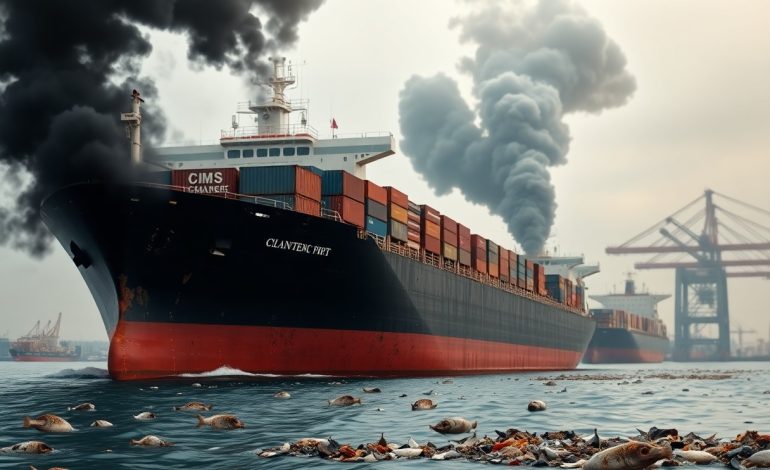
Most of your operational choices in the maritime sector determine how effectively you address rising greenhouse gas emissions, oil spills, and invasive species that threaten marine ecosystems; you must also confront noise pollution, ballast water risks, and port air quality while pursuing clean fuels, operational efficiency, and stricter regulations to reduce impact and liability.
Types of Environmental Challenges
- Air pollution
- Oil spills
- Ballast water & invasive species
- Greenhouse gas emissions
- Underwater noise & habitat loss
| Air pollution | Emissions of SOx, NOx and PM from heavy fuel oil; the IMO 2020 sulfur cap (0.50%) cut fuel sulfur content dramatically, reducing coastal SOx loads but not eliminating PM and NOx health impacts. |
| Oil spills | Large and small spills persist; the 2020 MV Wakashio grounding released ~1,000 tonnes of oil near Mauritius, causing acute damage to coral and mangroves. |
| Ballast water & invasive species | Transfers organisms across oceans; examples include zebra mussels altering Great Lakes ecosystems and costing managers millions annually to control. |
| Greenhouse gas emissions | Shipping accounts for roughly 2-3% of global CO2; the IMO target seeks at least a 50% reduction in total GHGs by 2050 vs 2008, driving fuel and efficiency shifts. |
| Underwater noise & habitat loss | Chronic ship noise disrupts cetacean communication and sonar use; increased traffic near feeding grounds has been linked to behavioral changes and stranding risks. |
Pollution
You encounter several overlapping pollution vectors: airborne emissions from engines, acute hydrocarbon releases, and operational discharges like bilge and gray water. New regulations such as the IMO 2020 sulfur cap (0.50% m/m) forced many ships to shift fuels or install scrubbers; scrubber use reduces stack SOx but can discharge washwater that raises local marine toxicity concerns, while low-sulfur fuels still produce PM and NOx that degrade air quality in port cities.
Your operational practices also determine spill and contamination risk. Ballast water continues to transport invasive species-zebra mussels in the Great Lakes and comb jellyfish in the Black Sea show how ecosystems and fisheries can be transformed-while groundings like MV Wakashio (~1,000 tonnes of oil) illustrate how a single incident damages coral, mangrove and tourism economies for years.
Climate Change
You must treat shipping as both a contributor to and a sector vulnerable to climate change. With around 2-3% of global CO2 emissions, the industry now faces regulatory pressure: the IMO’s strategy aims for at least a 50% GHG reduction by 2050 (2008 baseline), and several carriers are committing to net-zero timelines that drive investment in alternative fuels such as LNG, methanol and green ammonia as well as wind-assist and hull optimization technologies.
Your choices on fuels and technologies have nuanced trade-offs. Switching to LNG can reduce CO2 and SOx but risks methane slip-a potent short-term greenhouse forcing-while ammonia and methanol eliminate carbon combustion emissions at the engine but require new bunkering infrastructure and safety systems; operators like major container lines are already ordering methanol-capable tonnage to test commercial viability.
Lifecycle emissions, non-CO2 forcings and operational measures shape realistic decarbonization pathways: methane’s global warming potential is roughly 28-36× CO2 on a 100-year horizon, so you must account for upstream fuel production and engine slip; meanwhile, proven operational tactics such as slow steaming can cut fuel use by roughly 10-30% depending on voyage profiles, giving immediate mitigation while alternative fuels scale.
Thou must balance near-term operational fixes, lifecycle emissions of alternative fuels, and evolving regulation when you plan mitigation and adaptation pathways.
Factors Influencing Environmental Impact
Operational choices you make-route selection, speed profiles and port call practices-have immediate and measurable effects on emissions and other impacts. For example, adopting slow steaming can reduce fuel consumption by roughly 20-40%, while weather routing and voyage optimization algorithms typically cut fuel use by 10-15% on long voyages. Vessel age and maintenance regimes also matter: a two‑decade‑old engine without modern tuning or selective catalytic reduction will emit markedly more NOx and particulate matter than a newer, well‑maintained unit.
- Fuel quality: sulphur content determines SOx and particulate emissions; switching fuels changes cost and compliance burdens.
- Route optimization: affects fuel burn, underwater noise exposure and collision risk with marine fauna.
- Vessel design: hull form, coatings and propulsion efficiency set baseline energy intensity.
- Operational measures: slow steaming, just‑in‑time arrival and reduced auxiliary loads cut emissions in practice.
- Ballast water handling and port infrastructure: influence invasive species transfer and opportunities for cold ironing.
Technological trade‑offs are frequent: choosing LNG reduces SOx and particulates almost to zero but raises concerns about methane slip, while scrubbers lower stack SOx but generate washwater streams that some ports restrict. Any comprehensive mitigation plan you adopt therefore needs to balance lifecycle greenhouse gas effects, local pollutant reductions and operational practicality.
Vessel Design and Technology
You can reduce baseline environmental impact through design choices and targeted retrofits: optimized hull forms and wake‑adapted propellers lower resistance, while advanced coatings and air‑lubrication systems shave frictional losses by an additional 5-10% in certain sea states. Regulatory drivers such as the EEDI (introduced in 2013) forced newbuilds to cut CO2 per transport work in phased steps, and industry examples show material gains-Maersk’s Triple‑E class reported roughly a 50% improvement in CO2 per TEU versus older reference ships for similar service patterns.
For propulsion and fuels, you must weigh the benefits and drawbacks: dual‑fuel LNG engines cut SOx and particulate emissions by over 90% and can lower NOx substantially when combined with aftertreatment, but lifecycle methane emissions and refuelling infrastructure remain limiting factors. Hybrid and battery systems are already proven on short‑sea ferries and pilot routes in Norway and the Netherlands, where fully electric ferries operate with fast charging; larger ocean vessels, however, still rely on energy‑dense options, so you should consider waste‑heat recovery (~5-12% fuel savings) and rotor sails or wind‑assist technologies where route profiles permit.
Regulatory Framework
Regulations shape the choices you make and the pace of adoption: MARPOL Annex VI enforces the 0.50% global sulphur cap since 2020 and 0.10% within ECAs, the Ballast Water Management Convention (entry into force 2017) mandates treatment systems to prevent invasive species, and the IMO’s Initial GHG Strategy targets a substantial reduction in carbon intensity (roughly 40% by 2030 compared with 2008 levels). New operational metrics such as the CII (Carbon Intensity Indicator) require annual reporting and performance ratings that can influence chartering and financing decisions.
Compliance pathways you can choose include switching to low‑sulphur fuels, installing exhaust gas cleaning systems (scrubbers) or adopting alternative fuels; scrubber retrofits are capital intensive (often in the low‑millions per vessel) but were widely installed after the 2020 sulphur cap because they allowed continued use of cheaper heavy fuel oil in many trades. Market‑based measures and regional schemes-such as the EU monitoring and ETS inclusion for shipping-are already increasing operational costs and pushing you toward low‑carbon fuels and efficiency investments.
Pros and Cons of Maritime Transport
You can see why shipping remains the backbone of global trade: it delivers massive volumes at low cost and with unmatched economies of scale. With seaborne trade at around 11 billion tonnes annually and shipping carrying roughly 80% of global trade by volume (and over 70% by value), your supply chains often depend on the efficiencies only maritime transport provides.
At the same time, you must weigh those efficiencies against clear environmental and regulatory challenges. Shipping contributes about 3% of global CO2 emissions, faces stricter rules like the IMO 2020 0.5% sulfur cap, and presents risks from spills, invasive species, and black carbon deposition in polar regions that directly affect your environmental footprint.
| Pros | Cons |
|---|---|
| Very low cost per ton-mile compared with air or road freight | Contributes about 3% of global CO2 and significant NOx/PM emissions |
| Massive capacity: ultra-large container vessels can exceed 20,000 TEU | Slow to decarbonize due to long asset lifetimes and fuel infrastructure gaps |
| Energy-efficient for bulk cargoes and long distances | Sulfur and particulate emissions cause local air quality and health impacts in port cities |
| Global network of ports and modal connectivity supports complex supply chains | Ballast water and hull fouling spread invasive species (e.g., zebra mussels in the Great Lakes) |
| Lower carbon intensity per ton transported compared to air freight | Oil spills and operational discharges have large, long-lasting ecological impacts |
| Scalable for bulk commodities, containerized goods, and specialized cargoes | Black carbon from shipping accelerates Arctic ice melt, affecting global climate feedbacks |
| Industry innovations (slow steaming, hull design, wind-assist) reduce fuel use | Transition fuels (LNG, methanol) have trade-offs such as methane slip or supply constraints |
| Supports millions of jobs in ports, shipping, and logistics worldwide | Port infrastructure and refueling for low-carbon fuels require major investment |
Economic Benefits
Your operations benefit from maritime transport’s unparalleled cost efficiency: transporting goods by sea can be an order of magnitude cheaper per ton-mile than air, enabling global trade in low-margin commodities. The ability to move billions of tonnes annually-including bulk cargos like iron ore, coal, and grain-drives commodity markets and keeps consumer prices lower across regions.
Additionally, you gain from economies of scale and network effects: large container hubs and feeder networks reduce per-unit logistics costs and improve predictability. Major ports handle millions of TEUs a year, and investments in automation, digital bookings, and just-in-time berth allocation have trimmed turnaround times and reduced waste across supply chains.
Environmental Drawbacks
When you evaluate environmental impacts, shipping’s greenhouse gas footprint and air pollutant emissions stand out-about 3% of global CO2, significant NOx and PM contributions, and the historic sulfur issue now mitigated by the IMO 2020 0.5% sulfur cap. Local communities near busy ports experience elevated health risks from particulate and NOx emissions, and black carbon deposits from ships accelerate Arctic warming.
Operational risks also affect ecosystems: ballast water discharges and hull fouling have introduced invasive species that alter food webs and fisheries (the zebra mussel invasion of North American waterways is a clear example). Oil spills and bilge discharges produce acute, high-impact events that can devastate local biodiversity and tourism.
To manage these weaknesses, you should note the technology and policy landscape: the IMO’s initial strategy targets at least a 50% reduction in GHGs by 2050 (vs. 2008), while companies like Maersk have pledged net-zero operations by 2040 and trial alternative fuels (methanol, ammonia, biofuels). However, you will face trade-offs-LNG reduces SOx but risks methane slip, and scaling green hydrogen or ammonia requires vast new port infrastructure and renewable energy capacity before fleetwide adoption is feasible.
Tips for Reducing Environmental Footprint
You can reduce your vessel’s greenhouse gas emissions and local pollutants by prioritizing low-cost operational measures first: implement slow steaming where schedules allow (speed reductions of 10-20% can cut fuel use by roughly 15-35%), enforce regular hull cleaning and propeller polishing (typical savings 8-15%), and adopt voyage optimization software that slices fuel burn by 5-12% through weather routing and optimized trim. Targeted crew training and routine energy audits help lock in those gains and reveal quick wins such as reducing hotel loads and improving cargo stow plans to lower resistance.
- Slow steaming – reduces fuel and CO2 by up to ~30% depending on baseline speed
- Hull cleaning & propeller polishing – restores 8-15% efficiency
- Ballast water management – treat to avoid invasive species and regulatory fines
- Shore power (cold ironing) – eliminates auxiliary engine emissions in port
- Voyage optimization – weather and route planning that can cut fuel use 5-12%
Balance investments between operational changes and technical upgrades: smaller crews can offset costs through digital monitoring, while larger fleet operators often realize faster payback from retrofits and alternative fuel conversions. After you run a baseline emissions inventory and prioritize measures by impact per dollar, sequence implementation so the cheapest, high-impact steps come first before capital-intensive conversions.
Best Practices for Operators
You should institutionalize preventive maintenance and data-driven operations: mandate hull inspections every docking, install real-time fuel and emissions monitoring, and set measurable KPIs (e.g., gCO2/ton-mile targets). Operators that benchmark voyages and share anonymized fuel-performance data across the fleet often reduce variability and cut average fuel consumption by several percent within a year.
Make regulatory compliance part of operational planning: align ballast water management procedures with BWM Convention requirements, maintain fuel changeover protocols for the IMO 0.50% sulfur cap, and schedule port calls to access shore power where available. Deploying standardized checklists and crew training reduces noncompliance risk and avoids fines that can more than erase marginal fuel savings.
Innovations in Green Technology
You can adopt a spectrum of technologies depending on route, vessel type, and capital profile: hybrid battery systems and full-electric ferries have cut fuel consumption and on-route emissions by over 80% on short crossings; dual-fuel LNG engines typically deliver ~20% lower CO2 and near-elimination of SOx and particulates; and rotor sails and kite-assist have demonstrated fuel reductions in the 5-20% range depending on wind conditions. Air-lubrication and advanced hull coatings can add another 5-10% efficiency uplift without changing propulsion systems.
For newbuilds and retrofits, consider fuel flexibility and future-proofing: methanol-capable engines (as ordered by several major container lines) allow immediate use of low-emission fuels while remaining adaptable to bio- or e-fuel blends, and scrubbers can meet SOx limits where low-sulfur fuels are unavailable, although washwater management and port acceptance must be checked. Integration with digital systems-predictive maintenance, engine tuning, and automated trim-magnifies hardware gains by ensuring sustained performance.
Further information: pay attention to bunkering and lifecycle constraints-ammonia and hydrogen offer zero-carbon combustion potential but currently lack widespread bunkering and require new safety protocols, whereas LNG bunkering infrastructure exists in many major ports (over 150 ports offering LNG bunkering by recent counts), making LNG a pragmatic transition fuel for many operators; evaluate total lifecycle emissions, fuel availability on your routes, and port-specific regulations before committing to a single pathway.
Step-by-Step Strategies for Improvement
| Strategy | Actions & Examples |
|---|---|
| Fuel switching & low-carbon fuels | Adopt LNG, biofuels, methanol or ammonia where bunker availability allows; Maersk and CMA CGM have placed orders for methanol- and LNG-capable vessels to lower lifecycle CO2. |
| Energy efficiency & operational measures | Implement slow steaming (can cut fuel use by up to 30%), hull cleaning, propeller polishing, and weather-optimized routing using ECDIS-integrated algorithms. |
| Ship design & retrofits | Invest in hull form optimization, air lubrication and rotor sails; retrofits often deliver 5-20% fuel savings depending on vessel type and trading pattern. |
| Port & shore-side measures | Install shore power to eliminate hotelling emissions; Rotterdam and certain North American ports have expanded cold-ironing to cut port NOx and SOx. |
| Regulatory alignment & incentives | Align your fleet planning with IMO/EEXI/CII and regional schemes (e.g., EU MRV/ETS developments); leverage green financing and carbon-offset marketplaces. |
| Monitoring & digitalization | Deploy onboard fuel sensors, automated logbooks and AIS/satellite analytics to validate fuel use and voyage efficiency for reporting and audits. |
Implementing Sustainable Practices
You should begin by prioritizing measures with the highest immediate return on investment: operational changes like slow steaming, weather-routing and strict hull maintenance deliver tangible cuts in fuel burn and emissions within months. For example, slow steaming across a feeder route can reduce bunker consumption by 20-30%, while systematic hull-cleaning schedules can recover several percent of lost efficiency per docking.
Next, phase in technical upgrades where they fit your trading pattern-installing rotor sails or selective catalytic reduction on ferries and short-sea vessels can be cost-effective, whereas methanol or ammonia conversions make sense if you can secure long-term bunkering contracts. You must also account for well-to-wake lifecycle emissions when choosing fuels: an LNG retrofit may lower CO2 onboard but has upstream methane slip implications that you need to manage through engine tuning and methane abatement tech.
Monitoring and Compliance
You need a robust monitoring framework that combines onboard sensors, electronic logbooks and shore-side analytics to meet IMO DCS, EEXI and evolving regional reporting requirements. Install fuel-flow meters and exhaust sensors linked to a central voyage data system so you can produce verifiable gCO2/tonne-nm metrics for each voyage; companies that integrated automated MRV saw reporting time drop by over 70% in pilot programs.
Use AIS and satellite-based analytics to cross-check reported performance and detect anomalies such as undocumented slow steaming deviations or excessive idling in port. Regulatory bodies increasingly use remote monitoring, and non-compliance can lead to detentions, fines and reputational damage, so automated cross-verification reduces your audit risk and speeds up corrective action.
Operationalize compliance by setting clear KPIs (e.g., target gCO2/tonne-nm per year), assigning responsibility to a fleet emissions officer, and contracting accredited third-party verifiers for annual checks; achieving a CII rating of A or B improves chartering access and can be a tangible commercial advantage.
Collaborative Efforts and Stakeholder Engagement
Across consortia, ports, lenders and regulators you will see partnerships increasingly define what is feasible in decarbonization and pollution control. The industry now relies on public‑private collaborations such as the Getting to Zero Coalition, which targets commercially viable zero‑emission deep‑sea vessels by 2030, and charterer frameworks like the Sea Cargo Charter that align cargo owners on emission accounting and reporting. These alliances reduce technology and market risk by aggregating demand, coordinating pilot routes and sharing data from operational trials.
When you engage with peers and counterparties, expect to leverage pooled procurement, joint fuel offtake agreements and shared infrastructure pilots-mechanisms that cut unit costs and accelerate scale‑up. Port authorities are also moving from passive regulators to active partners: for example, several major ports now offer preferential berthing or reduced fees for ships meeting stringent emission or air‑quality criteria, shifting commercial incentives toward cleaner operations.
Industry Partnerships
You can form or join consortia that link shipowners, fuel producers and technology providers to underwrite new fuels and vessel designs; Maersk, as an example, has publicly ordered methanol‑capable tonnage to de‑risk fuel availability and technology readiness. By negotiating long‑term offtake contracts and sharing retrofit pilots, members lower capital costs and secure supply chains for alternative fuels like methanol, ammonia and biofuels.
Participation also means sharing performance data: if your fleet participates in joint trials (engine manufacturers plus owners), you gain access to operational metrics that shorten the learning curve and improve fuel‑use forecasting. In practice, these partnerships have enabled port‑to‑port green corridors and demonstrated that coordinated demand can bring first‑mover vessels to market faster than isolated investments.
Governmental Regulations
You must plan around an evolving regulatory landscape that already includes the IMO’s initial strategy to reduce greenhouse gas emissions by at least 50% by 2050 relative to 2008 levels and the EU’s Monitoring, Reporting and Verification (MRV) regime, which has required CO2 reporting for voyages into, out of and between EU ports since 2018. These frameworks set minimum reporting standards and create the baseline data that market mechanisms and financing covenants rely on.
Because regulations create both compliance obligations and market signals, you should factor them into chartering decisions, financing covenants and retrofit timetables. The IMO 2020 sulphur cap (reducing fuel sulphur to 0.5%) is a clear precedent: it forced rapid operational changes-low‑sulphur fuel adoption, scrubber installs and routing adjustments-and provides a template for how future fuel‑related rules will reshape supply chains and costs.
More specifically, you will face a mix of reporting obligations (IMO DCS, EU MRV), regional carbon pricing and port state measures that together influence economics and risk assessment; lenders are already using frameworks like the Poseidon Principles to align shipping finance with regulatory trajectories, meaning compliance and demonstrated emissions reductions can materially affect your access to capital and borrowing rates.
Final Words
Presently you face a maritime transport sector under strain from multiple environmental pressures: rising greenhouse gas emissions from heavy fuel oil use, air pollutants (NOx, SOx, particulates), marine pollution from oil spills and plastic waste, and the spread of invasive species via ballast water. You also confront underwater noise, habitat damage from anchoring and seabed interaction, and growing regulatory demands as international and regional bodies tighten standards against a backdrop of sustained global trade.
To address these challenges you must pursue coordinated investment in low‑carbon fuels and propulsion, upgrade port infrastructure to support alternative fuels, and enforce robust monitoring and compliance regimes. You should combine operational measures that improve energy efficiency with fleet renewal, lifecycle assessments, and cross‑sector collaboration among industry, regulators, and financiers to manage transition costs and build resilience to climate impacts like sea‑level rise and more frequent extreme weather.