Shipbuilding Innovations That Will Shape the Next Decade

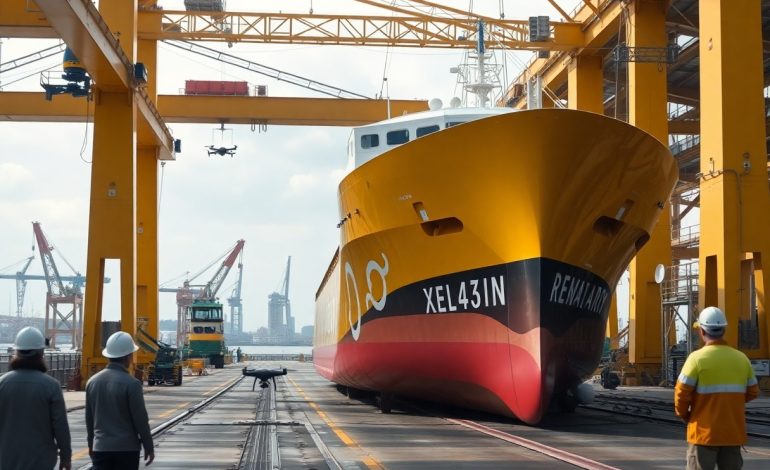
This guide explains how advancements in autonomous navigation, green propulsion, and modular construction will change how you design, build, and operate vessels; you must weigh cybersecurity risks and supply-chain vulnerabilities as seriously as efficiency gains, and adopt digital twins, AI-assisted fabrication, and advanced composites to keep your fleet competitive and compliant.
Types of Shipbuilding Innovations
You should expect the next decade to be dominated by advances in modular construction, digital twins, additive manufacturing, sustainable materials, and automation and robotics, each reducing cycle time or lifecycle emissions in measurable ways. Modular approaches can cut build time by 20-40% on large commercial builds, while digital twin workflows frequently shave 10-30% off commissioning and rework through virtual testing and simulation.
- Modular construction – block assembly, parallel outfitting
- Digital twins – real-time simulation, predictive maintenance
- Additive manufacturing – on-demand spare parts, topology-optimized brackets
- Sustainable materials – recycled metals, bio-based composites, low-carbon steel
- Automation and robotics – robotic welding, AGVs, automated painting
| Innovation | Impact / Example |
|---|---|
| Modular construction | Parallel outfitting reduces yard bottlenecks; major yards report 20-40% shorter schedules |
| Digital twins | Enables virtual sea trials and predictive maintenance, cutting downtime by up to 30% |
| Additive manufacturing | Onboard spares printed on demand; complex brackets cut weight 30-50% |
| Sustainable materials | Recycled aluminum saves ~95% energy vs primary; H2-DRI steel promises up to ~90% CO₂ reduction |
| Automation and robotics | Robotic welding and AGVs increase consistency and can reduce labor and rework by 30-70% |
Sustainable Materials
You can cut operational emissions significantly by specifying sustainable materials early in design: switching to recycled aluminum for superstructure elements typically reduces embodied energy by about 95% versus primary aluminum, and adopting hydrogen-reduced steel grades targets lifecycle CO₂ reductions on the order of up to 90% compared with blast-furnace routes. Composite layups using flax, hemp, or bio-resins are gaining traction for small craft and interiors because they lower weight by 20-50%, which directly translates to fuel savings of roughly 10-30% depending on hull form and duty cycle.
You should also assess end-of-life and repairability: materials that simplify disassembly or enable high-value recycling raise resale and circularity metrics. Shipyards experimenting with hybrid laminate schemes have reported 15-25% total lifecycle carbon reductions when combining recycled metals for structure and bio-composites for non-structural elements, while suppliers are increasingly offering verified Environmental Product Declarations (EPDs) to quantify gains.
Automation and Robotics
You will see robots handling repetitive, hazardous tasks across welding, cutting, painting, and block handling, and that shift reduces onsite injuries and improves repeatability; in practice robotic welding lines can cut weld rework by up to 70% and lift throughput substantially. Automated guided vehicles (AGVs) and crane automation accelerate block movement and assembly, enabling more parallel workstreams and squeezing weeks off complex builds.
You should plan for integration: pairing robots with a digital twin lets you validate toolpaths and interferences before steel hits the shop floor, typically shortening commissioning by 10-30%. Vendors now bundle simulation, offline programming, and quality inspection into single workflows so you can scale from a single cell to yard-wide automation with predictable ROI.
Further detail on adoption shows practical trade-offs: initial capital outlay and workforce reskilling are real, yet many yards report payback periods of 2-5 years on medium-scale automation projects; cybersecurity and systems integration become operational priorities as you connect robots to enterprise systems, and standardizing communication protocols cuts implementation risk.
Knowing how automation, sustainable materials, and digital twins interact lets you prioritize investments that deliver the fastest schedule compression and largest lifecycle emission reductions.
Key Factors Driving Innovation
- Decarbonization
- Digitalization
- Automation
- Alternative fuels
- Regulatory pressure
- Market economics
You face a landscape where regulatory deadlines and charterer expectations force rapid change: the IMO’s mid‑century goal to cut greenhouse gas emissions from international shipping by at least 50% by 2050 (versus 2008) and the rollout of EEXI/CII standards since 2023 push owners toward low‑emission designs and operational measures. Practical examples matter – after the 2020 sulphur cap many operators either switched to low‑sulfur fuels or retrofitted exhaust gas cleaning systems, showing how compliance can flip procurement and retrofit pipelines almost overnight.
Financing and procurement are shifting too: lenders and equity investors now include ESG performance in underwriting, while charterers demand lower-carbon voyages and supply‑chain transparency. You should expect CAPEX premiums for alternative‑fuel newbuilds and retrofits, balanced against potential OPEX savings and access to premium cargoes or green corridors.
Environmental Regulations
You will be operating under overlapping regulatory frameworks that change both technical and operational requirements: IMO measures like EEXI and CII set vessel performance baselines and annual carbon intensity ratings, the EU’s MRV/ETS schemes impose reporting and carbon costs for voyages into European waters, and regional port rules add further constraints. Non‑compliance carries financial penalties and reputational risk; for instance, a poor CII rating can limit charter opportunities and increase operating costs through required speed or retrofit measures.
Technical mandates already reshaped the fleet: the 2020 0.50% sulphur cap forced rapid fuel switching and a wave of scrubber installations, and you’ll see similar technology pivots as low‑carbon fuels (methanol, ammonia, hydrogen) move from pilot projects to commercial orders. Certification, bunkering infrastructure, and crew training become operational bottlenecks you must plan for when assessing retrofit versus newbuild paths.
Market Demand and Economics
Freight markets and chartering economics directly determine how fast you can amortize investments in fuel‑flexible designs or digital systems: freight rate volatility means that long payback periods are risky, so owners and operators prefer measures with shorter paybacks such as hull optimization, propeller upgrades, and digital trim/route optimization that can yield fuel reductions of 5-20% depending on the route. Major cargo owners increasingly contract for lower‑emission logistics and are willing to negotiate long‑term charters or premiums tied to verified emissions reductions.
Investment decisions are also driven by fuel price spreads and availability: when marine gasoil or green methanol premiums narrow relative to heavy fuel oil, conversion economics improve rapidly. You should model scenarios with fuel price shocks and regional fuel availability – financiers now expect scenario analysis showing how a vessel performs under multiple fuel‑price and regulatory trajectories.
More specifically, upfront CAPEX for alternative‑fuel newbuilds typically rises, commonly in the range of 10-30% higher versus conventional designs depending on fuel systems and safety arrangements, yet lifecycle analyses often show payback windows of 5-12 years when factoring in carbon costs, fuel savings, and potential charter premiums – making staged retrofits and fuel‑flexible designs attractive mitigation strategies.
Assume that you structure investment plans around phased compliance, prioritizing measures with sub‑five‑year paybacks while keeping retrofit paths open for zero‑emission fuels.
Tips for Adopting New Technologies
You should phase deployments with tightly scoped pilots: run 6-12 month sprints, define KPIs such as first-pass yield, assembly time and MTTR, and require concrete ROI milestones before scaling. Use edge-to-cloud architectures so you can validate value on a single module without touching full-yard operations, and embed cybersecurity and data-ownership clauses into pilot contracts to avoid costly disputes later.
- Start with a digital twin pilot for one module or block.
- Deploy IoT sensors on critical weld lines to measure cycle time and defects.
- Automate one repetitive process with automation or robotics to prove throughput gains.
- Test an AI inspection model on a historical defect dataset before live use.
- Prototype selective additive manufacturing for non-structural brackets to evaluate part lead-time reductions.
Set up a cross-functional steering group that includes operations, IT, safety and procurement to govern scope changes and vendor integration; yards that integrated pilots with existing PLM and ERP systems saw measurable drops in rework. Define acceptance criteria up front-functional, performance and security-and choose partners with proven maritime deployments to reduce integration time and operational risk.
Training and Workforce Development
You should create a competency matrix linking each role to needed skills in robotics, AI analytics and digital twin operations, then deliver blended learning (classroom, on-the-job, AR/VR). Immersive simulation vendors and internal pilots typically report onboarding improvements in the 20-40% range, so quantify training impact by measuring time-to-competence and certification pass rates.
Scale knowledge with a train-the-trainer approach-certify a small cadre of internal instructors (for example, 5-10 trainers per 100 production staff during year one) and partner with local technical schools for a steady entry-level pipeline. Enforce certification gates for access to automated systems because insufficient training produces safety risks and operational bottlenecks.
Collaboration with Tech Companies
You should favor partners that support open integration standards like OPC UA and can show maritime references; structure engagements as 6-12 month pilots with shared KPIs, fixed integration milestones and explicit data-ownership rules. Negotiate SLAs that include remote-monitoring capabilities, patch cadences and defined failure-response windows to keep downtime predictable.
Co-develop features with system integrators for a reference module first so you validate interfaces and reduce commissioning time-some projects have cut commissioning by up to 25%. Include clauses for IP licensing, escalation paths and training deliverables so technology transfer happens smoothly when you scale.
Recognizing that data and security determine long-term value, insist on clear data-governance terms, encryption in transit and at rest, vendor compliance with standards such as ISO 27001 or SOC 2, and measurable KPIs (for example, uptime > 99.5% and defined telemetry latency); require open APIs, regular penetration tests and contractual rights to port data so you avoid inheriting hidden vulnerabilities and retain control as deployments scale.
Step-by-Step Implementation Guide
Implementation roadmap: phases, timelines, and measurable outcomes
| Phase | Action & Metrics |
|---|---|
| Assessment (3-6 months) | Inventory systems (ERP, CAD/CAM, PLCs), map workflows, run time-motion studies; set baselines for build hours per GT, on-time delivery, rework rate, and energy use (kWh/ton). Flag legacy OT with no network segmentation as high risk. |
| Pilot (6-12 months) | Deploy 1-3 technologies in confined scope (robotic welding cell, prefab module line, digital twin). Measure % change in cycle time, quality defects, and labor hours; aim for pilot ROI within 18-36 months. |
| Scale (12-36 months) | Standardize interfaces (OPC UA, MTConnect), roll out modular prefabrication and integrated MES across 1-2 production lines; track reductions in build time (target 10-25%) and floor space usage. |
| Integrate & Train (concurrent) | Implement change management, certify 10-20% of workforce per year on digital tools, adopt SLA-backed vendor support, and establish cybersecurity controls (segmentation, monitoring). |
| Monitor & Optimize (ongoing) | Use KPIs and digital twin feedback loops to tune operations; target continuous improvement cycles every 3 months and roll out incremental automation where unit economics exceed threshold. |
Assessing Current Capabilities
You should start by quantifying current performance: measure build hours per gross ton, average man-hours per module, welding rework rate, and energy consumption per hull. Conduct a skills matrix for your workforce-note how many technicians are certified on CNC, robotic programming, and digital design tools; a realistic baseline is often that less than 30% of shop-floor staff are comfortable with advanced digital tooling in yards that haven’t modernized in a decade.
Next, run targeted technical audits of OT/IT systems: list PLC vendors, network topology, ERP version, and CAD/CAM interoperability. Prioritize remediation where you find unsupported systems or unsegmented OT networks that introduce safety and cyber risk. Use these findings to build a gap matrix that feeds into pilot selection and a 12-24 month remediation budget.
Selecting Suitable Technologies
You should filter options against four criteria: measurable ROI within 18-36 months, interoperability with existing systems (prefer standards like OPC UA), proven vendor references (minimum three comparable shipbuilding implementations), and workforce upskilling requirements. For example, a mid-tier yard often realizes the fastest value from modular prefabrication plus a single robotic welding cell rather than a full robotic line; pilots there reduced local rework by 12-18% in analogous deployments.
Evaluate propulsion and fuel technologies based on operational profile: if your vessels average short sea runs with frequent port calls, battery-hybrid or fuel-cell pilots may be appropriate; for deep-sea tonnage, prioritize dual-fuel engines designed for ammonia or methanol and require supplier-backed lifecycle cost analyses. Always model fuel price sensitivity across a 10-year horizon and include conversion/refit costs in the TCO.
When finalizing technology choices, require staged SLAs, on-site commissioning support, and training quotas in the contract-insist on interoperability proofs (sample data exchange with your ERP/MES) and a rollback plan that limits production interruption to predefined windows.
Pros and Cons of Modern Shipbuilding Techniques
| Pros | Cons |
|---|---|
| Modular/block construction accelerates schedule and improves QA – many yards report up to 30% faster build times on repeat designs (Meyer Werft, Samsung, Hyundai). | Requires high upfront investment in jigs, cranes and pre-outfitting halls; smaller yards struggle to justify the capital intensity. |
| Advanced hull forms, air lubrication and propeller optimization deliver measurable fuel savings; optimized containerships cut CO2 per TEU by ~20% vs older designs. | Performance is sensitive to hull fouling and operating profile; real-world gains can be less than modelled without strict maintenance. |
| Alternative fuels and hybrid powertrains (LNG, methanol, batteries) lower local emissions and can reduce lifecycle CO2 in some cases (LNG ~20% CO2 reduction vs HFO under ideal conditions). | Methane slip on LNG engines and limited bunkering infrastructure increase operational and climate risk for early adopters. |
| Digital twins and predictive maintenance cut unscheduled downtime and speed commissioning; owners report condition-based maintenance can reduce failures by ~20-30%. | Data integration, legacy systems and lack of standardization create long onboard-to-cloud pipelines; initial deployments are complex and costly. |
| Additive manufacturing enables on-demand spares and reduces inventory lead times for non-critical parts. | Certification and material qualification for critical structural components remain slow; currently limited to service parts and non-primary structures. |
| Robotics and automated welding increase repeatability and throughput, improving weld quality on high-volume builds. | Workforce displacement and retraining demands rise; yards must invest in human capital to operate and maintain automated systems. |
| Advanced composites offer weight savings and corrosion resistance-beneficial for high-speed craft and superstructures. | Higher material cost, repair complexity and fire-performance certification hurdles limit widespread adoption in commercial hulls. |
| Standardization of systems and modular outfitting shortens outfitting time and simplifies logistics for series production. | Standard modules can constrain bespoke designs and reduce flexibility for specialized vessel types. |
Advantages of Innovative Practices
When you implement block/modular construction and parallel outfitting, you directly cut critical-path tasks; yards that standardize blocks and run concurrent systems integration can reduce a project’s schedule by roughly 20-30%, lowering finance costs and enabling faster entry-to-service. You also gain repeatability: series vessels from the same design let you refine workflows and reduce variance in labor hours per ship, which improves predictability for your delivery windows and cost forecasting.
Adopting digital twins, predictive maintenance and fuel-optimization tools gives you operational leverage after handover – owners using condition-based maintenance have reported measurable reductions in unplanned downtime and fuel-monitoring suites have cut bunker consumption by several percent on long-haul trades. You can combine lightweight composites in superstructures, air lubrication and optimized propulsors to compound fuel savings, so the upfront R&D often pays back over 3-7 years on high-utilization vessels.
Challenges and Limitations
You face significant capital and organizational barriers: converting a traditional slipway to a modular pre-outfitting hall can require multi-million dollar investment and a multi-year transition in yard layout. Supply-chain fragility demonstrated during the 2020-2022 semiconductor and component shortages shows that integrating advanced systems can backfire if critical suppliers fail to deliver on schedule, increasing your risk of delays and cost overruns.
Regulatory and certification processes also slow adoption – class approvals for novel materials, fuel systems and component qualification can add months to a program; LNG, methanol and battery systems each carry different safety and training requirements that you must address before operation. You will likely need to budget for extended commissioning trials and additional class surveys when implementing first-of-type technologies.
Cybersecurity is a real operational threat: incidents like the 2017 NotPetya attack that crippled Maersk illustrate how exposed integrated digital systems can be and why you should treat connectivity projects with the same risk controls as physical safety systems; without robust segmentation, backup procedures and incident response plans, digital innovations can create single points of failure that are costly and dangerous.
Future Trends in Shipbuilding
Expect the next decade to be defined by an intersection of electrification, advanced materials, and pervasive digitalization: hydrogen, ammonia and battery hybrids will move from pilot projects into repeatable designs, while composite and high-strength steels will enable lighter, longer-lived hulls. With the IMO’s ongoing 2050 decarbonization agenda and tightening regional rules, you should budget for systems that accommodate multiple fuel types and scaled-up energy storage; early adopters estimate lifecycle fuel-cost reductions and emissions cuts in the low double digits when designs are optimized for dual-fuel operation.
You will need to align procurement, shipyard workflows, and crewing plans to capture these gains-modular outfitting, supplier-certified blocks, and digital supply-chain twins shorten build cycles and reduce on-site rework. Pilot programs of 6-12 months where you define KPIs like first-pass yield, commissioning hours, and operational fuel consumption will let you validate ROI before fleet-wide rollout; prioritize partnerships with platform providers who can integrate with your ERP and asset-management systems.
Digital Twin Technology
Digital twins will transition from dotted-line experiments to operational backbones: when you link hull-form CFD, propulsion-system models, and live telemetry, you get a continuous engineering loop that identifies degradation before it affects schedule or safety. Vendors such as Kongsberg Digital (Kognifai) and Wärtsilä already demonstrate shipboard-digital-twin deployments that combine sea-trial data with historical performance to create a single source of truth-operators report noticeable reductions in unplanned downtime and faster fault diagnosis when twins are actively used in maintenance planning.
Implementation demands careful data architecture: you must map sensors, standardized APIs (for example OPC-UA), and versioned simulation models so the twin stays representative as hardware and software evolve. Pay particular attention to cybersecurity since a high-fidelity twin exposed to shore networks becomes a high-value attack surface; segregated networks, role-based access, and encrypted telemetry are non-negotiable. Start with a constrained twin (propulsion + power management) and expand once the data pipeline and governance show stable results.
Integration of AI and Machine Learning
You can use AI/ML to extract operational value from the twin and from fleet telematics: predictive-maintenance models trained on vibration, engine-hour, and fuel-consumption data catch anomalies earlier than rule-based systems, while reinforcement-learning agents optimize trim and speed for varying sea states. Real-world pilots-ranging from autonomous feeder trials to voyage-optimization deployments-have produced operational fuel savings typically in the 3-10% range, depending on vessel type and operating profile, and have accelerated decision-making in bridge and shoreside control centers.
For more depth, focus on the data lifecycle: you will need labeled failure cases, at least several thousand operating hours per asset class, and a hybrid edge/cloud model so inference happens on-board with periodic retraining ashore. Explainability matters-classifications affecting navigation or safety must be auditable-so design models that produce human-readable diagnostics and conservative fallback behaviors. Lastly, plan for regulatory review cycles and keep simulation records to support approvals and operator training.
Final Words
Drawing together the rapid advances in modular construction, digital twins, AI-driven design and automation, and low-carbon propulsion, you can see how shipbuilding will shift from bespoke, siloed projects to integrated, data-enabled production lines. You will face shorter delivery cycles, tighter regulatory demands and higher expectations for lifecycle performance, so aligning your investments, skills and supplier relationships around digital workflows and sustainability will determine who leads the market.
By embracing iterative pilots, cross-industry partnerships and workforce upskilling, you position your yards and fleets to capture efficiency gains, reduce emissions and improve safety while lowering total ownership costs. Expect a decade where agility, data literacy and strategic collaboration separate winners from laggards; your ability to adopt and scale these innovations will shape not just individual projects but the future competitiveness of your enterprise.