How Dual Fuel Ships Are Changing Marine Fuel Choices

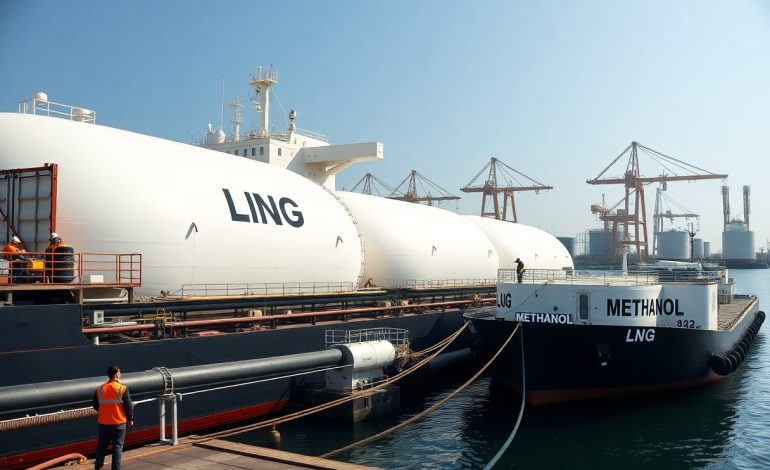
There’s a shift underway as dual fuel ships let you balance significant emissions reductions and operational savings while meeting tighter regulations; the guide shows how your fleet gains fuel-switching flexibility and compliance, but also exposes you to LNG handling and boil-off safety risks and infrastructure constraints you must manage to realize the benefits.
Types of Dual Fuel Ships
You can classify dual fuel vessels by how they store and combust alternative fuels and by the propulsion architecture that pairs with them. Typical categories include LNG-powered dual-fuel engines, diesel-electric genset configurations that run on gas or liquid fuels, and hybrids that combine batteries with fuel-flexible engines; each choice changes operational cost, emissions profile and maintenance needs.
Operationally, you should weigh trade-offs: LNG options yield large reductions in SOx and NOx and moderate CO2 gains, while diesel-electric setups give you flexibility for varying load profiles and easier integration of battery systems. Real-world fleet decisions often hinge on bunkering access, route pattern (e.g., long-haul container vs short-sea ferry), and regulatory exposure in Emission Control Areas (ECAs).
| Type | Typical features / trade-offs |
| LNG-Fueled Ships | Low SOx (near-zero) and up to ~20% CO2 reduction vs heavy fuel oil; requires cryogenic tanks and bunkering access. |
| Diesel-Electric Ships | Genset-driven electric propulsion, excellent for variable loads, easy battery integration, common on cruise and offshore vessels. |
| Methanol-Capable Dual Fuel | Liquid fuel handling, easier retrofit in some designs, lower particulate emissions; fuel availability is growing but still limited. |
| Battery-Hybrid Dual Fuel | Short-duration zero-emission operation, peak shaving for gensets, reduces fuel burn in stop-start trades; adds weight and space needs. |
- dual fuel
- LNG
- diesel-electric
- methanol
- battery-hybrid
LNG-Fueled Ships
You will see LNG-fueled dual fuel ships use either low-pressure Otto-cycle engines or high-pressure gas-injection engines; both types allow immediate switching to marine diesel oil (MDO) when gas is unavailable. Operators report NOx reductions in the range of 85-90% and near-elimination of SOx, while lifecycle CO2 savings commonly cited are about 10-25% depending on boil-off control and upstream emissions.
Vessel examples include LNG-equipped containerships and large tankers where long voyages justify the added tank volume and insulation. You must manage methane slip carefully-without effective combustion tuning and after-treatment, methane emissions can erode climate benefits-so you should budget for gas monitoring, upgraded seals and trained crew to handle cryogenic systems.
Diesel-Electric Ships
Many modern cruise ships, offshore vessels and some ro-ro ferries use diesel-electric architectures because they match variable load profiles and permit flexible genset operation. You can optimize fuel use by running a subset of generators at optimal load and supplementing with batteries for hotel loads or transient power demands; this yields quantifiable fuel savings in stop-start operations compared with fixed-speed shaft lines.
From a maintenance and retrofitting standpoint, diesel-electric conversions are attractive: rewiring and control-system upgrades are often simpler than major engine swaps, and you can phase in batteries or alternative fuel tanks. Safety-wise, electrical segregation and redundant power management are important because generator failures directly affect propulsion and hotel systems.
Knowing how your route duty cycle, available bunkers and regulatory exposures interact with diesel-electric benefits will let you target investments that reduce both operating cost and emissions while managing safety and crewing impacts.
Factors Influencing Marine Fuel Choices
Cost dynamics and supply reliability push you to evaluate both capital and operating expenses: installing dual fuel engines raises upfront costs by up to 10-30% for newbuilds or retrofit conversion, while fuel price spreads between LNG, methanol and HFO determine payback windows that often range from 3-7 years depending on trading patterns. Port and bunkering infrastructure govern route-level feasibility-major hubs such as Rotterdam and Singapore offer robust LNG bunkering, but if your voyages call to secondary ports you may face limited availability and higher logistical costs.
- Regulatory: sulfur caps, EEDI/CII and regional carbon pricing
- Fuel availability: bunkering density along your routes
- Capital and operational cost: conversion vs newbuild economics
- Technology risk: engine readiness and methane slip mitigation
- Environmental performance: well‑to‑wake lifecycle emissions
- Crew training and safety: handling cryogenic or toxic fuels
Operational realities like crewing, maintenance access and insurance also shape your choice-insurers may charge different premiums for vessels running LNG versus methanol, and fuel handling protocols affect turnaround times. The
Regulatory Compliance
When you map fuel choices against rules, the visible constraints are the IMO 0.50% sulfur cap and emissions efficiency measures such as EEXI and CII, which push operators toward lower‑carbon options or technical modifications to meet required ratings. Retrofitting exhaust gas cleaning systems or switching to LNG can address sulfur and particulate limits, while switching to methanol or future hydrogen fuels can improve your carbon intensity scores without relying solely on carbon offsets.
Compliance cost is also a strategic factor: ballast-to-port trading patterns that expose you to stricter regional measures (for example, ports with local NOx control or carbon pricing) increase operating risk if you do not adopt compliant fuels or technology. Examples from recent fleet decisions show operators opt for methanol-ready or dual fuel designs to preserve flexibility under evolving regional schemes and avoid non-compliance fines.
Environmental Impact
You need to weigh direct exhaust benefits against lifecycle effects: switching to LNG typically virtually eliminates SOx and PM emissions and can reduce well‑to‑wake CO2 by roughly 5-21% versus heavy fuel oil, but those gains are sensitive to methane slip-even a few percent of slip can erode climate benefits because methane is about 28 times more potent than CO2 over a 100‑year horizon. Engines with improved combustion control, after‑treatment and active methane mitigation can lower slip into single‑digit percentages, preserving much of the CO2 advantage.
Lifecycle choices for methanol and hydrogen hinge on feedstock: fossil‑based methanol reduces SOx/PM but offers limited CO2 improvement unless produced from biomass or captured CO2, whereas green hydrogen or e‑fuels produced from renewables can approach net‑zero-but demand for green feedstock will remain constrained in the near term. Operational examples show carriers choosing methanol-capable engines now to access lower local emissions while keeping the option to switch to renewable methanol later.
The
Pros and Cons of Dual Fuel Technology
Pros vs Cons of Dual Fuel Technology
| Pros | Cons |
|---|---|
| Significant emissions cuts: SOx nearly eliminated, PM greatly reduced | Higher upfront capital expenditure: typically 5-15% more for newbuilds |
| CO2 reductions on LNG vs HFO commonly in the 10-25% range depending on engine and fuel pathway | Risk of methane slip that can erode GHG benefits on a CO2e basis |
| Fuel flexibility: you can switch between gas and liquid fuels for operational optimization | Fuel availability varies by region; bunkering network is concentrated at major hubs |
| Regulatory alignment: easier compliance with IMO 2020 sulphur cap and emerging market measures | Increased complexity in operations, safety systems, and crew training |
| Potential for future fuel transitions (methanol, ammonia) with adaptable engine designs | Fuel tanks occupy significant volume, often reducing cargo capacity by a few percent |
| Lower particulate emissions improve onboard working conditions and port relations | Boil-off management and cryogenic storage introduce thermal and handling challenges |
| Charter and market advantages in green cargo corridors and ESG-sensitive contracts | Long-term fuel price volatility can affect operating cost savings |
| Examples: CMA CGM’s Jacques Saade and AIDAnova show operational feasibility at scale | Retrofits are often expensive or technically infeasible for older tonnage |
Advantages
When you operate dual fuel vessels you capture measurable environmental gains: switching to LNG in practice cuts SOx to near-zero and reduces particulate matter by a large margin, while lifecycle analyses often show CO2 reductions of roughly 10-25% versus heavy fuel oil depending on engine type and supply chain. For example, LNG-powered cruise ships such as AIDAnova and large containerships like CMA CGM’s Jacques Saade have been reported to achieve roughly a 20% CO2 improvement in engine mode, and ports increasingly favor such tonnage for reduced local air pollution.
You also gain operational and commercial flexibility: dual fuel engines let you hedge against swings in fuel prices by switching between gas and liquid fuels, and they position your fleet for emerging regulations like tighter carbon intensity measures and inclusion in carbon markets. Shipowners such as Maersk ordering methanol-capable dual-fuel vessels signal that investing in dual-fuel platforms can be a strategic pathway to adopt alternative fuels later without full engine replacement.
Disadvantages
Adopting dual fuel comes with trade-offs you must weigh: upfront capital is higher – typically in the 5-15% range for newbuilds – and the added systems increase maintenance and training needs. Fuel tanks for LNG are bulky and cryogenic, so your vessel design often sacrifices cargo volume by a few percentage points, and integrating gas-handling systems raises classification and safety requirements that you’ll have to manage.
Operationally you face supply-chain and emissions caveats: bunkering infrastructure is well developed in major hubs but can be sparse on many routes, forcing careful voyage planning or long-term supply contracts. In addition, methane slip from some dual-fuel engines can materially reduce the greenhouse-gas advantage when converted to CO2-equivalent, so you’ll need to assess engine type, fuel quality and gas-management strategies to preserve net climate benefits.
On top of those points, you must plan for safety and regulatory complexity: crew certification, gas-detection systems, boil-off management and periodic inspection regimes are mandatory and often lead to higher operating overhead. The most dangerous operational risks relate to cryogenic handling and potential methane emissions, so you should budget for enhanced training, additional instrumentation and robust supply-chain agreements before committing to a dual-fuel strategy.
Step-by-Step Guide to Transitioning to Dual Fuel
Transition Checklist
| Step | Action / Details |
|---|---|
| 1. Assessment | Inventory engine types, age, hull space, and annual fuel burn (tonnes/year). Identify vessels with >5,000 t/yr fuel consumption first for best ROI. |
| 2. Feasibility Study | Compare CAPEX/OPEX, emissions delta (LNG ~20% lower CO2 vs HFO), methane slip risks, and payback scenarios at different fuel spreads. |
| 3. Technical Scope | Decide retrofit vs newbuild, select FGSS, tank type (IMO Type C/ membrane), engine vendor (MAN/Wärtsilä), and classification society approach. |
| 4. Regulatory & Safety | Plan for class approval, ISM/Safety Management updates, cryogenic handling procedures, and port bunkering permits. |
| 5. Pilot & Trials | Run sea trials and methane emission measurements on one unit before fleet roll-out; validate real-world fuel consumption and slip. |
| 6. Implementation | Schedule yard time, procure long-lead items, train crew, and update maintenance regimes; expect retrofit windows of 3-9 months depending on scope. |
| 7. Commercial Setup | Negotiate long-term bunkering contracts, secure bunkering routes, and model fuel price scenarios for 5-10 year outlooks. |
Assessment of Current Fleet
You should start by quantifying baseline metrics: annual fuel burn per vessel, engine make/model, existing fuel system layout, and available void space for cryogenic tanks. Vessels burning under 3,000-5,000 tonnes of fuel per year usually give longer payback periods, while those above 10,000 t/yr commonly deliver the fastest return on dual-fuel investment. Conduct a hull/engine dry-dock inspection to identify structural modifications required for tank placement and CO2/NOx baseline measurements to compare post-conversion performance.
Next, evaluate operational profiles and port rotation: short-sea feeders with frequent bunkering windows may adopt LNG sooner than deep-sea tramp vessels that call ports without LNG supply. Factor in methane slip and fuel availability risk-if your routes include ports with established LNG bunkering (Rotterdam, Singapore, Gibraltar, and increasing North European ports), your conversion case strengthens. Highlighted in many fleet conversions, space constraints, bunkering availability, and methane-slip mitigation are the biggest technical and environmental risks you need to quantify up front.
Implementation Strategies
For many fleets, the primary strategic choice is retrofit versus newbuild. Retrofitting a medium-range tanker or ferry typically ranges from several million to >US$20 million depending on tank capacity and complexity, while newbuilds embed FGSS for marginal incremental cost and optimized tank placement. You can reduce technical risk by selecting proven engine platforms (MAN Energy Solutions ME-GI, Wärtsilä 34DF/50DF) and standardised tank solutions; shipowners that ordered LNG newbuilds (for example, CMA CGM’s Jacques Saadé class) reported CO2 reductions around 20% and operational predictability when bunkering routes were secured.
Operational rollout must include rigorous crew training, updated SMS procedures, and supplier contracts that guarantee LNG quality and delivery windows. Implement a phased approach: convert one vessel as a pilot, collect fuel consumption and methane slip data for 6-12 months, then refine engineering and operational procedures before fleet-wide conversions. Emphasize operator competence, bunkering safety procedures, and emergency response planning-these are where you most mitigate safety and compliance risk during the transition.
More practically, schedule your project timeline and milestones: feasibility (1-3 months), detailed engineering and class approval (3-9 months), procurement (2-6 months), and yard work/retrofit (3-9 months). Model payback under conservative scenarios-many operators see breakeven in about 3-7 years depending on fuel price differentials and utilisation-and include sensitivity analyses for methane slip and carbon-pricing scenarios up to 2030 to ensure the investment remains robust.
Tips for Optimal Fuel Management
To maximize the operational and environmental benefits of dual fuel systems you need disciplined planning around bunkering, monitoring, and switching procedures. Prioritize clear BDN verification, on-board sampling, and automated fuel-mapping so you can detect fuel contamination or off-spec batches before they reach the engines; testing for water content, insolubles and density against ISO 8217 standards reduces the risk of filter blocking and combustion issues. Adopt voyage‑level fuel planning that matches fuel availability to route windows-if a bunkering port only supplies LNG every third call, align your consumption profile so you don’t exceed tank capacities or force an unplanned port call.
- Log and reconcile every bunker delivery against the BDN and lab results within 24 hours.
- Use RPM/speed optimization: cutting 1 knot can lower fuel burn by roughly 5-7% depending on hull condition and load.
- Monitor methane slip and NOx outputs when running LNG to ensure emissions targets are met.
- Plan dual-fuel switching windows away from heavy weather and port maneuvers to minimize risk.
- Contract bunkering with contingency clauses for quality disputes and rapid replacement.
Invest in an integrated fuel management system that ties real‑time consumption data to tank inventories, engine load, and supplier deliveries; operators using these systems typically cut reconciliation errors and off‑spec events by a large margin. Train your crew on procedural checklists for switching between HFO, LNG, and methanol, and standardize emergency isolation steps so human error doesn’t trigger engine failures or safety incidents. This improves operational resilience and lowers the likelihood of expensive downtime.
Fuel Selection Criteria
When choosing between LNG, methanol, and residual oils, weigh energy density, storage impacts, and port availability against emissions performance; LNG delivers near‑zero SOx and particulate emissions and typically reduces CO2 on a tank‑to‑wake basis by around 10-20% depending on methane slip, while methanol offers simpler cold storage and compatibility with existing liquid fuel infrastructure but has lower volumetric energy density. You should run a fuel-cost sensitivity model over at least 36 months that includes bunker price volatility, carbon pricing scenarios, and incremental maintenance or retrofit CAPEX to identify the lowest total cost of ownership for your trade lanes.
Include logistical factors in your selection matrix: number of compatible bunkering ports per year, typical bunker port windows, and supplier reliability (track on‑time delivery rates). If you operate short-sea routes with frequent port calls, the smaller storage footprint and liquid handling of methanol may trump the higher energy density of traditional fuels; conversely, deep-sea operators often favor LNG where a robust bunkering network exists. Use pilot voyages or a four‑voyage trial to validate assumptions-sample quality, handling time, and crew workload often reveal hidden costs.
Maintenance Best Practices
Implement a proactive maintenance regime that aligns with dual-fuel system requirements: schedule fuel system inspections at manufacturer‑recommended intervals, replace filter elements based on differential pressure thresholds rather than fixed days, and perform combustor and injector checks after every 2,000-4,000 engine hours depending on fuel type and load profile. You should maintain a separate log for dual‑fuel components (gas valves, vaporizers, gas detection sensors) and perform pressure/leak tests before every LNG bunkering operation to eliminate ignition and safety risks.
Complement routine checks with condition‑based monitoring-vibration analysis, oil debris analysis, and combustion monitoring (cylinder pressure traces, exhaust gas temperatures) give early warning of fuel-related wear so you can plan repairs during scheduled drydock windows rather than as emergency interventions. Train your technical crew on fuel-specific fault signatures (for example, increased unburnt hydrocarbons on LNG operation or injector coking patterns on heavy blends) and keep a parts stocklist sized to your typical turnaround time at the nearest supplier.
Document every maintenance action and tie it back to fuel usage events; if you see a spike in filter changes after a specific bunkering port, treat that as a quality incident and escalate to the supplier with supporting lab results and engine logs. This ensures suppliers address systemic issues and protects you during commercial disputes. This approach reduces unscheduled engine downtime and protects your warranty standing.
Future Trends in Marine Fuels
Innovations in Fuel Technology
Advances in alternative fuels are moving quickly: methanol and ammonia are already in commercial trials while hydrogen and synthetic e-fuels are progressing through pilot stages. You can point to operators who paved the way – for example, Stena Line converted the Stena Germanica to methanol and major owners like Maersk placed orders for methanol-capable containerships – demonstrating real-world scale-up beyond lab tests. At the same time, engine builders such as MAN Energy Solutions and Wärtsilä are developing ammonia-capable engines and dual-fuel configurations, and fuel cell systems are reaching efficiencies of roughly 50-60% electric conversion versus ~40-45% for internal combustion, which changes how you size hybrid and battery systems for short-sea routes.
When you evaluate these technologies, weigh operational trade-offs: ammonia offers zero-carbon combustion but is highly toxic and corrosive, requiring specialized materials and crew training; methanol reduces SOx/PM and is easier to handle but remains carbon-containing unless produced renewably; and LNG delivers near-term CO2 and SOx reductions but carries the risk of methane slip, a potent greenhouse effect. You should also monitor supply-chain innovations – power-to-X projects are scaling in regions with cheap renewables, which means green ammonia or methanol costs could fall materially if electrolyzer capacity jumps and electrolytic hydrogen reaches <$2/kg under favorable scenarios.
Market Predictions
Policy and carbon pricing will shape your fuel choices: with the IMO target of at least a 50% GHG reduction by 2050 (relative to 2008) and regional measures extending emissions pricing to shipping, analysts expect accelerated adoption of alternative fuels in newbuilds through the 2020s and 2030s. You should prepare for increasing regulatory pressure and commercial incentives – several forecasts put a meaningful shift in fleet fuel mix by 2030, with methanol and ammonia capturing significant share for deep-sea trades if bunkering and engine availability scale. Expect ports like Rotterdam, Singapore and Antwerp to lead in bunkering infrastructure, making route planning and hub selection a critical part of your commercial strategy.
More specifically for your planning, model scenarios where green fuel price parity occurs when renewable electricity prices fall below certain thresholds (for example, electrolytic hydrogen produced at scale when power is <$30-40/MWh) - in those cases e-fuels become economically viable for long-haul tonnage. You should also factor in charter market signals and potential carbon costs that could reach tens to hundreds of dollars per tonne over the next decade, as those will rapidly change operating cost comparisons and make early investment in fuel-flexible systems a competitive advantage.
Summing up
Following this, dual fuel ships give you operational flexibility by enabling rapid switching between conventional marine fuels and alternatives like LNG, methanol, or ammonia, reducing your exposure to volatile fuel markets and helping you meet tightening emissions standards. They allow you to tailor fuel use to route, regulatory regime, and availability, lowering NOx/SOx/CO2 footprints when alternative fuels are available while keeping commercial operations uninterrupted when they are not.
By adopting dual-fuel capability you must balance higher upfront investment, bunkering logistics, and crew training against long-term resilience and regulatory alignment; doing so positions your fleet to adapt as cleaner fuel infrastructure and market signals evolve. If you align procurement, technical planning, and commercial strategy, your dual-fuel choice becomes a practical hedge that protects asset value, opens new trading opportunities, and accelerates progressive decarbonization of your operations.