Why Methanol and Hydrogen Are Leading Alternative Fuel Options

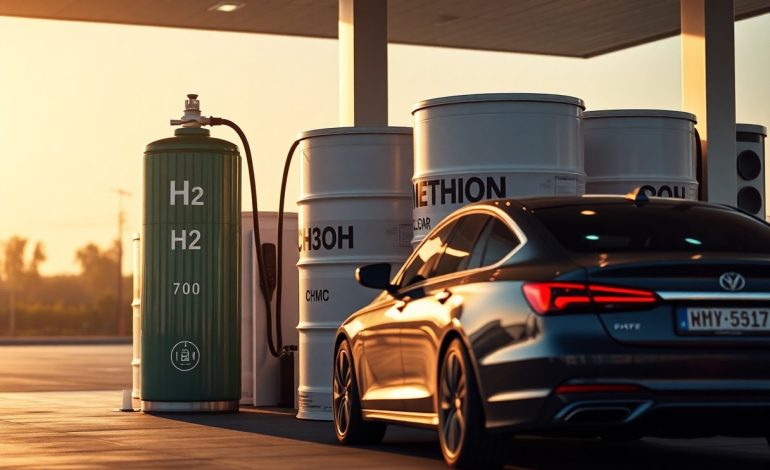
Hydrogen offers exceptional energy-per-mass and rapid refueling, while methanol is a liquid you can store and distribute using existing infrastructure; both expand your low‑carbon fuel options but require attention to storage and handling risks-hydrogen is highly flammable and methanol is toxic, yet both enable lower lifecycle emissions and pathways for renewable production that benefit your decarbonization goals.
Types of Alternative Fuels
Among the options you evaluate for decarbonizing transport and industry, liquid alcohols like methanol and gaseous carriers such as hydrogen sit alongside biofuels, synthetic e‑fuels and battery electricity in different value chains. You’ll find that each pathway trades off energy density, storage complexity and refueling time: methanol offers a liquid, easily pumpable fuel with a lower volumetric energy density (~15.8 MJ/L) but simple logistics, while hydrogen delivers unmatched gravimetric energy (~120 MJ/kg) at the cost of high‑pressure or cryogenic storage and tailored refueling infrastructure.
For practical deployment you should weigh fuel production routes and end‑use conversions: methanol can be made from natural gas, biomass or CO2 + hydrogen via synthesis, which lets you retrofit existing liquid supply chains; hydrogen scales via electrolysis or steam methane reforming with CCS, and pairs with high‑efficiency fuel cells in vehicles and stationary power. Your fleet type, duty cycles and local fuel prices will determine which fuel dramatically reduces lifecycle emissions for your application.
- Methanol – liquid alcohol, easy storage and distribution
- Hydrogen – high gravimetric energy, fast refueling for long‑range use
- Ethanol – widely used blendstock and drop‑in in some markets
- Biodiesel – compatible with diesel engines, lower particulate emissions
- Electricity (batteries) – high round‑trip efficiency for short urban routes
| Methanol | Liquid alcohol, LHV ≈ 19.9 MJ/kg (~15.8 MJ/L), produced from NG/biomass/CO2; used in marine dual‑fuel vessels and as DMFC feedstock |
| Hydrogen | Gas with gravimetric energy ≈ 120 MJ/kg; stored compressed (350/700 bar) or liquid; fuel cell efficiencies ~50-60%; used in buses, cars, trains |
| Ethanol | Common bio‑alcohol, used as gasoline blend (E10/E85); energy density lower than gasoline but renewable feedstock potential |
| Biodiesel | Fatty acid methyl esters for diesel engines, good drop‑in performance, reduces soot and lifecycle GHG when sustainably sourced |
| Electricity | Batteries deliver high round‑trip efficiency (>85% in some systems) and regenerative braking benefits; best for short‑range, high‑stop cycles |
Overview of Methanol
You’ll see methanol used both as a fuel and as a feedstock: it has an octane rating around 109 RON, which enables higher compression and cleaner combustion with lower soot and NOx compared with heavy fuels. Multiple shipping companies and engine manufacturers have already commissioned dual‑fuel methanol ships and retrofit projects, demonstrating that marine operations can cut particulate and SOx emissions while using existing bunkering procedures adapted for a low‑viscosity liquid.
In practical terms, methanol offers handling advantages – it pumps and stores like other liquids and can leverage parts of the existing logistics chain – but it is also toxic if ingested and has a relatively low volumetric energy density, so you should plan for larger tanks (about half the volume of diesel for the same range). Direct methanol fuel cells (DMFCs) and internal combustion adaptations have been proven at small scale, and production via CO2 hydrogenation creates a clear route to synthetic, low‑carbon methanol when your hydrogen supply is green.
Overview of Hydrogen
If you evaluate hydrogen for your vehicles, note the standout benefit: its gravimetric energy is roughly 120 MJ/kg, which makes it ideal for heavy and long‑range applications where weight matters. Fuel cell vehicles from OEMs like Toyota and Hyundai already operate in commercial fleets; refueling at 700 bar takes only a few minutes, giving cadence similar to diesel or gasoline for your operations, while fuel cells commonly deliver vehicle efficiencies in the 50-60% range versus ~25-30% for internal combustion engines.
Your planning must also address storage and safety tradeoffs: compressed hydrogen at 700 bar yields a volumetric energy density on the order of ~5-6 MJ/L, far below liquid fuels, and hydrogen has a wide flammability range (4-75% by volume) with a very low ignition energy, so station design, ventilation and material compatibility are non‑negotiable. Several successful case studies exist – Alstom’s Coradia iLint hydrogen trains in Germany and hydrogen bus deployments in California and Europe – showing how targeted infrastructure investment can bring operational benefits quickly.
For more technical depth, understand that production cost and carbon intensity hinge on your electricity source and electrolyzer utilization: green hydrogen produced at low electricity prices (below ~$0.03-0.05/kWh) can reach cost parity for some heavy‑use fleets, while blending or pipeline transport requires hydrogen‑compatible materials and compression energy you must budget for.
The choices you make as a fleet operator will determine how quickly hydrogen and methanol scale.
Factors Influencing Fuel Selection
When you evaluate fuels for a fleet or industrial application, technical, economic and regulatory vectors move in parallel: energy density and range requirements; refueling or recharging cadence; lifecycle emissions and feedstock source; and compatibility with existing asset bases. Consider that hydrogen (≈120 MJ/kg) delivers the best gravimetric energy, while methanol (~20 MJ/kg) offers a liquid, storable form that fits many current logistics chains. Operationally, you must weigh safety envelopes-hydrogen’s wide flammability range (roughly 4-75% by volume) and low ignition energy versus methanol’s toxicity and modest flash point (~11°C)-against the upside of rapid refueling or simple tank integration.
Balance those technical factors with cost and supply realities: capital outlay for electrolyzers and hydrogen refueling stations can be high up front, while methanol benefits from global production and tanker supply chains. Use a checklist to make the trade-offs explicit and actionable for your program priorities:
- Energy density (gravimetric vs volumetric)
- Infrastructure compatibility (pipelines, terminals, refueling)
- Lifecycle emissions (gray vs green pathways)
- Safety and handling (flammability, toxicity)
- Cost trajectory (CAPEX, OPEX, feedstock volatility)
Perceiving how those items interact with your timeline, regulatory exposure and total cost of ownership will narrow the optimal choice.
Environmental Impact
You should separate tailpipe emissions from full lifecycle footprints: a hydrogen fuel cell releases only water at the point of use, but hydrogen produced from steam methane reforming without CCS emits roughly 9-12 kg CO2 per kg H2, which can negate on-vehicle benefits. By contrast, methanol combustion emits CO2 directly (combustion of 1 kg methanol yields ~1.37 kg CO2), yet when methanol is synthesized from captured CO2 and green hydrogen it becomes a low- or even net-negative pathway depending on the carbon source and energy mix.
You will want to model regional electricity grids and upstream methane leakage: studies show that upstream methane emissions can erode the climate advantage of hydrogen routes relying on natural gas. Shipping and heavy industry pilots-major operators ordering methanol-capable vessels and hydrogen pilot projects in ports-illustrate that decarbonization gains depend as much on production pathways as on the in-use chemistry.
Availability and Accessibility
You can leverage existing global supply: current methanol production is on the order of ~100 million tonnes per year, with an established tanker and terminal network that lets you source fuel at many ports today. Hydrogen supply is large at scale too-global production is roughly ~70 million tonnes per year-but most of that is tied to industrial feedstock use and not distributed for transport, so you will face different logistics choices for delivery and storage.
You should account for distribution constraints: methanol moves via conventional liquid logistics (tankers, ISO containers, truck and rail) and can be bunkered with relatively minor terminal upgrades, whereas hydrogen requires compression or liquefaction and a much smaller refueling station footprint concentrated in regions like California, Japan and parts of Europe. Electrolyzer siting, hydrogen pipeline build-out and methanol synthesis-from-CO2 projects (examples include industrial pilots in Iceland and northwest Europe) will determine how quickly your access expands.
You will also need to plan for blending and retrofit limits-hydrogen blending into natural gas networks is typically limited to ~10-20% by volume without significant upgrades, while methanol can often be introduced into supply chains with fewer system changes; Perceiving your geographic footprint, seasonal demand swings and procurement flexibility is necessary when you size supply contracts and infrastructure investments.
Pros and Cons of Methanol
Pros and Cons of Methanol
| Advantages | Disadvantages |
|---|---|
| Can be produced from CO2 + H2 (electrochemical/thermochemical), enabling carbon recycling pathways and renewable methanol projects. | Renewable (e‑)methanol production is currently more expensive than fossil methanol – often 2-3× higher depending on electricity and electrolyzer costs. |
| Liquid at ambient conditions, so you can use modified versions of existing fuel infrastructure (tankers, pumps, storage) rather than cryogenic or high‑pressure systems. | Has lower volumetric energy density (~15.6 MJ/L) than gasoline/diesel (~34 MJ/L), requiring roughly ~2× more fuel volume for the same range. |
| High octane and fast flame speed allow higher compression ratios and engine downsizing; R&D shows improved brake thermal efficiency in dual‑fuel and dedicated methanol engines. | Corrosive to some elastomers and non‑compatible with common fuel system materials, forcing upgrades to seals, tanks and pumps. |
| Lower particulate and SOx emissions when compared to heavy fuel oil or diesel; shipping trials (and orders for methanol‑capable vessels) demonstrate operational viability at scale. | Methanol is toxic: ingestion or prolonged exposure can cause blindness or death, so handling and storage protocols must be strict and enforced. |
| Existing global methanol industry (~tens of millions of tonnes capacity) provides mature supply chains and experienced producers for fast scale‑up. | Vapor pressure and cold‑start behavior require engine calibration and sometimes pre‑heating or pilot fuels for reliable ignition in low temperatures. |
| Safer, easier bunkering than hydrogen for many operators – no high‑pressure cylinders or cryogenics, enabling faster refueling cycles for fleets. | Flammability and flash point considerations: methanol’s flash point (~~11°C) and flammability range (~6-36% by volume) create different fire risks than diesel. |
| Viable for multiple end‑uses: internal combustion engines, marine dual‑fuel systems, and as a chemical feedstock – providing flexibility for your fleet or plant decarbonization strategy. | Direct methanol fuel cells (DMFCs) offer lower electrical efficiency and limited commercial deployment, so fuel‑cell pathways are less mature than hydrogen fuel cells. |
| Enables geographic decarbonization where renewable electricity and CO2 sources are available (examples: Iceland/CRI and other pilot plants converting CO2 to methanol). | Fleet refit and certification costs, plus regulatory acceptance (e.g., emissions certification, maritime bunkering rules), can slow adoption and add upfront cost. |
Advantages of Using Methanol
You gain practical logistical benefits because methanol is a liquid at ambient conditions, which means you can leverage much of your existing fuel handling infrastructure after targeted material upgrades. For instance, retrofitted marine dual‑fuel engines and pilot projects by major shipowners show that methanol can be bunkered and burned with substantially lower particulate and SOx emissions compared with heavy fuel oil. Additionally, methanol’s high octane rating and fast flame propagation let you design engines for higher compression ratios, which in trials has translated into measurable efficiency gains in dedicated methanol engines and dual‑fuel systems.
From a supply perspective, methanol benefits from an established global industry already producing on the order of tens of millions of tonnes annually, so scaling renewable methanol is more about feedstock and electricity availability than inventing new logistics. You can also tap multiple feedstock pathways – methane reforming, biomass conversion, or CO2 hydrogenation – giving you flexibility to tailor production to local resource economics and policy incentives.
Disadvantages of Using Methanol
You must plan for reduced range and higher tank volumes because methanol’s volumetric energy density (~15.6 MJ/L) is roughly half that of conventional liquid fuels; in practice this often means redesigning tanks or accepting shorter mission ranges. In vehicles and vessels this impacts payload or requires more frequent refueling stops, which can undermine operational profiles optimized for diesel or heavy fuel oil.
Operational safety and material compatibility present additional hurdles: methanol is toxic (ingestion risks include blindness and death) and is corrosive to many common materials used in fuel systems, so you’ll need upgraded seals, stainless or compatible alloys, and comprehensive training and PPE for personnel. Regulatory and certification processes can add time and cost – for example, marine classification societies require specific safety cases and bunkering standards before approving widespread methanol use.
Mitigation measures exist but they increase complexity and upfront cost: you’ll likely install leak detection, secondary containment, flame detection, and specialized fuel system components, and you must adopt revised emergency response plans. Moreover, lifecycle CO2 benefits depend entirely on feedstock and hydrogen source; if you use fossil‑derived methanol produced from natural gas without carbon capture, your emissions improvements versus conventional fuels can be limited, whereas truly low‑carbon methanol requires abundant low‑cost renewable electricity and electrolyzers at scale.
Pros and Cons of Hydrogen
In operational terms, hydrogen gives you a potent mix of advantages-very high gravimetric energy density (~120 MJ/kg), refueling times comparable to petrol, and fuel-cell efficiencies in the ~40-60% range-while presenting concrete trade-offs around storage, transport and production emissions. Practical deployments (Toyota Mirai, Hyundai Nexo) already use 700‑bar tanks and refuel in under 5 minutes, but scaling that capability requires addressing compression, liquefaction and materials challenges.
The table below lays out paired benefits and drawbacks so you can weigh where hydrogen fits in your fleet, industrial process or grid strategy; each row pairs an operational strength with the corresponding technical, economic or safety constraint.
| Pros | Cons |
|---|---|
| High energy-per-mass (~120 MJ/kg) makes it attractive for weight‑sensitive uses like aviation and long‑haul transport. | Very low volumetric energy at ambient conditions; storing usable energy requires compression (350/700 bar), liquefaction, or heavy hydride systems. |
| Fast refuelling (<5 minutes for FCEVs) and steady power output from fuel cells improve operational uptime. | Public refuelling infrastructure is sparse-only a few hundred hydrogen stations globally-creating serious refuelling access risk for deployments. |
| When produced by electrolysis using renewables, hydrogen enables zero tailpipe CO2 and flexible long‑duration energy storage. | Most current hydrogen is gray (steam methane reforming), emitting ≈9 kg CO2 per kg H2; blue hydrogen reduces but does not eliminate upstream emissions. |
| Versatile feedstock for ammonia, refining and industry; supports hard‑to‑electrify sectors. | Electrolysis requires large electricity inputs; electrolyzer efficiency is typically in the ~60-80% LHV range, so energy losses are significant. |
| Can be produced at various scales close to renewables, enabling localized production. | Compression, liquefaction (which can consume ~30% of the energy content) and transport add cost and energy penalty. |
| Blending into existing gas networks and seasonal storage in salt caverns has been demonstrated. | Blend limits (often 10-20%) and material compatibility limit use in existing networks; hydrogen’s small molecule size increases leakage risk. |
| Enables decarbonisation pathways for steel, shipping and synthetic fuels. | Safety and materials issues: wide flammability range (4-75% in air), low ignition energy, and hydrogen embrittlement require specialised materials and protocols. |
| Long‑term storage and grid balancing potential supports variable renewables. | High upfront capital: electrolyzers, refuelling stations and pipeline retrofits are expensive and face regulatory hurdles. |
Advantages of Using Hydrogen
You gain exceptional payload advantages because hydrogen’s gravimetric energy density (~120 MJ/kg) is almost three times that of gasoline by mass, which makes it particularly valuable where weight matters more than volume-aviation concepts, heavy trucks and rail. Fuel cells convert that chemical energy to electricity at roughly 40-60% efficiency (vs ~25-30% for internal‑combustion engines), so in real world use you often see higher system efficiency and lower operational emissions when hydrogen is produced cleanly.
Beyond vehicles, hydrogen is already proving its industrial value: you can displace fossil feedstocks in ammonia and steel production and use hydrogen for seasonal storage in salt caverns and large underground reservoirs, as demonstrated by several European projects. When paired with cheap renewable electricity, electrolytic hydrogen gives you a flexible, storable vector that bridges daily and seasonal renewable variability while delivering zero tailpipe CO2 in applications that are otherwise hard to electrify.
Disadvantages of Using Hydrogen
You must contend with multiple supply‑chain and technical downsides that raise cost and risk. Producing truly low‑carbon hydrogen at scale requires vast amounts of renewables and large electrolyzer fleets; current green hydrogen costs typically range in the several dollars per kilogram depending on region and electricity price, while gray hydrogen production emits on the order of ≈9 kg CO2 per kg H2. Transport and storage are energy‑intensive-liquefaction can consume around 30% of the energy content and compression to 700 bar also carries a significant energy penalty.
Safety and materials issues also demand attention: hydrogen has a wide flammability range (about 4-75% in air) and a very low ignition energy, so leak detection and ventilation are more demanding than for hydrocarbons. In addition, hydrogen embrittlement affects steel and other pipeline materials, meaning you often need specialised alloys or liners for long‑distance transport, and retrofitting existing infrastructure can be costly.
Operationally, rollout is constrained by economics and policy: a single hydrogen refuelling station can cost from the low millions to several million dollars to build, and regulatory frameworks, safety codes and workforce training must scale alongside infrastructure. You should also factor in lifecycle emissions-unless your hydrogen pathway is demonstrably green (renewable electrolytic) or accompanied by robust CCS, you may not achieve the decarbonization outcomes you expect.
Tips for Transitioning to Alternative Fuels
Run a targeted energy audit of your fleet or facility to map where methanol or hydrogen fits best: high-utilization, depot-return vehicles are ideal pilots because you can centralize refueling and monitor fuel economy. Retrofit scope usually centers on fuel-system materials, seals, and injectors for methanol, and on high-pressure cylinders, valves, and fuel-cell integration for hydrogen; expect retrofits to range from a few thousand dollars per light vehicle to tens or hundreds of thousands for heavy equipment or vessels. Use short, measurable pilot programs (6-12 months) with baseline telemetry so you can quantify changes in miles per kg, maintenance intervals, and total fuel cost per kilometer.
Implement these concrete steps to reduce deployment risk:
- Pilot fleets – convert 1-5 vehicles first and track uptime for 3-6 months.
- Compatibility checks – test small fuel blends and materials for methanol corrosion and seal degradation.
- Station planning – locate refueling points near depots to cut delivery costs for hydrogen at 350-700 bar or liquid methanol storage.
- Training – certify technicians on high-pressure hydrogen safety and methanol handling to reduce incident rates.
Thou sequence rollouts from low-risk routes to long-haul or public-facing vehicles to build operational confidence before scaling.
Infrastructure Considerations
You must assess storage and distribution physics: hydrogen is usually stored compressed at 350-700 bar or cryogenically as LH2 for bulk transport, with volumetric energy around 5-6 MJ/L at 700 bar, while liquid methanol stores easily at ambient pressure with a volumetric energy of roughly 15.7 MJ/L. That difference affects station footprint-hydrogen dispensers need high-pressure compression, cooling, and robust leak detection systems, while methanol bunkering leverages existing liquid-fuel logistics but requires corrosion-resistant tanks and vapor-control systems because methanol is toxic and can be corrosive.
Plan for regulatory and permitting timelines: building a hydrogen refueling station in many jurisdictions can take 12-24 months due to safety reviews, whereas installing methanol tanks and dispensers often aligns with standard liquid-fuel permitting and can be completed in months. Factor in redundancy for supply-on-site electrolysis or methanol synthesis can cut delivery dependence but raises capital needs, and interconnection or pipeline access may be a limiting factor in dense urban or port areas.
Cost Factors
You will face three main cost categories: upfront capital (station hardware, vehicle retrofits), ongoing operating expenses (feedstock, electricity, maintenance), and regulatory compliance or insurance premiums for high-pressure systems. Typical estimates in recent industry reports put green hydrogen production via electrolysis in the range of about $3-7/kg depending on electricity price and electrolyzer capacity factors, while fossil-based methanol feedstock prices have historically been in the several-hundred-dollars-per-tonne range, with green methanol often commanding a premium due to electrolytic hydrogen and CO2 sourcing.
- CapEx – dispensers, compressors, and tanks for hydrogen; stainless or lined tanks and pumps for methanol.
- OpEx – electricity for electrolysis, fuel deliveries, and increased maintenance for high-pressure systems.
- Incentives – grants, tax credits, and carbon credits can materially shorten payback windows.
- This can swing project economics by tens of percent and often determines whether a pilot scales to full deployment.
Drill into lifecycle economics: factor fuel price volatility, expected maintenance cycles (fuel-cell stacks typically need replacement after 5,000-20,000 hours depending on duty), and residual asset values when comparing total cost of ownership to diesel or gasoline. Electrolyzer capital costs have declined materially in recent years, improving projected levelized costs at higher renewable capacity factors, and long-term offtake contracts or bundled hydrogen-methanol synthesis arrangements can stabilize a fleet’s fuel budget.
- Lifecycle cost – include stack replacement, seal changes, and disposal.
- Contracting – power purchase agreements and fuel offtake contracts reduce price risk.
- Maintenance – hydrogen systems demand tight leak detection and qualified technicians.
- This is often the deciding factor when fleet managers run detailed payback models.
Step-by-Step Guide to Implementing Alternative Fuels
Implementation checklist
| Planning & Preparation | Execution & Monitoring |
|---|---|
| Define target duty cycles (short-haul, long-haul, port operations), run a baseline energy audit, and set KPIs: fuel use per 100 km, uptime, and target lifecycle CO2 reduction. Pilot size typically 5-10% of a fleet for 3-6 months. Build a permitting timeline of 6-18 months depending on local codes. | Commission equipment with factory-recommended tests, install continuous sensors (fuel flow, pressure, leak detectors), and deploy remote telemetry for real-time KPIs. Expect station capex ranges: hydrogen refueling stations ~$1-5M (light-duty scale) and methanol storage/dispensing typically an order of magnitude lower. |
| Assess supply-chain: secure fuel contracts (renewable/e-methanol or green hydrogen), calculate delivered price sensitivity, and plan storage sizing – e.g., a 100-vehicle depot using methanol may need several cubic meters of tank capacity; hydrogen storage is sized by mass and pressure. | Train staff on emergency response and normal ops: hydrogen requires H2-specific leak detection and ventilation; methanol requires PPE and spill containment because it is toxic and flammable. Track incidents, near-misses, and maintenance hours as part of safety KPIs. |
| Budget capex/opex with realistic conversion costs: engine/fuel-system retrofits, control-software updates, fueling infrastructure, and training. Pilot budgets often allocate 10-20% contingency for unforeseen integration issues. | Define acceptance criteria at commissioning (dispense rate, fuel quality, engine performance). Use 15-30 minute daily telemetry checks and weekly KPI reports during the pilot, moving to automated alerts for deviations once you scale. |
Planning and Preparation
Start by mapping specific vehicle or equipment profiles to fuel properties: use methanol where liquid storage and simple retrofit are advantages, and reserve hydrogen for high gravimetric-demand applications – hydrogen offers ~120 MJ/kg while methanol provides ~19.9 MJ/kg (LHV), so payload and range trade-offs drive selection. You should scope permitting, land-use, and utility interconnection requirements up front; many sites see permitting and utility upgrades account for several months and 10-30% of initial project cost.
Next, size pilot projects and capital investments with concrete numbers: select 5-10 representative units, budget for fuel infrastructure (expect hydrogen station capex of ~$1-5M; methanol tanks and pumps are significantly cheaper), and schedule operator training of 8-24 hours per crew plus quarterly refreshers. Secure at least one medium-term fuel supply agreement and include quality specs (water content, contaminants) because fuel quality directly affects engine life and warranty compliance.
Execution and Monitoring
Begin execution with phased commissioning: install storage and dispensers, perform factory acceptance tests, and run site-specific leak and ventilation tests. During the first 90 days, operate on a restricted duty cycle and collect high-frequency data – dispensed volume, unit fuel economy, start/stop counts, and any trips/failures. You should instrument tanks and dispensers with telemetry and set alert thresholds (for example, pressure drop, unusual flow rate, or sensor fault) that trigger immediate investigation.
During monitoring, prioritize safety and compliance metrics alongside operational KPIs: hydrogen’s leak propensity and wide flammability range require continuous H2 sensors and forced-ventilation verification; methanol handling requires spill containment and medical protocols because it is toxic and flammable. Track maintenance intervals and degradation trends; many fleets see the first meaningful reliability signals within 1-3 months and can project lifecycle maintenance costs after 6-12 months of data.
For practical monitoring you should define reporting cadence and automated thresholds: daily telemetry health checks, weekly KPI summaries, and monthly performance reviews that compare fuel cost per km, uptime, and lifecycle CO2 against baseline. Set go/no-go gates for scale-up – for example, achieving ≥90% of baseline uptime and meeting projected fuel-cost targets over the pilot period – and keep a rolling log of incidents and corrective actions to feed into continuous improvement before full rollout.
Final Words
Ultimately, you should view methanol and hydrogen as complementary, high-potential pathways that address different segments of the energy system: methanol offers liquid-fuel handling, retrofit potential, and compatibility with existing shipping and chemical infrastructure, while hydrogen delivers high specific energy for fuel cells and hard-to-electrify industrial processes. Their production routes-from renewable electricity to electrolysis for hydrogen and from biomass, captured CO2, or synthesis for methanol-allow you to pursue deep emissions reductions while leveraging established logistics and scalable manufacturing techniques.
As you plan transitions, prioritize lifecycle emissions, supply-chain resilience, and safety standards so your choices yield real climate and economic benefits; invest in blended infrastructure and pilot projects to test performance and costs before wide deployment. With supportive policy, coordinated investment, and careful integration into transport, industry, and power systems, you can accelerate adoption and make methanol and hydrogen central pillars of a cleaner energy mix.