Autonomous Ships What to Expect in Maritime Transport

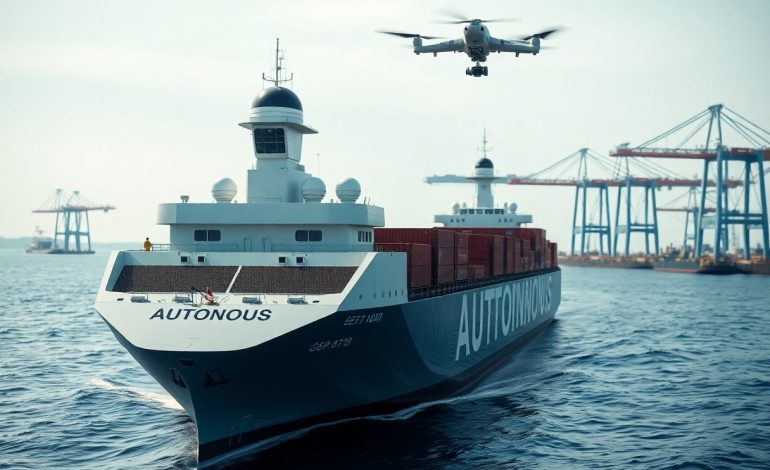
This guide prepares you for how autonomous ships will transform maritime transport, showing how your operations can gain significant efficiency and lower operating costs, while introducing new cybersecurity and collision risks that demand rigorous controls and creating regulatory, crewing and maintenance challenges you must plan for to keep your fleet safe and compliant.
Types of Autonomous Ships
- Fully Autonomous
- Semi-Autonomous
- MASS
- Remote Control Centre
- Redundancy
| Type | Key features |
| Fully Autonomous | Onboard decision-making stack, sensor fusion (radar, AIS, LiDAR, cameras, INS), no routine crew; emphasis on redundancy and collision-avoidance algorithms. |
| Semi-Autonomous | Automated navigation in defined envelopes with human oversight; remote-control handover points and decision-support systems for complex encounters. |
| Remotely Operated | Ship controlled from a shore centre in real time; depends on resilient communications, low-latency links and robust cyber defences. |
| Research / USV | Smaller unmanned surface vessels used for trials, ocean mapping, or environmental monitoring – testbeds for sensor stacks and autonomy logic. |
Fully Autonomous Ships
You will see fully autonomous designs rely on an integrated control stack that combines sensor fusion, automated collision avoidance and mission planners capable of replanning routes without human input; operators and regulators often reference the MASS concept while industry frameworks map autonomy into Levels 1-4 for implementation stages. Trials such as prototype operations in Norway and autonomous research crossings have demonstrated the feasibility of long-duration unmanned voyages, but the technical bar is high: expect certified triple-redundant navigation systems, safety-critical redundancy in propulsion controls, and continuously validated perception models to handle dense traffic and adverse weather.
When you examine operations, note that fully autonomous ships shift risk from human error to systems engineering and cybersecurity: downtime must be mitigated by layered failover architectures and validated simulation datasets that cover corner cases like small targets on radar or GNSS outages; cybersecurity and validated sensor fusion are among the most important risk controls for a vessel operating without crew.
Semi-Autonomous Ships
You will encounter semi-autonomous vessels most commonly in coastal feeder services and inland waterways where automated station-keeping, optimized fuel-efficient routing and berthing aids reduce workload while a human operator remains responsible for intervention; in practice this reduces on-board crew hours by a substantial margin during routine legs while keeping a human in the loop for complex decisions. Vendors typically pair autonomy modules with a remote control centre that handles monitoring, exception management and handovers at predefined waypoints.
Operationally, semi-autonomy gives you measurable benefits: reduced fuel consumption from optimized trim and speed profiles, lower fatigue-related incidents during monotonous transits, and faster response to port scheduling; however, it also concentrates responsibility at the shore centre, increasing the need for certified procedures, latency budgets and layered cyber defences to avoid single points of failure. Examples from pilot projects demonstrate successful auto-berthing and assisted collision avoidance in mixed traffic, but they also reveal gaps in regulation and standardization around handover protocols and liability allocation.
For more depth on semi-autonomous operations, examine the human-machine interface: you should verify the system’s decision transparency, audit logs for every automated maneuver, and test contingencies such as GNSS jamming and comms loss in live trials to confirm that your crew or remote operators can safely assume control when automation reaches its operational limits. Thou must ensure your remote-control latency budgets and failover procedures protect your crew, cargo and surrounding traffic.
Key Factors Influencing Adoption
Operational economics, safety performance, and regulatory clarity determine whether you scale autonomous systems beyond pilot projects. You will weigh operational cost savings against upfront investment in sensors, edge compute and communications, while insurers and charterers scrutinize liability and cybersecurity exposure. Port infrastructure and shore-side teams must be ready to support remote operations, and social factors – crew displacement, unions and training – influence timelines in markets such as Norway, Singapore and Japan.
- Autonomy
- Safety
- Regulation
- Cybersecurity
- Infrastructure
- Insurance
- Interoperability
Technical maturity is already visible in pilots: the Yara Birkeland project moved from concept to limited operations, targeting the elimination of roughly 40,000 truck trips per year on its initial route, and the Mayflower Autonomous Ship completed a transatlantic research voyage that stress-tested remote sensing and comms. You should treat each factor as interdependent – stronger safety cases reduce insurance costs, while clear regulatory pathways unlock financing and wider adoption. Knowing how these variables interact will let you sequence pilots, investment and stakeholder engagement to lower overall program risk.
Technological Advancements
Sensor fusion is central: you will combine AIS, radar, LiDAR, EO/IR cameras, GNSS and inertial systems so the autonomy stack maintains situational awareness in poor visibility and congested waters. Industry deployments now rely on redundant navigation (multi‑GNSS plus inertial), edge AI for real‑time perception, and hybrid communications – low‑latency 5G or LEO satellite links for command and telemetry. Trials by major suppliers show that layered sensing plus deterministic control logic can reduce human navigational error patterns linked to collisions and groundings.
Your software lifecycle and data strategy become operational priorities: models require continuous retraining on voyage data and fleets need secure OTA updates with rollback capabilities. You must plan for complex failure modes – for example, sensor occlusion combined with degraded comms – and implement independent fallback behaviours and diverse redundancy to keep the vessel safe and compliant with class requirements.
Regulatory Considerations
IMO has been conducting a regulatory scoping exercise for MASS since 2019, and you must navigate flag‑state interpretation, port‑state controls and national pilot schemes that vary widely. Classification societies such as DNV, Lloyd’s Register and ABS are publishing technical guidance and verification frameworks; you will work with them to develop safety cases, software assurance evidence and type approvals that satisfy both flag administrations and insurers.
Liability remains a top legal unknown: when autonomy makes a tactical decision, attribution across owner, operator, remote centre, and software developer is not uniformly settled, which drives premiums and contract clauses. You should expect transitional models – conditional waivers for trials, constrained trading areas, and stepwise delegation of functions – rather than immediate full transfer of command on international routes.
To accelerate approval you ought to build a documented safety management system aligned with existing IMO instruments (including the IMO cyber risk management guidelines) and ISO/IEC standards for software and information security; engage early with your flag state and port authorities; and prepare compliance evidence for performance, cybersecurity and human‑machine interfaces so regulators and insurers can assess residual risks such as liability gaps and cyberattack vectors.
Pros and Cons of Autonomous Maritime Transport
| Pros | Cons |
|---|---|
| Lower crew exposure to hazardous environments and reduced human-error incidents | Increased attack surface for cyber threats, GNSS spoofing and remote hijacking |
| Potential OPEX savings via smaller crews or shore-based operations and automation of routine tasks | High upfront CAPEX for sensors, redundant systems and validated autonomy stacks |
| Improved fuel efficiency through continuous route optimisation and speed profiling | Regulatory and liability gaps across flag states, ports and insurers |
| Higher utilisation and 24/7 operations for short-sea and feeder services | Reliability challenges in degraded environments (fog, ice, heavy seas) for sensors |
| Predictive maintenance enabled by continuous sensor data reduces unplanned downtime | Potential displacement of seafaring jobs and downstream social impacts |
| Smaller vessels and new business models (on-demand coastal services, port feeders) | Complex shore-to-ship communications and latency issues on oceanic routes |
| Rich operational data for logistics optimisation and tighter supply-chain integration | Insurance, classification and certification frameworks still evolving – uncertain premiums |
| Demonstrated use-cases (e.g., Yara Birkeland trials) show feasibility for short routes | Ethical and legal dilemmas in collision-avoidance decision-making under CONWARTs/COLREGs |
Advantages of Autonomous Ships
You will see immediate safety benefits where repetitive deck work and watchkeeping risks are removed; studies estimate that human factors contribute to 75-96% of maritime incidents, so automated monitoring and decision-support can materially reduce accident rates in coastal and port operations. Examples such as Yara Birkeland’s trials on short Norwegian routes illustrate how removing truck movements and automating harbour transits can cut local emissions and lower incident exposure on congested lanes.
Operationally, you can exploit continuous optimization: autonomous systems combine AIS, weather, and fuel-consumption models to shave transit time and consumption, and predictive maintenance driven by hundreds of onboard sensors detects gearbox or hull issues before they force diversions. In practical terms, operators running short-sea feeder services can increase daily rotations and reduce idle days, improving asset utilisation and logistics cadence.
Potential Challenges and Risks
You must plan for a broad spectrum of non-technical and technical risks: cyberattacks targeting ECDIS, INS or satellite links can produce mission-critical failures, while legal ambiguity about who bears liability in collisions (owner, remote operator, software supplier) remains unresolved across many flag administrations. Moreover, autonomy degrades in extreme weather and sensor-blocking conditions, so you’ll need validated fallback modes and well-defined human-in-the-loop escalation procedures.
Financially and organisationally, you should budget for higher capital expenditure on redundancy (multiple independent navigation suites, hardened comms) and extensive verification – regulators and class societies increasingly expect exhaustive simulation and sea-trial evidence before granting operational waivers. Social risks also matter: workforce transition programs will be necessary because shore-based operator roles differ significantly from traditional seafaring careers.
To manage these risks you’ll implement layered mitigations: multi-path navigation (GNSS + INS + radar), encrypted and redundant communications, continuous cyber-hygiene, and clearly codified liability contracts with insurers and software vendors. Additionally, rigorous testing-combining millions of simulation hours, staged coastal trials and independent class verification-is now the de facto route to secure port access and insurance terms for autonomous operations.
Step-by-Step Implementation Guide
| Assessing Readiness for Automation |
Assessing Readiness for AutomationBegin by mapping your fleet and routes against specific technical and operational criteria: sensor baseline (radar, AIS, EO/IR, LiDAR where required), connectivity (VSAT, 4G/5G coverage maps and end‑to‑end latency), redundancy in propulsion and steering, and existing safety management systems. You should quantify reliability targets (e.g., target MTBF for safety‑critical systems, and adherence to SIL 2-3 or equivalent assurance levels) and identify which classification society frameworks (DNV, LR, ABS) will govern approvals for each vessel class. Next, run a gap analysis and staged validation plan: baseline shadow mode runs to collect operational data, digital twin simulations to exercise edge cases, and corridor pilots of 6-24 months to validate assumptions under real traffic and weather. Engage port authorities and flag state regulators early; for example, the Yara Birkeland programme planned phased in‑port autonomy and projected the elimination of ~40,000 truck journeys per year as a measurable outcome-use comparable KPIs (hours underway, near‑miss rate, crew intervention frequency) to judge readiness. |
| Integrating Technology and Human Oversight |
Integrating Technology and Human OversightDesign your system architecture so that time‑critical control loops remain onboard while shore teams handle strategic decisions and exception management; this reduces the impact of satellite latency and link outages. Implement a layered autonomy stack with on‑board collision avoidance that is COLREG‑compliant, a clear human-machine interface for remote operators, and multiple communication paths with automatic failover. Real projects from Kongsberg and partners demonstrate that well‑engineered remote control centres can handle complex tasks, but only if you build redundancy and continuous health monitoring into sensors and actuators. Prepare your people and processes in parallel: define SOPs for escalation, simulation‑based certification for remote operators, and a cyber incident response playbook tied to your SOC. Train crews on degraded modes (return‑to‑safe, manual takeover) and run joint exercises with port pilots and tugs. Highlight and mitigate high‑risk scenarios such as deliberate cyber attack, multi‑sensor failure, or comms blackouts by implementing geofencing, dead‑reckoning fallbacks, and a black‑box logging regime for post‑incident forensics. Finally, design human factors into the HMI so operators can manage attention and workload-expect to evolve operator‑to‑vessel ratios as autonomy matures; early trials suggest supervised control models where one operator monitors a small cluster of predictable feeder vessels, expanding as trust and automation reliability improve. Emphasize continuous feedback loops from operations into software updates and training to keep human oversight effective and safe. |
Tips for Successful Transition to Autonomous Shipping
Adopt a phased rollout: begin with remote-assisted operations and defined pilot corridors before scaling to full autonomy, so you can validate sensors, remote operations protocols and shore control centers under real traffic. Use documented pilots-such as the Yara Birkeland project (designed to remove up to 40,000 truck journeys per year) and Massterly’s Rotterdam trials-to benchmark timelines, supplier roles and stakeholder engagement. Integrate classification and flag-state guidance early, and ensure your procurement contracts explicitly allocate responsibility for software updates, data ownership and cybersecurity incident response.
- Perform layered risk assessments and HAZID sessions with maritime, cyber and legal teams
- Run staged pilot projects with measurable KPIs (safety incidents, fuel/use, berth time)
- Invest in interoperable systems and open APIs to avoid vendor lock-in
- Engage insurers and classification societies (e.g., DNV, Lloyd’s Register) during design
- Update SOPs and emergency procedures for mixed human/autonomy operations
Prioritize resilience: create redundant communication paths, hot‑standby control centers and clear escalation ladders so a degraded system doesn’t cascade into a safety event; data integrity and patch management should be treated as operational necessities, not IT extras.
Training and Education
You should build competency frameworks that combine simulator hours, scenario-based tabletop exercises and live-ship drills so personnel can manage edge cases where autonomy hands control back to humans. Partner with maritime academies and simulation providers to develop modules covering bridge resource management for remote operators, sensor-fusion troubleshooting and advanced cybersecurity awareness; aim for repeated scenario exposure rather than one-off sessions.
Cross-train deck officers in shore-control roles and familiarise shore teams with shipboard systems to avoid handover gaps during shifts; vendor-supplied training should be validated by independent assessors and tied to measurable competencies (decision-making under degraded navigation, failover procedures, communications loss recovery).
Collaborating with Industry Leaders
You should seek partnerships with established platform providers and port operators to accelerate safe adoption-working with firms that already have operational data reduces your development time and lowers integration risk. Examples include technology consortia and public-private pilots in Norway and the Netherlands where operators, shipowners and suppliers shared telemetry to refine collision-avoidance models and berth-planning algorithms.
Structure collaboration around clear deliverables: shared testbeds, data‑sharing agreements, joint training programs and staged liability clauses so each party knows when responsibility shifts from human to automated systems; this approach shortens validation cycles and helps you meet evolving regulatory expectations.
Recognizing that long-term success depends on sustained, transparent partnerships where you exchange operational data, co-develop emergency procedures and align on certification pathways will let your operation scale safely and economically.
Future Trends in Maritime Transport
Innovations on the Horizon
Expect AI-driven navigation stacks and advanced sensor fusion to become standard: lidar, high-resolution radar, AIS, EO/IR cameras and satellite-based augmentation (including low-latency constellations like Starlink) will be fused onboard and at shoreside control centres to enable real-time decisioning. You’ll see digital twins and edge computing used to run closed-loop simulations of route and machinery performance, letting operators reduce unplanned downtime; early adopters report predictive-maintenance programs cutting unscheduled outages and parts costs by a noticeable margin in trials.
New vessel concepts will also appear more frequently – think lightweight, crewless ro-ro feeders and modular cargo barges designed for autonomous operations, alongside hybrid powertrains combining batteries, fuel cells and dual-fuel engines running on ammonia or methanol. Vendors such as Kongsberg and Wärtsilä are already piloting integrated autonomy packages and remote-control platforms, while projects like Yara Birkeland and the Mayflower Autonomous Ship provide practical case references for electrified and research-use autonomous vessels; you should weigh the operational gains against the heightened cybersecurity and comms dependencies these technologies introduce.
Sustainability and Environmental Impact
Autonomy can be a powerful lever for decarbonisation because it enables precise voyage optimisation, adaptive speed control and continuous hull- and engine-performance tuning; studies indicate optimized operations can cut fuel consumption by as much as up to 20% in some trades when combined with slow-steaming and route smoothing. You can pair that operational efficiency with alternative propulsion: short-sea and ferry routes already show that battery-electric and hybrid vessels can eliminate or drastically reduce emissions – for example, the battery-electric ferry Ampere achieved roughly a 95% reduction in CO2 on its route compared with its diesel predecessor.
At the same time, you must plan for lifecycle impacts beyond just fuel burn: smaller or crewless designs reduce weight and hotel loads, improving efficiency, yet they increase dependence on power for sensors, comms and cooling, and create new waste streams from electronics and batteries. Regulatory momentum (the IMO’s target to cut shipping’s GHGs by at least 50% by 2050 from 2008 levels) will push you toward green fuels and shore-based charging infrastructure, but be aware that the transition also raises operational risk – a successful cyber attack or comms blackout could lead to environmental harm if navigation systems fail.
Combining autonomous operation with green fuels will deliver the most significant gains: in practice, you can expect near-zero operational emissions on short routes using battery-electric autonomous ferries, while long-distance trades will likely rely on hybrid autonomy plus ammonia or e-methanol bunkering to meet IMO benchmarks. Pilot corridors and national programs (Norway’s autonomous ferry pilots, for instance) indicate a pragmatic rollout path: start with electrified short-sea services where infrastructure is easier to deploy, then scale autonomy-enabled efficiency improvements to larger vessels as fuel supply chains and regulatory frameworks mature.
Summing up
Hence the rise of autonomous ships will reshape maritime transport by improving operational efficiency, lowering fuel and crew costs, and reducing human-error related incidents; you will see staged deployment beginning with remote-assisted and partially autonomous vessels, followed by fully autonomous ships as regulations, insurance frameworks, and supporting infrastructure mature. Expect heightened focus on cybersecurity, standardized communication protocols, and environmental monitoring to meet compliance and performance targets while operators balance capital investments against long-term savings.
You should prepare by investing in digital skills, updating operational procedures, and engaging with regulators and insurers to influence standards and liability models; training shore-side remote operators, adapting ports for automated berthing, and piloting hybrid systems will give your organization a competitive advantage as adoption grows steadily over the next decade. Ultimately, staying proactive about technology, governance, and workforce transition will let you capture the efficiency and safety gains autonomous shipping promises.