The Importance of Crew Training in the Era of Digital Shipping

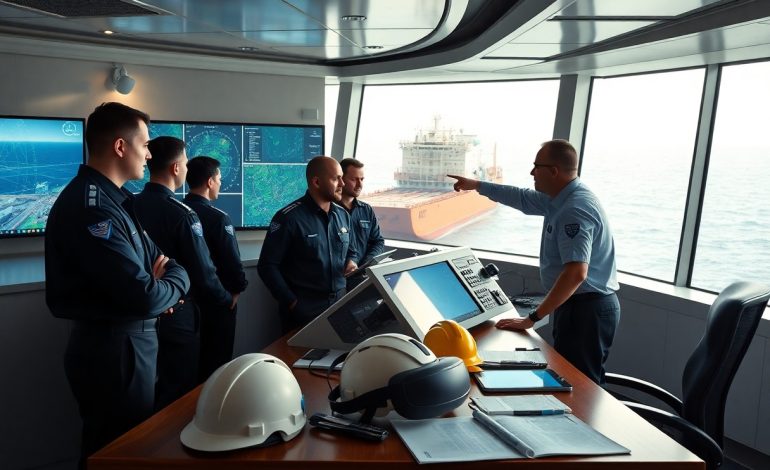
This shift toward digital shipping makes it vital that you equip your crew with updated technical and cybersecurity skills so they can manage automated systems and respond to cyber threats and system failures; by investing in continuous training you reduce safety risks, improve operational efficiency, and protect cargo, reputation, and compliance in a fast-evolving maritime landscape.
Types of Crew Training
You’ll encounter several distinct program types as digital systems proliferate: technical systems training for ECDIS and engine automation, bridge resource management adapted to autonomous-assist features, cybersecurity awareness for OT/IT convergence, and soft skills work to manage human-machine interaction. Studies estimate between 75% and 96% of marine incidents involve human error, so blending technical and behavioral training directly reduces exposure to the most dangerous failure modes.
- Technical systems: ECDIS, integrated automation, predictive maintenance tools
- Bridge resource management: team coordination with automated alerts and decision support
- Cybersecurity: access control, incident response, network hygiene for shipboard OT/IT
- Emergency response: fire, flooding, and containment when automation fails
- Soft skills: communication, leadership, fatigue management in mixed human-AI watches
| Program type | Typical focus and outcome |
| Technical systems | Hands-on simulator time, system logic, failure-mode drills; goal: competent autonomous-assist operation |
| Bridge resource | Scenario-based team exercises, decision-making under degraded automation; goal: reduced navigation errors |
| Cybersecurity | Phishing drills, patch management, offline recovery plans; goal: maintain control of OT systems |
| Emergency response | Integrated drills combining human response and system shutdowns; goal: containment within 30-60 minutes |
| Continuous learning | Microlearning, eLearning modules, recurrent simulator sessions; goal: measurable competency retention |
Onboarding Programs
You should structure onboarding as a phased program: an initial 2-6 week formal block covering shipboard architecture (power, propulsion, navigation systems), followed by a 3-6 month mentored integration where new crew shadow watchkeepers on live routes. Include hands-on ECDIS calibration, bridge automation handover drills, and a tailored cybersecurity induction-failure to do so has directly contributed to navigation incidents in several cases.
Many operators mandate checklist-based sign-offs and a baseline competency test within the first 30 days; for example, a major liner instituted a 21-step ECDIS sign-off and cut navigation errors by roughly 30% in its fleet. You’ll want to pair simulator sessions with onboard shadowing, and ensure documentation aligns with company SMS and STCW familiarization expectations.
Ongoing Skill Development
You must treat ongoing training as continuous rather than episodic: schedule annual full-mission bridge simulators, quarterly eLearning modules on software updates, and monthly microlearning refreshers on critical alarms. Many fleets adopt a blended model-90 minutes of eLearning plus a 4-hour simulator scenario each quarter-to maintain practical muscle memory for rare but high-impact events.
Competency-based assessments should drive progression: use objective metrics such as time-to-stabilize after an automation fault, error rates on procedural checklists, and successful execution of cyber incident drills. Case studies show fleets that implemented recurrent simulator training and targeted cyber exercises experienced measurable declines in human-error incidents and faster recovery times after system failures.
The best programs tie skill development to measurable KPIs-reduction in incident frequency, faster mean time to recovery, and improved fuel-efficiency handling-so you can quantify ROI and adapt training content as digital systems evolve.
Key Factors Influencing Training Effectiveness
Variability in program design and delivery shapes how well crew training translates into safer, more efficient operations: you need clear competency frameworks, regular practical assessments, and alignment between simulator scenarios and the actual equipment installed on board. In audits of 150 mixed-fleet operators, programs that combined monthly practical drills with quarterly e-learning achieved a 35% reduction in human-error incidents compared with e-learning-only approaches, demonstrating that frequency and realism matter as much as content. You should treat assessment data as operational intelligence – training completion alone is insufficient without pass/fail performance metrics tied to onboard checks.
Key elements you must account for include curriculum relevance, assessment cadence, learning modality mix, and organizational support; examples below show how these interact in practice:
- Curriculum relevance – tailor modules to the specific ECDIS, automation and engine-management systems on your vessels.
- Assessment cadence – mix monthly drills, quarterly simulations and annual full-mission exercises to prevent skill fade.
- Learning modality mix – combine microlearning, VR simulation and hands-on maintenance tasks to cover different learning styles.
- Organizational support – ensure shore-based supervision, KPI-linked incentives and protected time for training during rotation schedules.
Assume that a blended, analytics-driven program can reduce incident rates by 30% within 12 months while improving measurable competency pass rates across your fleet.
Technological Advancements
You will find that adoption of technological advancements-from LMS platforms and interactive e-learning to full-mission simulators and VR simulation-changes both the pace and the fidelity of skills transfer: in field pilots, VR scenarios shortened task training time by around 25% and cut procedural error rates by up to 40% for navigation and engine-room faults. Practical examples include shore-based diagnostics feeding simulated failure modes into bridge and engine-room exercises, so your crew trains on faults they are increasingly likely to encounter in a connected-ship environment.
Implementation details matter: bandwidth limits on many vessels (often in the 1-10 Mbps range with high latency) require offline-capable packages, local caching and asynchronous assessments, while analytics from LMS exports should be integrated into SMS dashboards to flag competency gaps. Pay attention to cybersecurity: connected training systems can be an attack vector, so you must mandate segmented networks for training platforms and perform pen-tests as part of rollout to avoid operational risk from cyber intrusions.
Crew Composition and Diversity
Your crew mix – age, nationality, language proficiency and prior exposure to digital systems – strongly influences how quickly training sticks. Multigenerational teams, where officers range from under-30 cadets to masters with 30+ years at sea, show differing modality preferences: younger seafarers often complete mobile microlearning modules 20-30% faster, while more experienced officers perform better with scenario-based simulator practice. When you have bridgeroom teams from three or more nationalities, language barriers and cultural communication styles can create latent operational risk unless training materials and assessments are standardized and localized.
Rotation patterns and crew turnover also shape effectiveness: operators with short rotation cycles (e.g., 4 months on, 4 months off) need modular, repeatable refreshers to avoid skill fade; evidence from internal audits indicates skill degradation can rise by ~20% after six months without targeted refreshers. You should pair standardized assessments with mentor-led on-ship coaching – programs that introduced a formal mentoring element reduced procedural non-conformities by nearly 18% in pilot fleets.
Design for inclusion: deliver multilingual curricula, use visual-first instructions for lower-literacy cohorts, stagger live simulation slots to fit duty rosters, and measure outcomes every 3 months with concrete KPIs (for example, target 95% proficiency on critical navigation and safety tasks within six months of onboarding). By doing so, you make diversity an operational strength rather than a training liability, and you ensure your crew composition supports rapid uptake of digital systems.
Pros and Cons of Digital Training Methods
| Pros | Cons |
|---|---|
| Scalable delivery to hundreds of seafarers across fleets without repeating instructor travel | Limited hands‑on shipboard practice; some procedures still require live drills to validate skills |
| Lower recurring travel and accommodation costs; pilots show travel-related training spend can drop 40-60% | High up‑front investment for immersive hardware and content development |
| Consistent, auditable content – every crew sees the same SOPs and updates | Connectivity constraints at sea (satcom bandwidth, latency) complicate large multimedia delivery |
| Data-driven insights: completion rates, assessment scores, skill gaps visible in LMS dashboards | Cybersecurity and data‑privacy risks when training platforms integrate with fleet systems |
| Simulators, VR/AR improve procedural rehearsal and situational awareness in a safe environment | Simulation fidelity limits: complex tactile feedback (e.g., engine room feel) remains hard to replicate |
| Asynchronous learning lets you train during off‑watch hours without disrupting operations | Crew digital literacy varies; you may need foundational IT training before effective e‑learning |
| Faster onboarding: pilots report time‑to‑competency reductions of 20-40% when blended with on‑board mentoring | Regulatory acceptance and certification pathways can lag, requiring extra validation steps |
| Environmental and reputational benefits from reduced travel and paperless records | Change management friction: unions and senior crew may resist perceived replacement of instructors |
Advantages of Digital Learning
You can scale standardized modules across a global fleet so every new joiner receives identical instruction on safety procedures, ISM changes, and company‑specific SOPs. When you combine asynchronous e‑modules with targeted VR scenarios, pilots show measurable outcomes: onboarding time drops 20-40% and travel costs for classroom training can fall by nearly half. That consistency also makes audits simpler because you have time‑stamped completion records and assessment logs in your LMS.
When you adopt data‑driven delivery, your trainers no longer guess where gaps exist – dashboards reveal which drills have low pass rates, which languages cause comprehension issues, and which ports consistently trigger non‑conformities. In practice, this lets you run focused remediation (a short simulator session or targeted brief) rather than repeating full classroom courses, reducing both downtime and the risk of human error on deck and in machinery spaces.
Challenges in Implementation
Bandwidth and latency on many vessels remain limiting factors: satellite links can be variable and often provide less than 10 Mbps of usable throughput for crew services, so streaming high‑resolution VR or large SCORM packages is often impractical without local caching. You also face the reality that some critical tactile skills – valve handling under pressure, smell diagnostics in engine rooms – are poorly approximated by current simulators, so you still need staged on‑board assessments to validate competence.
Security and regulatory hurdles add complexity: integrating training platforms with crew management systems introduces attack surfaces, so you must implement segmented network zones, device management and encryption to protect personal and certification data. At the same time, flag states and classification societies may require specific proctored assessments or live sign‑offs for certain certificates, so your digital program must be mapped to accepted compliance pathways.
To mitigate these issues you should adopt an offline‑first approach (preloaded content and local LMS instances), run phased pilots on a representative subset of vessels, and budget for blended validation – combining digital modules with on‑board practical sign‑offs. Additionally, invest in crew digital literacy training and clear change management: pairing digital coaches with senior officers accelerates adoption and reduces resistance while maintaining safety standards.
Tips for Effective Crew Training
Target a mix of short, focused e-learning and high-fidelity simulation so your crew training supports both knowledge retention and practical skill transfer. Schedule microlearning bursts of 15-30 minutes for procedural refreshers, quarterly full-bridge or engine-room simulator sessions for context-rich practice, and monthly tabletop exercises for cybersecurity and emergency procedures; one operator reported a 25% drop in procedural errors after instituting that cadence fleet-wide. Use your LMS to track completion, timestamps, and re-attempts, and tie those metrics to operational KPIs such as near-miss frequency and audit non-conformities.
- Blended learning: combine instructor-led sessions, e-learning, and simulator drills.
- Microlearning: 15-30 minute modules for high-signal topics (checklists, alarms, emergency stops).
- Simulation: quarterly full-mission sims for navigation and engine-room scenarios.
- Cybersecurity drills: monthly phishing/tabletop exercises with post-event analyses.
- LMS analytics: benchmark pass rates, completion time, and revision cycles.
Engaging Training Modules
You should design modules that force decision-making under pressure: branching scenarios that change based on your choices, timed tasks that replicate watch rotation fatigue, and AR overlays for cargo handling checks. Implement gamified elements such as leaderboards for routine tasks and badges for repeated procedural accuracy; pilots and tanker crews exposed to gamified drills report higher voluntary participation and faster skill refresh cycles. Prioritize scenario realism-inject common distractions (poor comms, language barriers, equipment faults) into simulations so your crew learns to manage the human error factors that industry analyses attribute to roughly 75-96% of maritime incidents.
Assessing Training Outcomes
You must measure outcomes with a mix of objective and behavioral metrics: pre/post-test score deltas, simulated task completion time, error rates in drills, and post-training retention checks at 30 and 90 days. Set target performance thresholds (for example, aim for an initial pass rate >85% and a 90-day retention score within 10% of the post-training peak) and flag cohorts below a 70% pass rate as elevated risk. Correlate LMS data with operations data-if near-miss reports or maintenance flags rise as assessment scores fall, treat that as a signal for immediate retraining.
Use external audits and anonymized peer reviews to validate your internal metrics, and automate reporting so your managers see trends rather than one-off scores; analytics dashboards that surface a steady decline in simulator performance over four weeks let you intervene before an incident occurs. One ferry operator used monthly assessment dashboards to reduce compliance-related nonconformities by a reported 40% within six months through targeted refreshers and competency coaching. Perceiving gaps as opportunities to redesign modules and reassign mentors will keep your digital shipping operations resilient.
Step-by-Step Guide to Implementing a Training Program
Implementation Map
| Step | Actions / Details |
|---|---|
| Needs Assessment | Inventory systems and incidents, run a gap analysis across navigation, engineering, safety, cybersecurity and soft skills; sample size: assess at least one full crew per vessel class or 30% of fleet for larger operators. |
| Curriculum Design | Build modular, competency-based learning with 15-30 minute microlearning + 4-8 hour simulator scenarios; align to IMO STCW and use SCORM/xAPI for tracking. |
| Delivery | Blend 70% digital/30% practical for technical subjects, provide offline-capable LMS, schedule training windows during port rotations or designated “training weeks.” |
| Pilot & Rollout | Run a 3-month pilot on 3-5 ships, capture baseline KPIs, then phase rollout by vessel type every 6-8 weeks to avoid operational disruption. |
| Monitoring & Evaluation | Track completion rate, assessment scores, 3-month retention, simulator metrics and incident correlation; aim for >90% completion and >85% pass rate. |
| Continuous Improvement | Quarterly curriculum reviews, A/B test modules, and update scenario libraries based on incident data and software changes. |
Needs Assessment
Begin by mapping equipment inventory, software versions and recent incident logs to identify where training gaps create the biggest operational risk; for example, check ECDIS versions across your fleet and flag systems that differ from the shore baseline. You should classify gaps across at least five categories-navigation, engineering, safety, cybersecurity and human factors-and prioritize the top three that contribute to the most incidents in the last 12 months.
Use a mix of methods: competency surveys (target a 70% response rate), simulator baseline tests for at-risk roles, and onboard observations during two-week voyages to capture real behaviors. Weight quantitative data (assessment scores, incident counts) higher than self-reports, because failing to identify true baseline skill shortfalls is one of the most dangerous mistakes when introducing automation or new digital tools.
Program Design and Delivery
Design modules to be short, outcome-driven and cumulative: 15-30 minute microlearning for theory, followed by 4-8 hour high-fidelity simulator scenarios and on-board practical drills. Align each module to a clear competency with a measurable assessment-set the pass threshold at 85% for technical tasks and require two successful scenario runs for certification. Include xAPI tracking so you can stitch shore and ship data together for learner journeys.
For delivery, select an LMS that supports offline sync, compression for low-bandwidth transfers and role-based learning paths; schedule training in staggered cohorts to avoid operational bottlenecks and use a train-the-trainer model so you have at least one certified instructor per vessel class. Plan for a 90-day completion window after crew sign-on and use port stays or designated training rotations to achieve >90% completion without impacting commercial schedules.
More detail on sequencing: start with mandatory safety and system-operation modules, then follow with scenario-based assessments and finally soft-skills coaching linked to CRM (Bridge Resource Management) incidents. For assessment design, mix multiple-choice knowledge checks (timed to 10-15 minutes), simulator performance metrics (track decisional latency, task completion time) and structured debrief rubrics; allow two remediation cycles and require a supervised re-test for failed scenarios.
Monitoring and Evaluation
Set specific KPIs up front: completion rate (>90%), initial pass rate (>85%), 3-month retention (>70%) and correlation metrics such as change in near-miss frequency or human-factor incidents within 12 months. Use control groups during rollout (pilot vs. non-pilot vessels) to measure impact-industry pilots commonly show a 10-20% reduction in procedural errors when training is blended with simulation.
Collect data from multiple sources: LMS logs, simulator telemetry, QA checklists, VDR extracts and incident reports; then triangulate to spot training-to-incident causality rather than simple association. Dashboards should surface outliers (e.g., crews with repeated remediation) so you can trigger targeted coaching and safety stand-downs-persistent low performers are a leading indicator of operational risk.
More operationally: run monthly dashboards for completion and assessment trends, perform quarterly deep-dives into simulation performance and an annual curriculum review tied to regulatory or software updates. Implement A/B testing for new modules and keep a remediation plan that defines timelines (30 days for first remediation, 60 for final) and escalation paths back to management when learners don’t meet minimum competency thresholds.
Future Trends in Crew Training
Expect training to shift toward integrated, continuous learning where you combine live-ship exposure with virtual tools: digital twins that mirror a vessel’s propulsion and cargo systems let you run hundreds of failure scenarios without leaving port, and trials such as the Yara Birkeland autonomous feeder (which aimed to remove up to 40,000 truck journeys a year) show how operational change drives new competence profiles. Operators that have implemented digital twin pilots report measurable benefits-some saw 15-20% reductions in unplanned downtime by using sensor-fed simulations to pre-train crews on likely fault chains, so your programs must move from one-off courses to data-driven, repeatable practice.
At the same time, training design will emphasize rapid, modular updates: microlearning modules pushed via shipboard LMS for system firmware changes, and AR overlays used during port calls to guide repairs in real time. Cyber risk sits alongside equipment fault risk now; you must include live cyber-incident drills and access-control exercises because a successful attack can immobilize bridge systems as effectively as mechanical failure-making cybersecurity and system-interpretation skills as important as traditional watchkeeping competencies.
Innovations in Digital Shipping
New operational models-remote condition monitoring, predictive maintenance algorithms, and assisted/autonomous navigation-mean you will train on data flows as much as hardware. For example, predictive maintenance platforms from engine-makers and suppliers have demonstrated the ability to reduce unscheduled engine events by up to 30% in field trials, so your crew needs to learn how to interpret trend charts, validate sensor data, and execute pre-emptive actions rather than wait for alarms. At the same time, assisted navigation trials by firms like Kongsberg and others have exposed gaps where crews misread automation intent, underlining the need for scenario-based automation handover training.
Because systems are networked, your training must include integrated exercises that combine operational failure with cyber-attack vectors: the Maersk NotPetya incident in 2017 cost the company an estimated $300 million and demonstrated the cascading impact of IT/OT compromise. Incorporate tabletop cyber war-games, simulated ransomware recoveries, and validated failover procedures into recurrent drills so you can assess not only technical responses but also command decisions, communication flows, and escalation timelines under degraded conditions.
Increasing Importance of Soft Skills
With more automation and remote support, non-technical skills become a primary safety lever: human error still contributes to roughly 75-90% of maritime incidents, so you must train for decision-making, assertive communication, and cross-cultural team coordination. Practical exercises should force you into degraded-visibility or multi-failure scenarios where you practice closed-loop communication, priority-setting, and explicit delegation-skills that reduce misinterpretation when automation hands control back to the bridge.
Leadership and stress management training will be part of standard curricula; for instance, bridge team resource management (BTRM) adapted from aviation improves coordination in mixed-nationality crews during simulation studies, and fatigue-management modules tied to voyage planning help you make better operational trade-offs. Emphasize role rotations during drills so junior officers practice command calls and senior officers practice coaching under pressure-both reduce single-point decision failures.
To measure progress, implement objective soft-skill metrics: use simulation-derived KPIs such as decision latency, number of closed-loop confirmations per event, and error rates during compound failures, and combine them with 360° feedback and periodic psychometric screening. Targets like reducing decision latency by 20-30% in high-pressure drills or increasing closed-loop confirmations to a standard threshold give you quantifiable evidence that interpersonal and cognitive training is improving operational resilience.
Conclusion
With this in mind, you must view crew training as an operational imperative rather than an add-on: equip your teams with hands-on simulation, data-analytics fluency, and cybersecurity practices so they can operate automated systems, interpret real-time telemetry, and respond to anomalies with confidence. A structured training program reduces human error, supports regulatory compliance, and preserves safety margins as your fleet adopts remote operations and integrated digital platforms.
Continuous learning and measurable competency assessment ensure your investment delivers resilience and efficiency: deploy blended learning, scenario-based drills, and digital twins to validate skills, and tie training outcomes to performance metrics to demonstrate ROI and readiness. By embedding ongoing digital training into your operations and leadership priorities, you protect mission continuity, accelerate technology adoption, and keep your crew prepared for evolving threats and opportunities.