How IoT Is Improving Vessel Monitoring and Safety

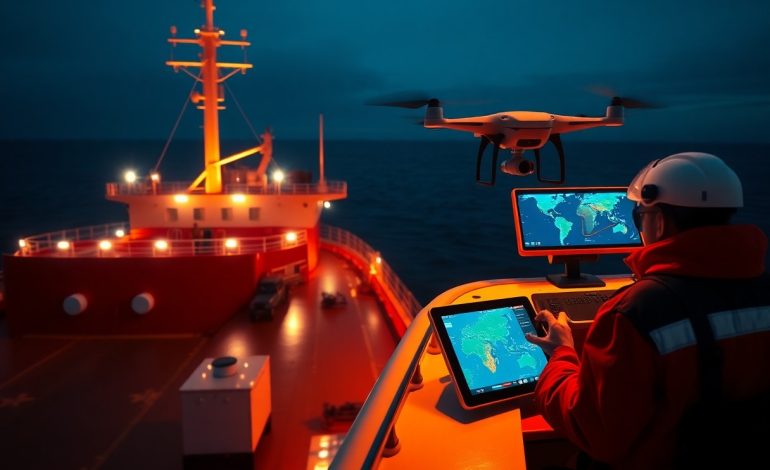
Just as IoT equips vessels with continuous sensors and connectivity, you can monitor engine health, navigation, and crew safety in real time; real-time alerts warn you of collision risk and engine failure, while analytics optimize routes to reduce costs and emissions, and automated compliance logs improve oversight-this guide shows how adopting these systems enhances your operational visibility and overall safety.
Understanding IoT in Vessel Monitoring
You already know vessel safety depends on timely, actionable data; IoT stitches together distributed sensors, edge computing, and cloud analytics so you get real-time situational awareness across propulsion, hull integrity, cargo and the bridge. Sensors like AIS and GNSS provide position feeds at intervals from 2-10 seconds in congested waters to minutes offshore, while engine vibration and temperature monitors sample at sub-second rates to detect developing faults before they escalate into engine failure.
Integration into your onboard systems and shore-side platforms converts those raw feeds into alerts, dashboards and automated workflows that can reduce unplanned downtime by an estimated 20-40% and trim maintenance costs by around 10-30% through predictive maintenance and condition-based interventions.
Types of IoT Devices for Vessel Monitoring
Sensors and edge devices fall into function groups you should prioritize based on risk and ROI: navigation and collision-avoidance (AIS, radar augmentation), machinery health (vibration, oil quality, temperature), hull and ballast monitoring (strain gauges, bilge and water ingress sensors), environmental and cargo condition (gas detectors, temperature/humidity loggers), and communications (VSAT and SOTDMA/DSC gateways). Many of these devices feed into on-vessel gateways that perform local filtering and send only relevant anomalies to shore to conserve bandwidth.
- AIS / GNSS
- Engine vibration sensors
- Fuel flow meters
- Bilge and water ingress sensors
- Satellite / cellular terminals
| Device | Primary purpose |
| AIS / GNSS | Collision avoidance, position reporting, geofencing |
| Vibration sensor | Early detection of bearing and shaft issues |
| Fuel flow meter | Consumption monitoring and CO₂ / efficiency analytics |
| Bilge / ingress sensor | Water intrusion alerts and pump automation |
| Satellite terminal | Reliable telemetry and remote diagnostics |
After you map device outputs to the bridge workflows and shore-side incident playbooks you can phase installations to protect the most safety-critical systems first.
Factors Driving IoT Adoption in Marine Safety
Regulatory pressure (IMO fuel and emissions regimes, port state controls), the economics of rising fuel prices where fuel can represent up to ~50% of voyage operating cost, and the need to avoid high-cost incidents are compelling reasons you deploy IoT systems. You also face pressures from insurers and charterers who increasingly demand documented risk mitigation-for example, insurers may offer premium discounts when you demonstrate continuous monitoring and automated alerts for collision risk or machinery anomalies.
- Regulation
- Operating costs
- Insurance / charterer requirements
- Safety culture
Knowing which drivers apply most strongly to your fleet helps you justify investment and set measurable KPIs for pilot projects.
Operational benefits-reduced fuel burn via route and speed optimization, lower downtime from predictive maintenance, and faster incident response through automated alarms-create clear ROI paths: many operators report 3-8% fuel savings after combining hull condition monitoring with voyage optimization, while predictive maintenance programs regularly cut component failures and avoid emergency repairs.
- Predictive maintenance
- Remote diagnostics
- Voyage optimization
Knowing how these concrete savings map to your operating model will determine the scale and pace of your IoT rollout.
Benefits of IoT in Enhancing Vessel Safety
You gain continuous, granular visibility into machinery, hull integrity, and crew safety that was previously episodic; by streaming vibration, temperature, pressure, and GPS data you can detect anomalies early and act before they escalate into failures. Pilots and studies show that predictive maintenance driven by IoT analytics can cut unscheduled engine downtime by roughly 20-40% and deliver fuel and operational savings of about 5-15%, while integrated AIS and sensor fusion enable real‑time collision alerts and automated route adjustments to avoid high‑risk traffic or weather corridors.
When you connect wearables, hull‑stress sensors, and engine monitors to a unified platform, emergency response times and situational awareness improve dramatically: crew location and health telemetry reduce man‑overboard search windows, and automated alarms let you isolate faults remotely so you can decide whether to divert, slow down, or perform an in‑port repair. Operators report that consolidating telemetry into dashboards shortens diagnostic cycles from hours to minutes, which directly lowers exposure to hazardous events and decreases costly delays.
Pros of Implementing IoT Solutions
You get early warning on the most dangerous failure modes – for example, a steady rise in bearing vibration or coolant temperature often precedes catastrophic engine failure, and IoT thresholds let you schedule maintenance before a breakdown. Edge analytics can filter noise at the sensor, so alarms you see onshore or on the bridge are actionable; that reduces false positives and keeps crew attention on real risks. In addition, remote diagnostics and software updates let shore teams support multiple vessels simultaneously, cutting the need for emergency port calls.
Beyond safety, IoT delivers measurable operational upside: route optimization and trim control based on live environmental and hull condition data typically improve fuel efficiency and emissions compliance, helping you meet both cost and regulatory targets. Analytics also support lifecycle planning-tracking component wear rates across a fleet lets you standardize spares and reduce inventory costs while improving readiness for high‑risk voyages.
Cons and Challenges to Consider
Connectivity gaps, especially beyond L-band satellite coverage, create windows where telemetry is delayed or unavailable, and that can undermine systems that rely on continuous streams; satellite latency and bandwidth costs can run into the low thousands of dollars per month for heavily instrumented vessels. Integration with legacy control systems on older ships is often complex and time‑consuming, requiring custom gateways and careful validation to avoid introducing new failure modes. You must also contend with data quality issues-uncalibrated sensors and poor installation lead to misleading alerts that erode trust in automated warnings.
Cybersecurity is the other major risk: connecting navigation, propulsion, and crew systems expands the attack surface. Incidents such as the 2017 NotPetya attack against container operators illustrate how a single compromise can cascade into massive operational and financial loss, so you need network segmentation, encrypted telemetry, authenticated firmware updates, and incident response plans to protect your fleet. Since the IMO now expects cyber risk management to be part of safety management systems, inadequate controls can also expose you to regulatory non‑compliance and liability.
Step-by-Step Guide to Implementing IoT for Vessel Monitoring
Implementation Overview
| Phase | Key Actions & Examples |
|---|---|
| Planning & Assessment | Define KPIs (fuel reduction %, MTTR for alarms), perform site survey for power, cabling, and mast visibility; inventory existing bridge systems (AIS, ECDIS). Example: survey a 120 m RO-RO to map 20+ sensor locations and two gateway mounting points. |
| Hardware Selection | Choose marine-grade sensors (IP67, vibration-rated), edge gateway (ARM quad-core, 8-16 GB RAM), and redundant connectivity (dual-SIM LTE + Iridium/VSAT). Typical sensor costs: $200-$2,000; gateway $1,200-$6,000. |
| Connectivity & Network | Design network segmentation (OT/IT), select protocols (NMEA 2000, MQTT over TLS), and plan bandwidth: telemetry often <1 MB/day, but firmware and raw telematics require higher capacity. Expect VSAT latency 600-800 ms; LTE <100 ms. |
| Integration & Software | Map data flows to middleware, implement edge filtering/aggregation, integrate with fleet dashboards and ECDIS. Use containerized services and apply QoS (MQTT QoS 1/2) for critical alarms. |
| Testing & Commissioning | Run harbor and sea trials, calibrate sensors (fuel meters against measured tank draws), validate alarm thresholds, and measure false-positive rates. Example: fuel-meter calibration reduced reported variance from ±6% to ±1.5%. |
| Operations & Maintenance | Schedule OTA updates, certificate rotation, and periodic cybersecurity scans; keep spares for fast replacement. Track ROI with monthly telemetry on fuel and downtime. |
Planning and Assessment
Start by defining measurable objectives-whether you need to cut fuel consumption by 5-10%, shorten response time for bilge alarms to under 5 minutes, or reduce unscheduled downtime by a target percentage. Then perform a physical survey of the vessel to log power taps, cable trays, bulkhead penetrations, mast clearances and hazardous-area classifications; for example, a 2000 TEU container ship typically requires separate routing plans for engine-room sensors and deck-mounted GPS/AIS antennas.
Assess interoperability with existing systems and regulatory constraints: verify NMEA 2000/NMEA 0183 compatibility, plan SOLAS/MARPOL reporting integration, and run a cybersecurity baseline (network segmentation, VPNs, certificate management). Pay special attention to unencrypted telemetry or open management ports-these present the most immediate security exposure and must be isolated behind gateway firewalls.
Installation and Integration
Place navigational antennas (GPS, AIS) on the highest clear-mast position with unobstructed sky view, and mount IMUs as close to the vessel’s center of gravity as possible to minimize motion bias. Route sensor cabling away from high-EMI zones near generators and use marine-grade glands and marine-certified junction boxes; during installation, tag every cable and record its run in a digital as-built to speed troubleshooting during trials.
Configure the edge gateway to perform local aggregation and health checks, forwarding only filtered events to shore to conserve bandwidth-set critical alerts to bypass aggregation for immediate transmission. Use MQTT over TLS with client certificates for telemetry, implement QoS 1 or 2 for engine alarms, and maintain an offline store-and-forward buffer sized for at least 48 hours of telemetry in case of connectivity outages.
For commissioning, run both harbor acceptance tests and a minimum 24-48 hour sea trial to validate sensor calibration and alarm logic; calibrate fuel flow meters against measured fuel transfers, verify GPS/IMU fusion accuracy with known waypoints, and train crew on the dashboard workflows. Address one more operational detail: deploy a dual-connectivity plan (primary broadband + satellite fallback) and document failover behavior so your team can diagnose link-layer issues during critical events.
Tips for Maximizing IoT Efficiency in Maritime Operations
Segment your fleet by mission profile and prioritize sensor deployment where failure has the highest operational or safety impact: bridge systems, propulsion, fuel lines and ballast tanks. Apply edge processing to pre-filter telemetry and only transmit events or summarized metrics – operators commonly cut bandwidth by 40-60% and reduce cloud costs by a similar margin when moving from raw-stream to filtered-event strategies. Wherever possible, adopt open standards like MQTT and OPC-UA to simplify integration, and enact network segmentation so that IoT telemetry is isolated from crew and navigation networks to preserve safety and reduce attack surface.
Prioritize measurable KPIs (MTBF, mean time to repair, fuel burn per nautical mile) and run short pilot projects (6-12 weeks) to validate ROI before fleet-wide rollouts; a pilot that focuses on engine vibration and oil analysis often yields a 20-40% drop in unplanned engine downtime. Use the following checklist to operationalize improvements:
- Define KPIs tied to operational cost and safety metrics
- Implement edge processing for bandwidth and latency reduction
- Adopt open protocols for interoperability
- Enforce cybersecurity via segmentation and device identity
- Train crew on sensor care and incident reporting
Best Practices for Data Management
Classify data by fidelity and retention needs: stream high-frequency vibration data at 100 Hz only for 24-72 hours on the edge, then store 1 Hz aggregates and anomaly markers for 3+ years in a time-series database to support trend analysis and compliance audits. Implement strict metadata standards (ISO 19115-style tagging or equivalent) so every telemetry point includes timestamp, geolocation, sensor ID, and firmware version – this makes root-cause analysis across voyages possible within hours instead of days.
Automate data pipelines with rule-based filters and anomaly detectors so you reduce false alarms and only escalate meaningful events to crew or shore teams; for example, set thresholds that combine engine RPM, cylinder pressure, and temperature to trigger a high-priority alert, which reduces unnecessary maintenance stops. Encrypt data-in-transit and at-rest, maintain role-based access controls, and use hashing for audit trails to preserve integrity while enabling forensic review after incidents.
Regular Maintenance and Updates
Schedule device inspections and firmware reviews on a predictable cadence: visual and electrical checks every 6 months, full sensor calibration annually, and firmware/patch reviews quarterly. Use staged over‑the‑air (OTA) rollouts – deploy updates to a 5-10% subset of the fleet first, monitor for regressions for 72 hours, then proceed with wider deployment – that approach reduces the risk of fleet-wide failures due to a faulty update.
Maintain a versioned rollback strategy and simulate updates against a digital twin or test harness before applying them at sea; operators who adopt simulated update testing report a faster recovery from field issues and fewer emergency port calls. Keep spare sensors and pre-configured replacement units on board so you can replace a failed sensor within hours instead of days, which directly improves vessel monitoring continuity and overall safety.
Thou must implement strict change-control: require signed approvals for any firmware modification, log each update with timestamp and operator ID, and verify post‑update telemetry for at least one full operational cycle before closing the maintenance ticket.
Conclusion
With this in mind, you can leverage IoT to enhance vessel monitoring and safety by receiving continuous telemetry, automated alerts, and integrated sensor fusion that deliver real-time situational awareness. Your operations benefit from predictive maintenance that reduces downtime and fuel use, faster incident detection that speeds coordinated responses, and consolidated vessel, environmental, and cargo data that enable evidence-based decisions to lower risk and improve efficiency.
To implement effectively, you should prioritize secure, interoperable systems, phased rollouts, and robust analytics so your fleet scales without exposing critical infrastructure. Equip your crew with targeted training, define clear device-driven procedures, and track performance metrics so you can refine deployments, demonstrate ROI, and steadily raise safety standards across operations.