Methane Slip and Its Impact on Marine Fuel Sustainability

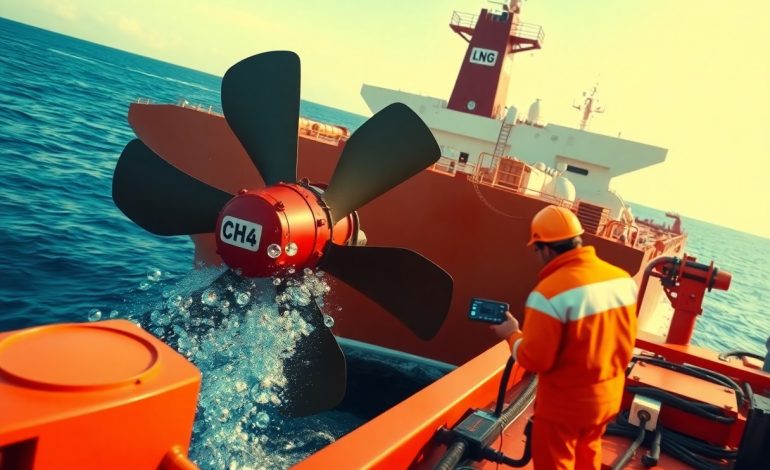
There’s increasing evidence that methane slip-the unburned methane released from engines and fuel systems-can undermine the climate benefits of alternative marine fuels, because methane is many times more potent than CO2 over short timeframes; as an operator, you must assess your fuel choice, emissions controls, and monitoring to avoid ship-level warming increases, and note that effective mitigation and continuous measurement can cut emissions substantially, preserving your vessel’s sustainability credentials.
Understanding Methane Slip
Types of Methane Emissions
In marine operations you encounter several distinct emission pathways: combustion slip from dual‑fuel and gas engines, episodic releases during bunkering and tank handling, and continuous losses from upstream fugitive sources in the fuel supply chain. Engine types produce very different profiles – medium‑speed dual‑fuel units commonly report slip in the low single digits percent range under suboptimal load, whereas optimized slow‑speed two‑stroke designs can achieve values below 1% when properly calibrated and maintained. You should track both instantaneous spikes (bunkering, cold start) and steady-state slip when assessing vessel emissions.
Your measurement strategy must separate these sources so mitigation can be targeted: engine tuning and aftertreatment address combustion slip, procedural changes reduce bunkering/venting events, and supplier verification limits upstream leaks. Typical monitoring combines continuous exhaust sensors, periodic methane analyzers during bunkering, and supply‑chain audits to reconcile on‑board readings with lifecycle estimates.
- Combustion slip
- Bunkering/venting
- Upstream fugitive emissions
- Cold start spikes
Thou must treat each pathway differently to lower your overall footprint.
| Emission Source | Typical Characteristics / Impact |
|---|---|
| Combustion slip (dual‑fuel engines) | Range often ~0.5-7% of methane in fuel depending on engine design, load and tuning; largest on some medium‑speed DF engines. |
| Bunkering and tank venting | Short‑duration spikes during transfer; improper procedures or faulty equipment can produce measurable releases per bunkering event. |
| Upstream fugitive emissions | Leaks across extraction, processing and transport can dominate lifecycle methane; supplier quality controls matter. |
| Cold start & transient operation | Higher slip in the first minutes after start or during rapid load changes; periodic but intensity can be significant. |
| Maintenance and calibration issues | Poorly calibrated fuel injection, worn components or incorrect pilot fuel settings increase persistent slip. |
Factors Contributing to Methane Slip
Engine architecture is a primary driver: you see higher slip from certain medium‑speed gas engines and poorly optimized dual‑fuel systems because incomplete mixing or late combustion leaves unburned methane. Fuel composition also matters – higher fractions of light hydrocarbons and contaminants can change flame propagation and raise slip. Operational profile makes a measurable difference: frequent low‑load steaming, extended idling, or repeated cold starts increase aggregate slip compared with steady, optimised cruise.
Mitigation technologies and practices have quantifiable effects: methane oxidation catalysts and optimized combustion controls can reduce observable slip by substantial percentages in trials, while stricter supply chain management limits upstream contributions. You should combine hardware, operational changes and supplier audits to cut both on‑board and lifecycle emissions. Recognizing how these elements interact lets you prioritize interventions for the highest return.
- Engine design
- Fuel quality
- Operating profile
- Aftertreatment
- Maintenance
Additional detail matters: for example, retrofitting a shipboard oxidation catalyst is effective only when exhaust temperatures and flow allow adequate residence time, and a 24‑hour trial may underestimate lifetime performance if you routinely operate at low load; similarly, supplier reporting that masks fugitive losses will skew lifecycle comparisons between LNG and alternative fuels. You must evaluate both shipboard diagnostics and fuel‑chain monitoring to build a reliable emissions profile. Recognizing the operational limits of each mitigation step determines which measures you can reasonably deploy at scale.
- Oxidation catalysts
- Operational windows
- Supplier verification
- Long‑term monitoring
The Impact of Methane Slip on Marine Fuels
When you compare fuel options, you must weigh short‑term radiative forcing against lifecycle CO2 benefits: methane’s global warming potential is roughly 84 times CO2 on a 20‑year horizon and ~28 times on a 100‑year horizon (IPCC AR5 ranges). Studies report methane slip from marine LNG engines commonly in the range of 0.5-3% under steady operation and potentially higher during start/stop or low‑load transients; at those rates, modelled gains of 10-25% lower CO2 emissions on combustion basis compared with heavy fuel oil can be offset once you apply 20‑year GWP metrics.
Operational realities amplify the effect: engine type, load profile, fuel composition and bunkering practices can push slip higher, while after‑treatment and optimized combustion can reduce it. Field trials and bench tests show methane oxidation catalysts and improved port‑injection timing can cut slip by 50-80% in some installations, but you’ll still face measurement and verification challenges that affect lifecycle accounting and regulatory compliance.
Pros and Cons of Marine Fuels with Methane Emissions
You need a clear, side‑by‑side view to make decisions that balance near‑term climate risk and operational benefits.
Pros and Cons of Marine Fuels with Methane Emissions
| Pros | Cons |
|---|---|
| Lower combustion CO2 emissions vs heavy fuel oil (typically 10-25% reduction) | Methane slip increases short‑term warming, undermining CO2 gains if slip is >~1-3% |
| Reduced SOx and particulate emissions, aiding compliance with SECA/ECA rules | Upstream methane leaks in production and supply chain can add 1-4% fugitive emissions |
| Existing LNG bunkering infrastructure in many ports simplifies adoption | Bunkering and handling introduce boil‑off and leakage risks requiring tight procedures |
| Well‑developed dual‑fuel engine technology with operational experience | Variable slip across engine types and operating profiles complicates fleet‑level planning |
| Potential pathway to renewable synthetic methane or bio‑LNG | Supply of truly low‑carbon synthetic/bio methane is currently limited and expensive |
| Lower NOx in some engine configurations | Measurement, reporting and verification systems for methane are still being standardized |
| Short‑term air quality benefits in port and coastal areas | Regulatory uncertainty (IMO lifecycle accounting, CII) creates investment risk |
| Retrofit and after‑treatment options exist to reduce slip | Retrofit costs and downtime can be significant; ROI depends on fuel and carbon pricing |
After you review the table, you should focus on end‑to‑end emissions accounting: even low single‑digit slip rates materially change the climate profile of a fuel when you use a 20‑year horizon, so supplier QA and onboard monitoring become central to a sustainable strategy.
Sustainability Implications
Policy targets and near‑term climate risk mean you can’t treat methane slip as a minor leak; the IMO’s GHG strategy seeks at least a 50% reduction in shipping emissions by 2050 (vs 2008), and short‑lived climate pollutants like methane can drive warming on timescales that matter for those targets. If you value alignment with 2030-2040 decarbonization milestones, assessing fuels with a GWP20 basis and including upstream fugitive emissions becomes necessary.
Technically, you can mitigate slip through engine design, operational changes and after‑treatment; examples include medium‑speed DF engines tuned for lean combustion, continuous methane sensors tied to automated control, and catalytic oxidizers tested in trials that show 50-80% reductions. From a procurement perspective, requiring supplier methane intensity reporting and third‑party verification reduces your exposure to hidden lifecycle emissions.
More specifically, you should implement continuous methane monitoring at the engine and bunkering interfaces, adopt life‑cycle assessment protocols that use both 20‑ and 100‑year GWPs for scenario analysis, and set supplier thresholds (for example, maximum allowable upstream leakage rates) when contracting LNG or synthetic methane-these steps let you quantify trade‑offs and demonstrate compliance to regulators and charterers.
Mitigation Strategies for Methane Slip
Step-by-Step Approaches to Reduce Emissions
You should begin by establishing a precise baseline using continuous methane analyzers and periodic cylinder-outlet testing; many ship trials report baseline methane slip between 0.5% and 5% of fuel mass depending on engine type and load. Next, prioritize interventions that deliver the highest reduced emissions per euro: software-driven engine mapping and pilot-fuel optimization typically cut slip at partial load by 20-50%, while post-combustion measures can address residual emissions.
Then implement a staged program: measure, tune, retrofit, verify. In practice that means short-term actions (engine tuning, load management, leak-tight fuel systems), medium-term investments (upgrading gas admission systems, improving gas injection timing), and long-term fixes (installing methane oxidation catalysts or thermal oxidizers and integrating continuous emissions monitoring). You should also set performance KPIs (for example, target a 50% reduction in slip within 12 months) and verify with logged emissions data.
Step Overview
| Step | Action & Impact |
| Baseline Measurement | Install CEMS or portable tunable diode laser analyzers to quantify slip (g/kWh or % fuel mass); this informs priorities and verifies progress. |
| Engine Calibration | Adjust pilot fuel, gas admission timing, and turbocharger matching to reduce unburned methane at low-to-mid load; typical reductions 20-50% depending on engine. |
| After-treatment Retrofit | Fit methane oxidation catalysts (MOC) or catalytic reactors downstream of the exhaust; field tests show slip reductions of up to ~90% on residual emissions under suitable temperature conditions. |
| Fuel Handling & Leak Control | Upgrade seals, valves and automated detection (sniffers, fixed sensors) to cut fugitive emissions; losses from leaks can exceed engine slip if unchecked. |
| Operational Measures | Apply load scheduling, avoid prolonged low-load operation, and implement rapid-response maintenance to keep combustion optimal and minimize slip. |
| Monitoring & Verification | Use logged data and third-party verification to maintain compliance and demonstrate emission reductions to charterers and regulators. |
Tips for Implementing Sustainable Practices
You should prioritize actions that yield measurable emission reductions quickly: begin with continuous monitoring, implement targeted engine recalibration, and schedule catalyst retrofits where exhaust temperatures support oxidation efficiency (typically >300-350°C). Financially, retrofits and controls often pay back within 2-5 years through improved fuel use and lower regulatory risk; pilot projects on commercial vessels have cut verified slip by more than half within one year when combining tuning with after-treatment.
Operationally, train your engineering teams on gas-handling best practices and integrate methane performance into routine KPI dashboards so you can catch drift early. Maintain a planned maintenance schedule for injectors and gas trains-worn components can increase slip by double-digit percentages-and deploy fixed leak detection in high-risk compartments to stop fugitive emissions before they accumulate.
- Continuous Monitoring – install CEMS and regular portable checks to track trends
- Methane Oxidation Catalyst – target retrofit where exhaust temps and backpressure allow
- Engine Tuning – optimize pilot fuel and timing for your typical load profile
- Leak Detection – use fixed sensors and regular walkthroughs to prevent fugitive releases
- Operational KPIs – set clear reduction targets (e.g., 50% slip reduction in 12 months)
Knowing you can phase investments to align with drydock cycles and leverage staged upgrades will make implementation manageable and cost-effective.
For more detailed rollout, you should pilot solutions on one or two vessels: for example, run engine mapping plus temporary portable catalytic units during a controlled trial to verify expected reductions before committing to fleet-wide capital expenditure. Case studies from class society trials indicate that combining calibration and MOC installation reduces total methane emissions per voyage by a factor of five in favorable conditions, and you can use those results to build a business case for wider adoption.
- Regulatory Alignment – document reductions to meet flag and class expectations
- Fuel Quality Control – monitor LNG composition (methane number, Wobbe index) to avoid combustion inefficiencies
- Technical Partnerships – work with OEMs and class for validated retrofit kits
- Data Transparency – publish verified emission outcomes to stakeholders and charterers
Knowing that transparent measurement, phased investment, and combined technical-operational measures are the fastest route to durable reductions in methane slip.
Future Directions in Marine Fuel Sustainability
Technology and operational pathways
You will see rapid refinement in engine and after‑treatment designs that directly target methane slip: newer low‑speed dual‑fuel engines can achieve slip rates below 0.1% in optimal conditions, while older medium‑speed and spark‑ignited units may still emit at the percent‑level, erasing LNG’s climate benefit if unmanaged. Retrofit options-methane oxidation catalysts, improved injection timing, and closed‑loop fuel control-have shown industry trial reductions of methane slip by more than half in some configurations, and further gains are possible when you combine hardware upgrades with operational measures like optimized load profiles and tailored fuel blending. You should factor in proven fleet examples (Stena’s methanol conversion of Stena Germanica and recent methanol‑capable orders from A.P. Moller‑Maersk) as evidence that fuel switching to lower‑slip alternatives and green fuels is commercially viable alongside engine upgrades.
Policy, measurement, and market incentives
You will need robust, standardized methane accounting to align technical fixes with policy targets-remember that methane has a global‑warming potential of about 28-34× CO2 over 100 years and ~84-86× over 20 years-so even small slip fractions materially change lifecycle emissions. Regulatory drivers like the IMO’s aim to halve total shipping emissions by 2050 and the EU’s FuelEU proposals are pushing carriers to disclose fuel carbon intensity and to prefer fuels with verified low methane emissions; combining onboard continuous methane monitoring, periodic bunker gas composition checks, and satellite/sensor verification (e.g., high‑resolution satellite plume detection paired with shipboard CEMS) will become standard if you want to access preferred financing, charter premiums, and compliance credits. Strong market signals already exist: charterers and banks are beginning to demand documented methane mitigation, so your procurement and retrofit decisions must include verified slip measurements to avoid penalties and to capture the value of genuinely lower‑emission fuel pathways.
Final Words
Drawing together the evidence on methane slip and its impact, you can see that unburned methane emissions erode the climate advantages of lower-carbon marine fuels such as LNG. Because methane has a much higher near-term global warming potential than CO2, even modest slip rates materially increase the lifecycle greenhouse‑gas intensity of a voyage, so you should evaluate engine types, operational profiles, and real-world slip measurements rather than rely solely on theoretical or manufacturer figures.
To safeguard the sustainability of your fuel choices, you should require robust monitoring, transparent lifecycle accounting, and the deployment of proven mitigation measures-engine optimization, methane detection and control systems, oxidation catalysts, and a shift toward low‑slip alternative fuels where feasible. Policy alignment, stricter certification and incentives for low‑slip technologies will help ensure your transition to new marine fuels delivers measurable climate benefits rather than unintended emissions backsliding.