Ballast Water Management and Ocean Ecosystem Protection

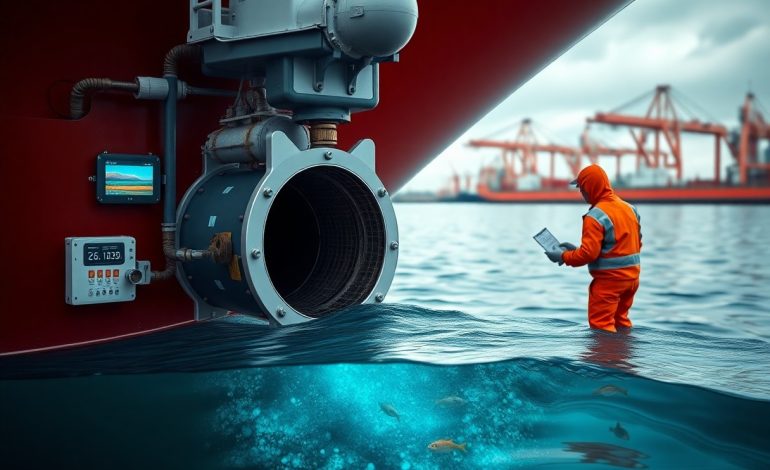
Most ballast discharges transport invasive species and pathogens that can devastate local fisheries and habitats, so you need to prioritize stringent management. By adopting effective treatment and monitoring systems, enforcing compliance, and tailoring practices to your vessel’s operations, you minimize ecological harm and protect biodiversity and coastal economies. Your choices-from technology investments to crew training-determine how well ports and marine life recover and remain resilient.
Understanding Ballast Water
You handle ballast water as a stability and trim tool, and the way you take on, store, and discharge that water directly shapes ecological outcomes. Modern merchant fleets move billions of tonnes of ballast water globally each year, and that movement has led to well-documented invasions – for example, the zebra mussel in the Great Lakes and the comb jelly Mnemiopsis leidyi in the Black Sea – which altered food webs and damaged intake systems at power plants and municipal facilities. You must balance operational needs with regulatory and environmental constraints, since the International Maritime Organization’s Ballast Water Management Convention (BWM Convention) and regional regulators now enforce specific limits and treatment requirements.
You face measurable standards and technical choices: the IMO D-2 standard sets discharge limits such as fewer than 10 viable organisms per m3 above 50 µm and strict indicator microbe thresholds, and the USCG maintains a parallel type-approval regime for systems operating in US waters. Implementing compliant systems affects voyage planning, retrofit budgets, and port operations, while failure to comply risks fines, detentions, and documented ecological damage.
Types of Ballast Water Systems
You encounter three broad categories of systems aboard ships: exchange-based methods (open-sea flushing), onboard treatment systems (filtration + UV, chemical dosing, electrochlorination), and hybrid solutions that combine approaches for variable conditions. Filtration typically removes larger organisms down to 50 µm, while UV and chemical systems inactivate microbes; many manufacturers provide systems rated to treat flows matching vessel pump capacities and are type-approved under IMO or USCG regimes. For instance, a medium-size tanker may use a filtration + UV system sized at several hundred to a few thousand m3/h to meet D-2 on typical ballasting operations.
- Open-loop: sea-water exchange at least 200 nautical miles from shore in water >200 m deep to reduce coastal organisms
- Closed-loop: retains water and uses onboard treatment before discharge
- Hybrid: switches between open-loop and closed-loop based on water quality and regulations
- Filtration + UV: mechanical removal then irradiation to meet D-2 viable organism limits
- Chemical systems: generate disinfectants (e.g., electrochlorination) and require neutralization before discharge in some jurisdictions
| System Type | Key Features / Use Case |
| Open‑loop (Sea Exchange) | Low capital cost; relies on offshore exchange; limited by sea conditions and regional bans |
| Closed‑loop (Onboard Treatment) | Consistent compliance in port and coastal waters; higher retrofit cost; needs power and maintenance |
| Hybrid Systems | Operational flexibility; can switch modes to meet both IMO and regional requirements |
| Filtration + UV | Effective for organisms >10-50 µm; modular designs for different flow rates |
| Chemical (Electrochlorination) | Broad-spectrum disinfection; requires handling of residuals and possible neutralization |
Knowing this taxonomy helps you select systems that match vessel size, typical routes, and the regulatory patchwork you operate within.
Factors Affecting Ballast Water Management
You must account for ship characteristics and voyage parameters: vessel age and design, ballast tank geometry, pumping rates, and frequency of ballasting events change how effective a given system will be in practice. Environmental variables like temperature and salinity influence organism survival and treatment efficacy – for example, UV effectiveness drops in turbid waters above certain suspended solids levels, while electrochlorination efficacy varies with salinity and requires corrosion management.
Regulatory drivers are equally determinant: the IMO BWM Convention entered into force in 2017 and sets the D-2 standard, but regional authorities such as the USCG and the EU may impose additional approval or operational requirements and port state control inspections. Perceiving how these technical and legal factors interact lets you forecast retrofit timelines, spare‑parts needs, and crew training requirements.
You also deal with operational constraints that change treatment choices: limited deck space for equipment, power availability during slow steaming, and port reception facilities for any residues or proxies limit options and influence life‑cycle costs. Perceiving these trade-offs lets you prioritize solutions that minimize downtime and ensure compliance.
- Ship design: tank layout and pumping system determine retrofit complexity
- Voyage profile: short coastal runs versus long ocean passages affect ballast exchange feasibility
- Water quality: turbidity and organic load reduce UV and filtration performance
- Regulatory regime: IMO D-2, USCG type approval, and local bans change allowed methods
- Operational limits: power, space, and maintenance capacity constrain system choice
Importance of Ballast Water Management
If you allow untreated ballast discharges, you effectively move entire biological communities across biogeographic boundaries; a single discharge can contain millions of microscopic organisms, and high-profile invasions like the zebra mussel in the Great Lakes (late 1980s) demonstrated how quickly infrastructure and fisheries can be impacted, with control and damage costs estimated in the order of $1 billion+ over subsequent decades. Beyond filter-feeders, incidents such as the comb jelly invasion of the Black Sea show how trophic cascades from introduced species can collapse regional fisheries and alter nutrient cycles within a few years.
Given those stakes, the IMO Ballast Water Management (BWM) Convention established numeric discharge limits (D-2 standard) and approval pathways for Ballast Water Management Systems (BWMS), so when you outfit vessels with certified treatment you reduce pathogen and species transfer risk at the source. That said, implementation affects operations, port inspections, and coastal managers: you must balance on-board retrofits, crew training, and monitoring against the long-term benefit of protecting fisheries, human health (for example, reducing transport of Vibrio species), and coastal economies.
Pros of Effective Management
When you deploy effective BWMS and follow BWM procedures, the most immediate benefit is a measurable reduction in new invasive introductions – protecting spawning grounds, aquaculture sites, and native food webs. Preventing an invasion is economically efficient: retrofitting a single ship may cost in the range of $0.5-2 million, whereas a single large-scale species establishment can impose hundreds of millions to billions in lost fisheries revenue, mitigation, and infrastructure remediation over time. In practical terms, robust ballast management lowers the probability that your port community will face long-term ecological damage that is far more expensive to reverse.
Operationally, you also gain regulatory certainty and reduced detention risk by complying with internationally accepted standards; ports and insurers increasingly expect documented ballast management, and early adopters often face fewer inspections and smoother port calls. From an ecosystem services perspective, maintaining native biodiversity supports fisheries yields and coastal resilience to other stressors such as climate change.
Cons and Challenges
Upfront and ongoing costs are the most visible challenge for shipowners and operators: BWMS retrofits commonly range from $0.5-2 million per vessel, plus recurring expenses for power, consumables, maintenance, and certification. You will encounter technical limitations too – UV systems can lose effectiveness in highly turbid or colored waters, and electrochlorination produces residuals that raise discharge concerns in some jurisdictions; these performance sensitivities make system selection and operation site-specific and can complicate compliance.
Enforcement and measurement difficulties add another layer: port state control regimes vary, sampling methods to detect viable organisms are technically demanding and can produce false negatives, and legacy fleets may delay full uptake. In practice, you face operational constraints such as rough-sea conditions that make ballast exchange impractical and regulatory patchworks that require different documentation or acceptance criteria across jurisdictions, increasing administrative burden and the risk of non-compliance if procedures are not rigorously followed.
Step-by-Step Guide to Ballast Water Management
| Step | Key Actions |
|---|---|
| Preparation and Planning | Conduct voyage-specific risk assessments, map ballast tank capacities (m3), develop a Ballast Water Management Plan, train crew, schedule sampling and maintenance |
| Implementation Strategies | Select appropriate BWTS (filtration + UV, electrochlorination, deoxygenation), plan retrofits (6-12 months typical), size systems to peak flow (e.g., 500-3,000 m3/h for mid-sized ships), budget $0.5-3M depending on vessel class |
| Monitoring and Compliance | Maintain Ballast Water Record Book and Certificate, install continuous sensors (turbidity, flow, UV intensity), prepare for port-state sampling and audits |
Preparation and Planning
You should start by quantifying your ballast operations: list tank volumes, pump rates, and frequent ballast exchange routes so you can model ballast water volumes per voyage. Conduct a risk assessment that identifies high-risk ballast origins (e.g., estuaries, aquaculture zones) and plan either mid-ocean exchanges-performed >200 nautical miles from nearest land in waters deeper than 200 m-or onboard treatment. Including these parameters in your voyage-specific Ballast Water Management Plan helps you meet statutory requirements and reduces the chance of carrying invasive species.
Assign a trained ballast water officer and create clear SOPs for every crew member involved in ballasting and deballasting. Train for emergency scenarios such as BWTS malfunctions and pump failures, and schedule routine maintenance intervals tied to operating hours. Keep detailed logs in the Ballast Water Record Book and prepare documentation for port-state inspections; failure to present complete records increases the risk of detention and fines.
Implementation Strategies
You need to choose a BWTS type that matches water quality and vessel operations: filtration + UV works well where turbidity is low to moderate, electrochlorination is effective in turbid waters but introduces residual oxidants to manage, and deoxygenation excels for certain tankers and short-sea vessels. Size the system to handle peak ballast flow-mid-size bulk carriers often require units in the 500-3,000 m3/h range-and budget for physical modifications to pipework, power supply, and control panels during retrofit planning.
Plan the retrofit timeline with the yard and manufacturer: allow 6-12 months for engineering, spare-parts lead times, and sea trials. Integrate monitoring instruments (flow meters, UV intensity sensors, pressure differentials) into the vessel automation so you can capture operational parameters in real time and produce audit-ready logs. Selecting a supplier with proven Type-Approval and documented trials in conditions similar to your trading areas reduces implementation risk and increases system reliability.
During commissioning, run staged trials that include raw-water challenge tests and verification sampling; require the vendor to provide training for watchkeeping crew and a maintenance plan that specifies consumable change intervals and fault-response procedures. Keeping a spare critical component on board (e.g., a UV lamp or filter cartridge) can prevent unscheduled downtime and protect your operations from system failures.
Monitoring and Compliance
You must implement continuous and discrete monitoring: install inline sensors for turbidity, flow rate and, where applicable, UV dose or residual oxidant concentration, and record these parameters automatically. Supplement continuous data with periodic microbiological or plankton sampling-many port states conduct spot checks using nets and pump-based samplers-and retain sample logs and chain-of-custody documentation to demonstrate compliance.
Maintain an up-to-date Ballast Water Management Plan and Ballast Water Record Book and ensure your vessel carries the appropriate Ballast Water Management Certificate issued under the BWM Convention. Non-compliant readings, incomplete records, or failed port-state samples can lead to detention; proactively scheduling third-party audits and internal reviews reduces that risk and demonstrates due diligence to inspectors.
For operational resilience, set alarm thresholds for sensor deviations and establish corrective-action workflows that specify who you contact, how you isolate affected tanks, and when to notify flag or port authorities. This procedural clarity reduces uncertainty during inspections and helps you respond rapidly to monitoring excursions while maintaining trading schedules.
Tips for Successful Ballast Water Management
Operational checklist
You should plan ballasting and deballasting to minimize uptake in biologically rich coastal zones, and whenever feasible use ballast water exchange at >200 nautical miles from shore or in water depths >200 m, achieving at least 95% volumetric exchange when using flow-through methods. Use an approved BWMS designed for your ship type, verify system efficacy against the D-2 performance standard (<10 viable organisms ≥50 µm per m3 and <10 viable organisms 10-50 µm per mL), and keep spares for UV lamps, pumps, and filters. Practical steps you can follow include:
- Pre-voyage planning: identify ballast locations, port restrictions, and nearest reception facilities.
- Equipment checks: perform pre-operation checks and schedule preventive maintenance every 3 months or every 500 operating hours.
- Operational hygiene: avoid uptake in turbid, shallow waters and purge lines after deballasting to prevent biofouling.
- Sampling: conduct biological sampling per manufacturer and flag guidelines after commissioning and periodically during service to confirm ballast water treatment performance.
- Recordkeeping: maintain accurate logs, certificates, and calibration records to streamline port-state inspections.
Training, monitoring and compliance
You must train crew on ballast water management procedures, emergency overrides, and basic troubleshooting for the BWMS; hands-on drills reduce human error and have cut system-related failures in some fleets by over 30%. Implement a monitoring regime that pairs onboard sensors (flow, UV dose, pressure) with periodic laboratory checks; several operators run quarterly third-party analyses and voyage-based spot checks to detect drift in performance. Case studies-such as the zebra mussel introduction to the Great Lakes (late 1980s) and the comb jelly invasion in the Black Sea (early 1980s)-demonstrate how non-compliance can devastate fisheries and port infrastructure, so you should treat compliance as an operational priority. Knowing that adhering to D-2 thresholds and proactive maintenance prevents detentions, costly remediation, and the spread of invasive species.
Ocean Ecosystem Protection
Impact of Ballast Water on Marine Life
When you trace how ballast water alters ecosystems, the most striking examples are invasive species that outcompete natives: the zebra mussel’s arrival in the Great Lakes in 1988 and the comb jelly Mnemiopsis leidyi in the Black Sea in the early 1980s are textbook cases – the latter contributed to more than a 60% decline in anchovy catches and widespread disruption of food webs. Scientific assessments estimate that ballast water has translocated thousands of non-native species globally, with some studies citing figures in excess of 7,000 distinct organisms recorded moving between bioregions, which directly changes predator-prey dynamics, nutrient cycling, and habitat structure.
You also need to account for less visible but equally damaging transfers: planktonic pathogens and harmful algal bloom species that can trigger mass mortalities or shellfish closures, and microorganisms that alter microbial loops. The most dangerous outcomes are rapid population explosions of invaders and the associated cascading effects – for example, fouling organisms that clog intake systems and alter benthic habitats – which together impose ecosystem shifts and multi‑million to billion‑dollar economic impacts on fisheries, tourism, and water infrastructure.
Strategies for Ecosystem Preservation
You can reduce invasions by combining technical and operational controls: install an IMO‑approved ballast water management system (BWMS) that meets the D‑2 standard – limiting viable organisms to <10 organisms per m³ for sizes >50 µm – or perform mid‑ocean ballast water exchange where allowed (typically >200 nautical miles from shore and in waters >200 m depth). Filtration + UV or electrochlorination systems on many modern ships deliver >99% removal or inactivation of organisms larger than 50 µm, and integrating real‑time monitoring sensors helps you verify system performance during discharge.
Your operational practices matter as much as equipment: maintain an up‑to‑date Ballast Water Management Plan and record book, train crew in BWMS operation and maintenance, and coordinate with shore authorities for port reception or onshore treatment when required. Regional measures – for example, stricter controls for the Great Lakes or Baltic Sea – demonstrate that targeted regulation combined with port state control inspections significantly reduces the rate of new introductions when you comply and document ballast operations.
For more effective preservation, you should layer advanced monitoring and regional cooperation: implement eDNA surveillance in high‑risk ports to detect low‑abundance invaders early, use risk‑based routing to avoid uptake in biologically rich coastal habitats, and participate in data‑sharing platforms so you and neighboring ports can prioritize inspections. Although approved BWMS carry upfront costs (typical retrofit ranges from about $200,000 to $1,000,000 depending on ship size and system type), the avoided losses from a single major invasion often outweigh those investments, making prevention both an ecological and economic imperative.
To wrap up
Conclusively, effective ballast water management protects ocean ecosystems and reduces the spread of invasive species; you must ensure compliance with international standards, install and maintain approved treatment systems, implement operational controls, and train your crew to minimize biological transfer.
You should also engage with regulators, ports, scientists, and coastal communities to monitor discharges, share data, and adapt practices as technology and knowledge advance; by aligning your operations with best practices and supporting policy and research, you protect biodiversity, sustain fisheries and coastal economies, and secure the long-term health of the oceans you rely on.