How Water Treatment Systems Improve Shipboard Life Quality

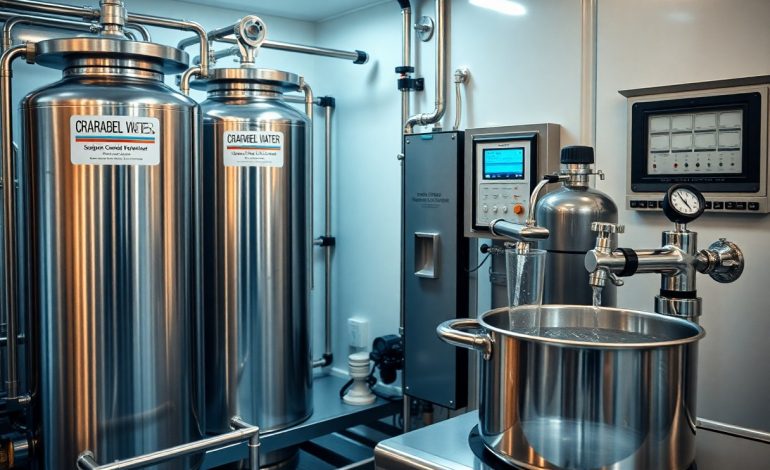
Treatment systems on board transform seawater and graywater into safe, potable water, giving you reliable hydration, cleaner hygiene, and better cooking; they protect your crew from contamination and disease outbreaks, extend equipment life, and reduce downtime so your operations stay efficient. By controlling chemical and biological risks and improving water taste and pressure, these systems directly enhance your comfort, health, and mission readiness.
Types of Water Treatment Systems
You will find a mix of mechanical, chemical, and physical technologies on modern ships, each tailored to mission profile and feedwater quality. Systems such as Reverse Osmosis, Ultraviolet (UV) disinfection, multimedia and cartridge filtration, chemical chlorination or dosing, and ion exchange units address different hazards-salinity, microorganisms, particulates, and dissolved contaminants-so you design redundancy and staging for consistent output.
Operationally, you should assess factors like energy use, maintenance intervals, and failure modes: RO draws the most power but removes dissolved salts; UV provides non‑chemical disinfection but needs low turbidity feed; chlorination gives a residual but requires safe dosing controls. Assume that integrating complementary systems reduces single-point risks and improves overall water quality for your crew.
- Reverse Osmosis (RO)
- Ultraviolet (UV) Treatment
- Filtration (sand, cartridge, multimedia)
- Chlorination / Chemical Dosing
- Ion Exchange / Softening
| Reverse Osmosis | Removes >95% of dissolved salts for seawater desalination; typical recovery rates 35-50% for seawater systems, pressures ~800-1000 psi (55-70 bar); membrane replacement every 2-5 years depending on fouling. |
| Ultraviolet (UV) Treatment | Provides chemical‑free disinfection; design dose often 40-60 mJ/cm² at rated flow; requires turbidity <1 NTU and regular lamp/sleeve maintenance to sustain log reductions of bacteria and viruses. |
| Filtration | Pre‑treatment to protect downstream systems: cartridge filters (1-50 µm) and sand beds remove particulates and reduce membrane fouling; you should size for expected solids load and allow easy replacement. |
| Chlorination / Chemical Dosing | Provides residual disinfection and biofilm control in distribution loops; dosing control and monitoring prevent over‑exposure and corrosion-common practice is free chlorine 0.2-0.5 mg/L in potable loops. |
| Ion Exchange | Used for softening and selective ion removal (e.g., nitrate); regeneration logistics and chemical storage must be planned for extended voyages to avoid service interruptions. |
Reverse Osmosis Systems
You rely on Reverse Osmosis when feedwater salinity or TDS is the primary concern; ships typically use either seawater RO plants or brackish RO depending on source. Performance metrics you monitor include permeate conductivity (µS/cm targets), recovery rate, and differential pressure across the membrane banks-deviations indicate scaling or biofouling that will lower output and raise energy draw.
Maintenance demands are operationally significant: expect membrane replacements every 2-5 years and periodic chemical cleanings when flux drops by 10-20%. Safety considerations include managing high‑pressure pumps (800-1000 psi) and controlling brine disposal; you should log operating pressures, flowrates, and salt passage to spot problems early and protect crew from high‑pressure hazards and concentrate handling risks.
Ultraviolet (UV) Treatment Systems
You depend on Ultraviolet (UV) reactors to inactivate microorganisms without adding chemicals, using lamps that emit around 254 nm (low‑pressure) or broader spectra (medium‑pressure). Design focuses on dose (mJ/cm²) at the rated flow; for practical shipboard units, delivering 40-60 mJ/cm² will achieve multi‑log reductions for bacteria and most viruses, but the reactor must follow a pre‑filtration stage to keep turbidity below ~1 NTU.
Operationally, lamp life and sleeve cleanliness determine effective dose: lamps commonly require replacement every 9-12 months, and quartz sleeves need monthly or condition‑based cleaning in fouling environments. You should also monitor UV intensity sensors and have bypass alarms; insufficient UV output is a dangerous silent failure mode because pathogens are not removed but only inactivated when dose is adequate.
Operators on passenger ships report that pairing a 40-60 mJ/cm² UV reactor with a 5 µm cartridge and a 0.2 µm final filter routinely yields potable water with <1 CFU/100 mL heterotrophic plate counts; maintenance schedules that include monthly sleeve inspection and annual lamp replacement keep performance predictable. Assume that you size UV reactors to deliver target dose at design flow and implement sensor alarms plus a documented maintenance interval to ensure continuous disinfection.
Tips for Choosing the Right System
Match system capacity and technology to your operational profile: for crewed vessels plan around a baseline of ~150 L/person/day for personal use and galley needs, then add laundry, deck washdown and any process demands to size the production capacity. For example, a 30‑person ship typically needs ~4.5 m3/day; selecting a 6 m3/day unit gives ~30-35% margin for peak days and maintenance downtime. Pay attention to power consumption (marine RO commonly uses ~1.5-4 kWh/m3), footprint, and installation weight so the system integrates with your ship’s electrical and stability constraints.
Evaluate water source and treatment chain rather than single components: combining pre‑filtration (5-20 µm), reverse osmosis or advanced filtration, and UV disinfection or residual chlorination addresses both particulate and biological risks while keeping operating costs predictable. Factor in spare parts, crew training, certification (IMO/USCG where applicable), and how you will manage brine disposal and biofouling – those are often the most expensive operational failures to fix.
- Capacity: daily output and peak flow
- Source water: seawater, brackish, or harbor intake
- Energy: kWh per m3 and generator impact
- Maintenance: filter, membrane, lamp intervals
- Compliance: classification society approvals
- Lifecycle cost: CAPEX + OPEX + downtime risk
Assessing Your Ship’s Water Needs
Start with a straightforward demand audit: add per‑person consumption (typical range 100-200 L/day; use 150 L/day for planning), multiply by crew and passengers, then add known usage for galley, HVAC, laundry and deck cleaning. If you run mission equipment or have large washdown cycles, include hourly peak flows – a brief peak of 1-2 m3/hr can require a buffer tank or booster pumps even if average daily production is modest. You should also plan for redundancy: a single 6 m3/day RO may meet average needs for a 30‑person crew, but a two‑unit 3 m3/day configuration reduces operational risk during maintenance.
Test source water quality before finalizing technology choices: measure TDS, turbidity, oil content and bacterial load. Seawater with TDS above 30,000 mg/L or high organic load might need multi‑stage pretreatment and anti‑scaling dosing ahead of reverse osmosis, whereas harbor intakes with low salinity could be handled with simpler filtration plus UV. Plan routine water sampling (monthly bacteriological checks and quarterly chemical tests) so you can detect membrane fouling trends and adjust cleaning schedules.
Budget Considerations
Break the budget into CAPEX (equipment, installation, integration) and OPEX (energy, consumables, parts, labor). Typical price bands for marine systems vary widely: a basic filtration + UV unit for small craft can be $2,000-$15,000, while marine RO plants sized 2-20 m3/day often range $10,000-$100,000 depending on automation and skid integration. Expect consumables costs such as cartridge filters ($50-$300 each, replaced 3-12 months) and periodic chemical cleanings that occur every 6-18 months, plus membrane replacement every 2-5 years depending on feed water and maintenance.
Model operating energy: using 2.5 kWh/m3 as a mid‑range figure, a 5 m3/day RO runs ~12.5 kWh/day; at generator rates this affects fuel burn and maintenance schedules. Include crew time for daily checks and monthly maintenance in OPEX; if training or contractor service visits are needed, budget those as recurring line items. Also include the cost of compliance testing and any required certification paperwork to avoid downtime during inspections.
To compare options, calculate total cost of ownership over a typical 7-10 year lifecycle: add CAPEX, sum annual OPEX (energy, consumables, labor, parts) and residual replacement cost, then divide by expected annual water production to get $/m3 – that metric lets you directly compare against bunkered water and onshore resupply prices. This
Step-by-Step Installation Guide
| Step | Action & Details |
|---|---|
| Site survey & layout | Measure available space and weight capacity; typical 5-20 m3/day units occupy 1.2-3.5 m2 and weigh ~150-800 kg depending on skid and tanks. Place the unit near feed-water intake and service access, with 300-600 mm clearance for maintenance panels. |
| Mechanical mounting | Fasten skid to deck using Grade 316 stainless anchors and anti-vibration mounts. Align piping to minimize bends; use flexible stainless hoses for dynamic movement. Fit isolation and check valves on feed, concentrate and permeate lines. |
| Hydraulics & pre-filtration | Install 5→1 μm cartridge or multimedia prefilters to achieve turbidity <1 NTU. For seawater RO, include a 2-5 μm guard filter and dosing point for antiscalant/biocide ahead of membranes. |
| Electrical & controls | Match motor supply (e.g., 400 V 3-phase or 230 V single-phase) and install an isolated ground. Wire control panel per manufacturer diagram and fit emergency stop. Program PLC interlocks for low feed, high pressure and high conductivity alarms. |
| Commissioning | Pressure-test piping at 1.5× operating pressure, then purge and flush until permeate TDS stabilizes. Set operating feed pressure (example: seawater RO often runs in the 55-70 bar range) and verify recovery rate and permeate quality against spec. |
| Documentation & spares | Log wiring diagrams, hydraulic schematics and commissioning readings. Stock consumables: prefilter cartridges (10-20 pcs), membranes (1-2 spares for critical vessels), antiscalant drums and O-ring kits. |
Preparing for Installation
You should start by validating feed-water quality: measure turbidity, TSS and conductivity; aim for turbidity <1 NTU and TSS below 5 mg/L before the first-stage cartridge to protect membranes. Also verify vessel weight limits and run an interference check for nearby machinery to prevent vibration transfer to the skid.
Next, arrange utilities and safety provisions: secure the correct electrical supply and breakers, provide a drained bund for chemical dosing tanks, and confirm ventilation for the equipment room. For reference, a 10 m3/day unit will typically need a 1-2 kW prefiltration pump and a raw-water supply capable of 0.5-1.5 m3/h to allow for flushing and backwash cycles.
Operating the System Efficiently
Start operations with a controlled ramp: begin at ~50% nominal feed flow and progressively increase to design flow while monitoring feed pressure, permeate conductivity and normalized permeate flow; if permeate conductivity rises by >10% or flow drops by >10% versus baseline, schedule a cleaning-in-place (CIP). Daily checks should include pressure gauges, pump currents and conductivity; log values and compare against baseline to detect drift early.
Optimize energy and recovery by balancing recovery rate with concentrate discharge: for typical seawater RO set recovery to 35-45% unless an energy recovery device is fitted, in which case you can target 45-55% and reduce specific energy consumption by 40-60%. Time production runs during low-generator-load hours where possible to reduce fuel cost and avoid voltage fluctuations that stress motors and controls.
Maintain a preventive chemistry schedule: test for free chlorine, pH and antiscalant residual weekly and perform microbiological checks monthly; perform membrane CIP when normalized permeate declines 10-15% or when salt passage increases beyond acceptable limits. Ensure chemical handling is done with PPE and secondary containment due to corrosion and toxicity risks.
Factors Affecting Water Quality on Ships
Operational variability, sourcing, and treatment design combine to determine onboard water quality. Intake from open sea versus sheltered harbors changes salinity and suspended solids-open-ocean feed typically has lower organic load but higher salinity, while port intakes can spike turbidity and introduce chemical pollutants or sewage cross-contamination. You should expect pretreatment needs to vary widely: for example, a well-working reverse osmosis (RO) train can remove up to 99% of dissolved salts, but its performance collapses if feed turbidity regularly exceeds ~1 NTU or if biofouling develops.
- Source variability – port vs. open-sea intake
- Operational practices – ballast handling, graywater routing
- Treatment technology – RO, UV, chlorination effectiveness
- Environmental exposure – algal blooms, industrial discharge
- Maintenance – filter change intervals and cleaning schedules
Fuel combustion emissions, paint and deck run-off, and onboard activities can introduce trace organics and metals that react with disinfectants to form disinfection by-products (DBPs); monitoring free chlorine residual in the 0.2-0.5 mg/L range is a common operational target to control microbial risk while limiting DBP formation. Your crew’s sampling regime (frequency and analytes) directly affects detectability of episodic contamination events and the speed of corrective action.
Environmental Challenges
Seasonal and geographic conditions create predictable stressors: coastal transits often expose intake water to nutrient-rich runoff and harmful algal blooms, which can double organic load in feedwater within days and accelerate membrane fouling. You will see temperature-driven changes too-warmer waters increase microbial growth rates and lower dissolved oxygen, raising the risk of pathogens and biofilm formation inside storage tanks and distribution lines.
Storms and port operations add episodic risks: runoff from docks and emergency discharges can introduce hydrocarbons and heavy metals, while prolonged loitering in estuaries increases suspended solids that overload sediment filters. In practice, vessels that transit busy ports more than twice weekly report a threefold increase in pretreatment frequency compared with ocean-only routes, so route planning directly influences how aggressively you must operate and monitor treatment systems.
System Maintenance Requirements
Routine maintenance dictates how reliably your system preserves water quality. Replace sediment prefilters typically every 3-6 months or when differential pressure rises ~10-20%, clean RO membranes on a schedule defined by feed water quality (often every 3-12 months), and change UV lamps annually to maintain dose performance. You should log differential pressures, turbidity, residual disinfectant, and flow rates daily during operations to spot trends before they become failures.
Spare-parts strategy and crew training reduce downtime: carrying at least one full set of critical spares for pumps, valves, and a replacement RO membrane module on vessels operating beyond 48 hours from port is common practice. Implement simple SOPs for backwashing multimedia filters (daily to weekly depending on load), dosing tank inspections (weekly), and emergency flushing of potable lines after periods of stagnation to minimize risk of contamination and corrosion-related leaching of metals such as iron or copper.
More advanced approaches that you can adopt include condition-based maintenance using sensors and remote alerts, predictive cleaning schedules based on entropy in pressure and conductivity signals, and contractual service agreements that guarantee membrane exchange within set TTAs; these measures typically cut unplanned downtime by 20-40%. After integrating predictive analytics with spare-part logistics and crew certification, you will see fewer emergency repairs and more consistent potable water delivery.
Pros and Cons of Water Treatment Systems
Pros and Cons Overview
| Pros | Cons |
|---|---|
| Improved potable water quality-removal of bacteria, viruses, particulates and many chemicals | High upfront capital cost for RO, UV, or ballast-water treatment systems |
| Reduces outbreak risk (UV + filtration often achieves 3-6 log reductions for bacteria/viruses) | Routine maintenance: cartridge changes, membrane cleaning/replacement, UV lamp replacement |
| Reduces reliance on port water resupply and can extend time between calls | Energy use-shipboard RO typically consumes ~3-6 kWh/m3, increasing fuel/EEDI impact |
| Helps satisfy regulatory standards (WHO drinking-water guidelines, IMO D-2 for ballast) | Space and weight penalties for equipment, tanks, and chemical stores |
| Improved taste, odor and reduced corrosion when combined with carbon filtration and softening | Brine and chemical discharge can harm local marine life and complicate compliance |
| Operational resilience-onboard treatment supports crew welfare and emergency operations | Chemical handling risks (chlorine dosing, biocides) and potential for overdosing or leaks |
| Potential long-term savings from fewer medical visits and lower port water purchases | Requires trained operators, spare parts logistics and supply-chain planning |
| Modular technologies allow tailoring capacity (small units 5-30 m3/day up to large systems) | System failures or fouling can quickly produce non-compliant water if alarms/actions are delayed |
Benefits for Crew Health and Safety
When you install a properly designed treatment train-typically prefiltration, reverse osmosis or distillation, plus UV or chlorination-you sharply reduce microbial loads that cause gastrointestinal and skin illnesses. For example, UV reactors commonly produce 3-6 log (99.9-99.999%) reductions in common pathogens; combined with filtration this significantly lowers your risk of onboard outbreaks that can sideline large fractions of the crew. Meeting WHO drinking-water guidelines and maintaining a residual disinfectant where required keeps your potable water consistently safe during long passages.
You also protect crew from chemical and corrosion-related hazards by removing organics and reducing chlorinated by-products when activated carbon and proper softening are included. In practical terms, that means fewer maintenance issues with galley boilers and freshwater systems and less downtime from complaints about taste and odor. Operators who upgraded systems report measurable drops in reported water-related complaints and reduced medical follow-ups after retrofit-translating into clearer watch schedules and preserved operational readiness.
Potential Drawbacks and Limitations
Installing and running onboard treatment comes with operational tradeoffs: initial retrofits for larger systems can range from tens of thousands for small desalters to $0.5-2M or more for complex ballast-water treatment on tonnage-heavy ships, and that capital outlay is only the start. You’ll need a documented maintenance regime-cartridge filters changed every 3-12 months, RO membranes often replaced every 3-5 years, and UV lamps at manufacturer intervals-to avoid performance degradation. Failing to adhere to schedules increases fouling, energy draw and the probability of producing non-compliant water.
Energy and discharge impacts also limit feasibility in some profiles: RO’s ~3-6 kWh/m3 demand adds to fuel consumption and CO2 emissions, while brine or chemically treated effluent can trigger local discharge restrictions and environmental scrutiny. Furthermore, handling disinfectants and anti-scalants introduces safety hazards-overdosing or storage failures can produce dangerous exposures, and you must provision appropriate PPE and training for your crew.
Operationally, you will face logistics challenges: sourcing replacement membranes, UV lamps, and specific chemicals at remote ports can create extended downtime if inventory planning is weak. For the best outcomes you should implement redundant alarms, spare-part inventory (critical spares like a backup UV lamp or a spare pump), and documented emergency procedures so that a single equipment fault does not compromise water safety or vessel schedules.
Best Practices for Maintaining Water Quality
Regular Testing and Monitoring
Daily automated checks for turbidity and free chlorine give you the fastest signal of system upset; aim for turbidity <1 NTU and a distributed free chlorine residual of about 0.2-0.5 mg/L as practical shipboard targets. Weekly on-board microbial screens for total coliforms and E. coli (0 CFU/100 mL), monthly chemical panels for metals (lead, copper) and nitrate, and quarterly full-lab analyses (HPC, Legionella screening, organics) form a routine that most operators follow to keep the system compliant and safe.
Use a mix of tools: handheld colorimeters or online analyzers for residual chlorine, turbidity meters inline, and ATP or rapid dip-slide tests for quick microbial checks (results in 15-30 minutes). If turbidity rises above 1 NTU or residual chlorine falls below 0.2 mg/L you should escalate-flush affected lines, isolate tanks if needed, and send confirmatory samples to a shore lab following chain-of-custody protocols.
Cleaning and Servicing the System
Schedule mechanical maintenance by measurable triggers rather than arbitrary dates: backwash multimedia/charcoal beds every 24-72 hours or when differential pressure increases by ~0.2-0.4 bar, replace prefilter cartridges every 3-6 months or when delta‑P rises, and service RO trains when flux drops by >10-15% or feed pressure climbs. UV lamps generally require replacement after ~9,000 hours of run-time and dosing pumps/calibrations should be checked monthly to preserve disinfection performance.
Follow manufacturer cleaning protocols for membranes-acid or alkaline cleanings performed on a planned frequency can substantially reduce scaling and biofouling and extend membrane life, while keeping spare seals, O-rings, and at least a one-month supply of critical consumables onboard minimizes downtime. Handle all cleaning chemicals (sodium hypochlorite, acids, caustics) with appropriate PPE and ventilation, and consult MSDSs before use; improper handling of concentrated chemicals is a common source of injury and equipment damage.
Maintain a detailed log of every service action: date, technician, parts changed, pre/post test results, and sample IDs. You should keep at least 12 months of records onboard for audits and to analyze trends; post-servicing validation tests that show E. coli = 0 CFU/100 mL and residuals within target are the final step before returning systems to normal service.
To wrap up
So you gain reliable access to safe, palatable water that prevents gastrointestinal and skin illnesses, supports cooking and cleaning, and sustains morale on extended passages; consistent treatment and monitoring mean fewer health incidents and stronger overall living conditions for your crew.
Your operational efficiency also improves because automated, energy‑efficient systems reduce manual treatment tasks, cut resupply frequency, lower maintenance demands, and help you meet environmental and safety regulations, keeping your vessel both healthier and more mission‑capable.