Wind Assisted Propulsion and Low Carbon Ship Designs

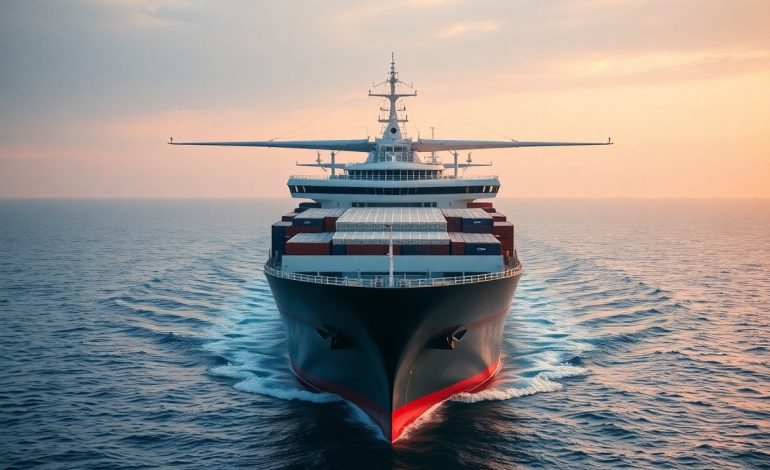
You will learn how integrating wind-assisted propulsion into low-carbon ship designs can reduce emissions dramatically and lower your fuel costs, while also requiring careful attention to stability and safety risks, retrofitting complexity, and compliance with evolving regulations; this guide gives practical steps, performance expectations, and decision tools so you can assess trade-offs and implement effective solutions.
Types of Wind Assisted Propulsion
| Soft Sails / Traditional Sails | Deployable canvas or synthetic sails including kites; typically deliver 5-15% average fuel savings on mixed routes and up to 35% in ideal downwind trades, but they require deck handling procedures and stowage planning that affect operations. |
| Flettner Rotors | Spinning vertical cylinders that exploit the Magnus effect; real-world installations report up to 20% fuel reduction on suitable routes, with rotor heights commonly in the 20-40 m range and modest auxiliary electrical power draw for rotation. |
| Wing Sails (Rigid) | Rigid, airfoil-shaped sails that deliver higher lift-to-drag than soft sails; automated folding systems let you operate with low crew intervention and claim 10-25%+ fuel savings depending on configuration and route profile. |
| Kite / Sky Sails | Large towing kites fly at 100-300 m altitude to access stronger winds; they produce high apparent wind and can generate significant thrust with low weight and deck footprint, though launch/recovery and control systems add operational complexity. |
| Operational & Integration Notes | Hybrid designs combine systems for broader route envelopes; you must assess structural loads, stability and cargo impacts, and shore/port compatibility. Safety and certification affect retrofit timelines and ROI calculations. |
- Flettner Rotors
- Sail Technology
- Wing Sails
- Kite Systems
- Fuel Savings
Sail Technology
You can choose between soft sails and high-altitude kites depending on your vessel profile: conventional soft sails or automated furling rigs are low-cost and simple to install on smaller tonnage, while kite systems exploit winds at altitude where speeds are often 20-50% higher. Trials of kite-assisted propulsion have shown fuel reductions in the single- to double-digit percent range on long-haul runs, but you must plan for deck reinforcement, crew training, and automated handling systems to make operations reliable.
When you fit soft sails, pay attention to the effect on cargo operations and the ship’s center of effort; large sails can impose significant heeling and longitudinal loads that impact stability and seakeeping. Operational constraints such as port clearance, stowage space, and the need for rapid reefing in gusty conditions are practical factors that often determine whether sails are a high-value solution for a particular trade lane.
Flettner Rotors
You should evaluate Flettner rotors when you need a low-profile, automated system that performs across a wide range of headings; because rotors generate thrust by rotation they are easier to automate than variable-geometry sails and impose predictable deck loads. Manufacturers report typical rotor-born savings of 10-20% on exposed routes, and installation often requires reinforced foundations and shaft-power for rotation in the order of tens to a few hundred kilowatts depending on rotor size and ship speed.
Operationally, you must consider increased transverse forces and maintenance access for bearings and drive systems; rotors also raise questions about radar signature and air draft for certain ports. In retrofit scenarios, designers commonly place rotors to minimize interference with cargo operations and to distribute added vertical loads into primary structure.
You should know the technical basis: rotors exploit the Magnus effect-a spinning cylinder in a crosswind produces lift perpendicular to the wind vector-so rotor diameter, height and spin rate are tuned to expected wind regimes and vessel speed to maximize net propulsion while limiting electrical consumption for rotation.
Wing Sails
You can expect rigid wing sails to deliver higher aerodynamic efficiency than soft sails, because fixed airfoil shapes achieve superior lift-to-drag and allow active camber control and automated yaw integration with the ship’s autopilot. Typical systems use wings in the 10-40 m height band with spanwise control surfaces and report fuel reductions generally in the 10-25% range depending on route and prevailing winds.
Integration requires careful consideration of center-of-effort shifts, folding mechanisms for port entry, and load paths into the hull; you will also benefit from advanced control systems that modulate incidence and twist to optimize performance across headings. Maintenance windows are predictable, but structural inspection of the wing root and actuators becomes a regular item in your drydock planning.
Manufacturers increasingly use composite materials and automated actuation so you can deploy wings that fold quickly and operate with minimal crew input while delivering measurable emissions reductions for medium- and long-haul trades.
The combined trials indicate you can achieve up to 30% fuel savings on favorable trade-wind routes.
Low Carbon Ship Designs
When you shift focus from retrofit gadgets to integrated low-carbon design, the biggest gains come from aligning hull form, structure, and operational profile. Designers routinely use CFD paired with 1:25 model basin testing to shave off 5-15% of resistance before steel is cut, and examples like the Maersk Triple‑E series show how combined hull and propulsion optimization can deliver around 20% lower fuel consumption per TEU versus older classes. You should plan designs around target service speed and load cases from the outset, because a hull optimized for a narrow Froude number band (typically 0.2-0.3 for boxy cargo ships) will outperform one sized as a compromise across a wide speed range.
Beyond pure form, integrating fuel-saving features – from wake-adapted rudders and pre‑swirl stators to air lubrication and appendages such as the Hull Vane – multiplies benefits. In operational terms, combining design changes with digital trim and speed optimization yields recurring savings: trial fleets report additional 2-6% fuel reductions from smart operation on top of design gains, so you should budget for both design and software/monitoring investments to realize the full carbon reduction potential.
Hull Optimization
You can reduce wave-making and frictional resistance by tuning block coefficient, prismatic distribution and stern geometry to the ship’s duty profile; a properly sized bulbous bow at the intended service speed reduces wave resistance, while an ill‑matched bulb can increase drag and fuel burn. CFD now allows you to evaluate variations across loading conditions, and practical gains from optimized hull form typically range from 5-12% in model-verified cases. Practical examples include bulb redesigns, stern flow-conditioning, and integrated propeller‑rudder optimization that improve effective propulsive coefficient (EPC).
Operational adjustments matter just as much: trim optimization systems that adjust ballast or ballast-free trim for different loads often save 3-5% fuel, and retrofits such as wake‑adapted rudders or pre‑swirl devices can add another 2-6%. If you pair hull-form changes with appendages like an air lubrication system or a Hull Vane (reported savings of 5-8% on some dry bulk and tanker installations), the combined effect compounds – but you must validate across the ship’s full load and speed envelope to avoid negative performance in off‑design conditions.
Lightweight Materials
Adopting high‑strength steels, aluminium superstructures, and composites for non‑primary structure lets you lower lightweight displacement and reduce required propulsion power; for example, replacing a steel superstructure with aluminium can cut topside mass by 30-50%, improving stability and typically delivering 1-3% reduction in fuel use for large vessels due to lower trim and resistance. You should run a full life‑cycle assessment because aluminium and some carbon composites have higher embodied CO2 per tonne than conventional steel, so operational savings must offset higher production emissions before declaring a net benefit.
Structural innovations such as sandwich panels, hybrid steel‑composite decks, and optimized stiffener layouts enabled by finite element analysis can reduce material by another 10-20% without compromising safety. When you design for modular construction, you also shorten yard time and reduce welding‑heavy zones that add weight and stress concentrations; HSLA steels allow thinner plates and lower weight while maintaining fatigue life when properly detailed.
Practical case studies reinforce these tradeoffs: Wallenius Marine’s Oceanbird concept uses large composite wing sails and lightweight structures aiming for dramatic operational emission cuts – sources cite targets up to ~90% reduction in propulsion emissions when wind covers most of the energy need, illustrating how lightweight construction and wind systems together can transform lifecycle CO2. Be aware that composites can complicate recycling and repair logistics, so you should plan end‑of‑life strategies and supply‑chain readiness before committing to extensive composite use.
Tips for Implementing Wind Assisted Propulsion
When you move from concept to execution, prioritize a structured implementation pathway that balances operational gains with shipboard realities. Start with a detailed route analysis using high-resolution wind and wave reanalysis (ERA5 or similar) to quantify available wind power; many short-sea and North Atlantic/Baltic trades show fuel savings potential in the 5-20% range for well-matched systems. Simultaneously run a high-fidelity performance model (vessel resistance + propulsion + wind system) and a top-level business case that includes CAPEX/OPEX, estimated payback (often 3-7 years depending on fuel price), and sensitivity to fuel and carbon pricing.
Follow a staged approach: pilot one ship, instrument it, then scale. Use clear decision gates-feasibility → detailed design → class approval → shipyard installation → monitored operations-and assign accountable roles for each gate. Implement practical measures on board: update operational guidance, integrate with the engine control room for combined propulsion management, and schedule preventative maintenance intervals for the wind system components.
- Route matching: prioritize vessels with consistent favorable winds and long service hours.
- Structural assessment: verify deck loads and global strength before selecting a supplier.
- Instrumentation: install fuel flow meters and anemometers for performance verification.
- Crew training: plan certification and simulator sessions for handling new sail configurations.
- Regulatory compliance: early engagement with class societies reduces approval surprises.
Assessing Feasibility
You should begin feasibility with a combined operational and technical study: run voyage-based simulations across seasonal wind climatologies and model both the expected thrust from the wind device and the resulting engine load reduction. For example, vessel-level simulations often show that a 20-30 m high rotor on a 10,000-30,000 DWT vessel can produce measurable shaft power reductions on transoceanic legs; quantify those reductions as kW-hour per voyage and convert to tonnes of fuel per year for your specific trading pattern. Include uncertainty bands-run at least three wind years and Monte Carlo scenarios to capture variability in benefits.
Next, layer on a structural and integration screen: assess added longitudinal and lateral loads, required reinforcements (which can add 5-50 tonnes of steel for large installations), and effects on stability and freeboard. Factor in deck-space conflicts with cranes or lifeboats and the impact on cargo operations. Engage class early to identify documentation for approval and any SOLAS-related considerations; failing to address these at the feasibility stage is one of the most dangerous oversights that can derail a retrofit schedule and budget.
Collaborating with Experts
Partner selection determines success: involve a proven wind system supplier, a naval architect for global strength and stability checks, a performance modeler for voyage simulations, and your chosen classification society for early-stage approvals. You should scope responsibilities clearly in the contract-supplier provides system loads and installation interface drawings, yard executes welds and electrical routing, and the owner supplies operational constraints and fuel consumption baselines. In past projects, owners who ran a six- to twelve-month pilot with supplier support and independent verification saw much faster operational adoption and clearer payback validation.
Include meteorological expertise and data analytics from the outset: subcontract a wind climatology specialist to produce route heat maps and an operations analytics partner to set up a digital-twin or voyage performance dashboard. Require the supplier to support commissioning sea trials with on-board engineers and to provide training packages for your crew. Make sure contractual warranties cover delivered power curves and specify acceptance thresholds tied to measured fuel-saving performance during a defined trial period.
Define a clear monitoring and verification plan before installation-install calibrated fuel meters, GPS-based voyage logging, and redundant anemometry at trusted mounting points, then run baseline and trial voyages under comparable loading conditions; this is how you prove out the case to stakeholders and underwrite financing or green incentives. Assume that you will run a 12-month monitored pilot using high-frequency fuel and wind sensors to validate savings.
Step-by-Step Guide to Integration
Integration Roadmap
| Step | Actions & Deliverables |
|---|---|
| Initial Assessment | Operational profiling (AIS, fuel consumption), wind climatology analysis, baseline CO2/fuel metrics, preliminary ROI |
| Design Considerations | Technology selection (rotor, wing, kite), structural reinforcement, stability checks, control systems, class approval plan |
| Testing & Implementation | Instrumentation & sea trials, incremental commissioning, crew training, verification and reporting |
Initial Assessment
Start by building a data-driven baseline: gather 12 months of AIS tracks, hourly fuel consumption, and engine load logs so you can quantify where your vessel spends time relative to wind vectors. Run a wind-exposure analysis using reanalysis datasets (for example ERA5) or route-specific weather files to estimate the percentage of sailing time in beam-to-following wind; typical wind-assisted gains range from 5-20% fuel reduction depending on route and exposure.
Then translate those exposure figures into operational economics: calculate expected daily fuel savings (for instance, a container ship burning 150 t/day gaining 10% saves ~15 t/day) and build a simple payback model including CAPEX and OPEX. Engage class societies and insurers early to flag potential issues such as added topside mass and dynamic loads so you can slot necessary strengthening and approval steps into the schedule.
Design Considerations
Choose the propulsion technology based on your constrained parameters: if deck footprint and crane access matter you might prefer retractable rigid sails or kites, while fixed Flettner rotors or wing sails often deliver higher average thrust for steady beam winds. Typical rotor heights fall in the 20-40 m range on retrofits; weigh that against center-of-gravity effects and required hull or deck reinforcement.
Perform coupled hydrodynamic-aerodynamic assessments: run CFD to capture rotor-hull interference and seakeeping simulations to identify added accelerations and fatigue hotspots. You must model load cases specified by class (e.g., intact and damaged stability, wave-induced loads) and include worst-case wind heel and righting-arm checks to avoid structural overstress or excessive heeling moments that could impair cargo operations.
Pay special attention to systems integration: design the control architecture so your wind-assist hardware communicates with the voyage optimizer and autopilot, and include automated trim/rotor-speed scheduling tied to wind angle and vessel speed. Also budget for maintenance access, spare parts logistics, and a documented class approval pathway (DNV/ABS/LR are common), since a delayed approval can be an otherwise hidden cost.
Testing and Implementation
Phase commissioning into incremental steps: first verify static loads ashore, then run tethered or low-speed sea checks before full-power trials. Instrument the installation with synchronized sensors (wind, rotor RPM, shaft power, fuel flow) logged at sufficient resolution (typically ≥1 Hz for transient analysis) so you can calculate verified fuel savings and detect early fatigue signatures; fatigue hotspots identified during these trials must be mitigated before routine operation.
Simultaneously prepare your crew: update bridge procedures, emergency cut-out actions, and maintenance checklists, and run simulator or shore-based training so watch officers can operate the system within defined operational limits (for example, automatic stow thresholds in gale conditions). Implement a maintenance plan with scheduled inspections of bearings, seals, and control actuators to preserve performance and safety.
For long-term verification, deploy a performance monitoring program and consider third-party validation to substantiate emissions claims for stakeholders; many operators pair live monitoring with periodic route-specific performance reports to refine routing rules and maximize annual savings, typically improving predicted payback by tightening operational practices.
Key Factors Influencing Performance
You should expect that Wind Assisted Propulsion performance varies widely: typical measured fuel savings fall in the 5-15% range and can approach 20% on long, steady trade-wind routes with optimal installation and operations. Vessel speed, route geometry, and the match between true wind direction and service speed combine to determine the effective contribution of any wind device; for many installations, meaningful assistance appears when apparent wind at the rig exceeds roughly 8 knots and when you operate on beam or broad reaches rather than close-hauled headings.
You’ll also need to factor in operational systems integration-voyage optimization, engine load management and crew procedures can add an extra 2-5% to realized savings beyond raw aerodynamic performance. The following list summarizes the factors you should evaluate when sizing expectations for Low Carbon Ship Designs:
- Wind strength and direction (true vs apparent wind)
- Sea state and wave periods that alter apparent wind angle
- Vessel speed and hull form (displacement vs semi-displacement characteristics)
- Retrofit feasibility – deck space, air draft and structural reinforcement
- Operational integration – routing software, weather windows, crew training
- Regulatory and port constraints such as air-draft limits and class approvals
Weather Conditions
You need to distinguish true wind from apparent wind because the latter is what the sails or rotors actually experience; a 12 kt true wind on a 12 kt service speed can produce a much smaller apparent benefit than the same wind when you’re making 10 kt. In practice, consistent trade winds of 10-20 kt deliver the most predictable gains, whereas highly variable coastal winds and frequent headwinds reduce the annualized benefit and increase operational complexity.
Gales and heavy seas present both performance and safety issues: gale-force conditions may require you to reef, furl or stop rotor systems, and wave-induced changes in heading or added resistance can negate wind-assist benefits. You should also plan for icing risk in sub-arctic routes and strong wind shear near storms; integrating high-resolution forecasts into voyage planning typically yields an additional 2-4% improvement in fuel avoidance by letting you exploit favorable wind windows and avoid counterproductive ones.
Vessel Design Compatibility
The simplest conversions are often tankers and bulk carriers because they offer clear deck expanses and simpler deckload paths; container ships and ro-ro vessels commonly face obstructions from cranes, stacks and lashing gear that complicate installation. You must evaluate air draft, transverse and longitudinal strength, and how added topweight affects intact and damage stability-class approval and finite-element structural analysis are standard prerequisites before you commit to installation.
Mounting location matters: forward installs can deliver better apparent wind exposure but may increase pitching moments and slamming loads, while aft installs reduce interference with cargo operations but can be shadowed by superstructure. You should run coupled CFD and seakeeping studies to quantify changes in resistance, added heeling or yawing moments, and the impact on maneuvering, especially during berthing or in narrow channels.
Beyond the structural and hydrodynamic checks, you must model commercial impacts: ROI for a typical mid-size bulk carrier on a long-haul trade often falls in the 3-7 year window depending on fuel price and utilization, whereas short-sea vessels rarely recover costs unless combined with other efficiency measures; class society approval, crew training and integration with your voyage optimization systems are non-negotiable operational steps. Perceiving how hull form, route and operational profile interact helps you estimate realistic fuel and emissions reductions.
Pros and Cons of Wind Assisted Systems
Pros and Cons at a glance
| Pros | Cons |
|---|---|
| Reduced fuel consumption and CO2 emissions – typical reductions 5-20% for many retrofits | Variable effectiveness – performance depends heavily on route wind regimes and heading |
| Proven demo projects: e.g., Norsepower installs reporting ~5-8% savings; Oceanbird concept targets up to ~90% for specific designs | Upfront capital expenditure – retrofits often cost from several hundred thousand to a few million USD per vessel |
| Operational cost savings improve lifecycle economics as fuel prices rise | Increased topside structural loads and windage affecting stability and maneuvering |
| Technology options (rotors, wings, kites) allow tailoring to vessel type and trade | Integration constraints – deck space, air draft, and port clearance can limit applicability |
| Marketing and regulatory benefits for green credentials and potential incentives | Maintenance and certification complexity – moving parts and control systems add OPEX and paperwork |
| Complementary to other low-carbon measures (slow steaming, alternative fuels) | Payback periods vary widely – commonly quoted between 2-7 years depending on utilization |
| Modular retrofit options allow staged investment and pilot testing | Operational limits – some systems must be stowed in heavy weather or during port operations |
| Can reduce dependence on fossil fuels and exposure to fuel price volatility | Insurance, crewing and procedural impacts require upfront risk assessment and training |
Advantages
You can achieve measurable fuel savings without waiting for fuel-supply infrastructure by fitting rotor sails, wing sails or kites; industry reports show average fuel reductions of 5-20% on many commercial trades, with specific installations (for example Norsepower retrofits) demonstrating consistent single-digit savings. When you combine wind assistance with voyage optimization and slow-steaming, the cumulative effect on bunker use and CO2 emissions becomes substantial, and larger purpose-built concepts such as Wallenius’ Oceanbird indicate the potential for very high reductions on suitable ship types.
Beyond direct economics, you gain operational flexibility: modular rotor and wing solutions let you stage investments and trial systems on select ships, while the relatively low marginal cost per ton of CO2 abated makes wind assist attractive for owners targeting short-to-medium term decarbonization goals. You’ll also see secondary benefits in corporate reporting and access to green finance as lenders and charterers increasingly reward demonstrable emissions reductions.
Disadvantages
You face significant upfront costs and integration challenges: retrofits typically range from several hundred thousand to a few million USD depending on scale and vessel modifications, and payback periods are highly route- and fuel-price dependent – often quoted between 2-7 years. Structural reinforcement, increased topside loads and potential impacts on stability or maneuvering must be addressed in detailed engineering and can add to both cost and schedule.
Operational complexity increases as you introduce active systems requiring control software, maintenance of moving parts, and new procedures for berthing and storm operations; in practice many systems need to be stowed in heavy weather or when port air-draft is constrained, which reduces annualized savings. You should also budget for crew training, updated safety procedures, and possibly higher insurance premiums during initial deployment.
More broadly, the route-dependent nature of wind assist means you must perform route-specific performance modelling and pilot trials before fleet-wide roll-out; failure to do so can leave you with marginal gains, longer-than-expected payback, and unanticipated operational impacts. Engaging naval architects, classification societies and insurers early will reduce those risks and help you quantify realistic fuel and emissions outcomes.
Final Words
Hence you should view wind-assisted propulsion as a practical, mature lever to cut fuel consumption and lower greenhouse gas intensity while preserving operational flexibility; when you combine sails, kites, or Flettner rotors with optimized hull forms and efficient powertrains, you reduce voyage costs and improve compliance with tightening emissions standards without sacrificing reliability.
To realize meaningful fleet-wide gains you must integrate aerodynamic devices into ship design from the outset, adapt routing and crewing practices, and evaluate whole-life emissions to capture upstream and downstream benefits; by aligning investment, regulation, and operational change your fleet can scale decarbonization while maintaining commercial performance and resilience to fuel price volatility.