The Future of LNG and Biofuels in Marine Transportation

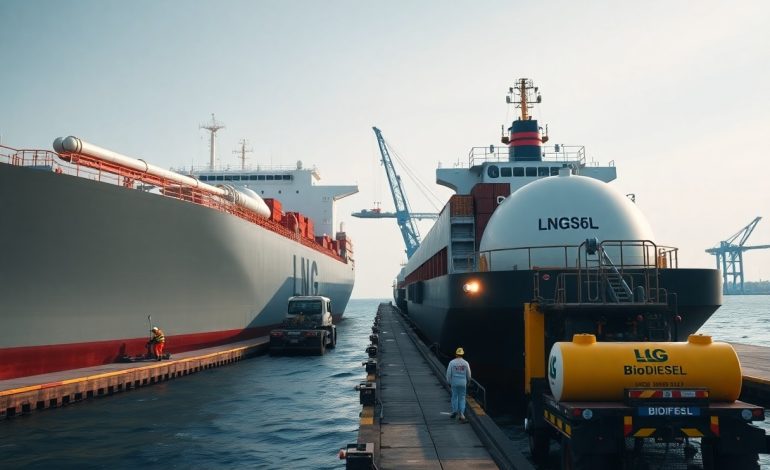
Biofuels and LNG are reshaping maritime fuel strategy; you need to weigh lower lifecycle emissions and regulatory benefits against operational hazards like fuel compatibility, storage risks, and supply variability. This guide shows how your fleet can reduce carbon intensity through phased adoption, bunkering logistics, and policy alignment, enabling safer, more competitive operations while exposing trade-offs you must manage to protect crew safety and long-term viability.
Types of Marine Fuels
| LNG | Near-zero SOx and particulate emissions, CO2 reduction ~20-25% vs heavy fuel oil, but methane slip (0.5-4% depending on engine) can offset benefits; expanding bunkering network in over 250 ports. |
| Heavy Fuel Oil (HFO) | Widespread legacy fuel with high SOx, particulate and CO2 emissions; often requires scrubbers to meet sulphur limits and remains cost-competitive for long-range deep-sea trades. |
| MGO / Marine Diesel | Lower sulphur alternative used in ECAs and short-sea trades, offers easier cold-start behavior and simpler bunkering logistics than cryogenic fuels. |
| Biofuels (HVO, FAME) | HVO can be used as a drop-in replacement delivering up to 90% lifecycle GHG reductions with waste feedstocks; FAME/blends face compatibility and cold-flow limits and supply-chain sustainability constraints. |
| Alternative fuels (Methanol, Ammonia, Hydrogen) | Offer deep decarbonization pathways but require engine and fuel-system redesigns, new bunkering infrastructure, and careful lifecycle assessment of production routes. |
- LNG
- Biofuels (HVO, FAME)
- HFO
- MGO
- Methanol / Ammonia
Liquefied Natural Gas (LNG)
You will see LNG deliver immediate air-quality benefits by virtually eliminating SOx and particulate emissions and cutting NOx significantly when used in modern dual-fuel engines; operators report lifecycle CO2 cuts in the order of 20-25% versus heavy fuel oil on typical voyages. You should plan for larger, cryogenic tanks-often about 1.5-2× the space of conventional fuel tanks for similar range-and for boil-off management that can be leveraged as engine fuel or reliquefied on larger vessels.
You must weigh the operational gain against the methane slip risk: measured slip rates vary by engine and operating mode (0.5-4%), and that leakage can erode the GHG advantage unless mitigated through engine choice, after-treatment or fuel-system controls. You can reference real-world deployments-operators such as CMA CGM, several Scandinavian ferry lines and offshore support fleets-to see how bunkering logistics (now available at over 250 ports) and commercial contracts have been structured around LNG adoption.
Biofuels
You can deploy HVO as a near-drop-in fuel in many existing diesel engines, enabling operators to run on 100% HVO in some cases and achieve substantial well-to-wake GHG reductions (frequently cited as up to 90% when produced from waste oils). You should note that FAME biodiesel behaves differently: it often requires blend limits, can present cold-flow and stability issues, and may trigger engine-warranty or fuel-system compatibility checks.
You need to scrutinize feedstock origin and certification-sustainability schemes like ISCC or equivalent can distinguish low-ILUC waste-oil HVO from crop-based feedstocks with higher indirect land-use change risks. You will also face a cost premium and supply constraints today, but ferry and short-sea operators (for example several European ferry lines) have demonstrated operational runs on HVO that validate handling and emissions benefits in line service profiles.
In addition to feedstock and certification, you should consider logistics: availability at key bunkering hubs, tank and separator compatibility, and fuel-management practices to avoid microbial growth or glycerol-related issues with FAME blends; lifecycle analyses and supplier traceability are where you will find the biggest variance between an effective decarbonization pathway and unintended environmental harms.
Any choice you make should balance well-to-wake emissions, feedstock sustainability, bunkering availability and your vessel operational profile.
Tips for Transitioning to Alternative Fuels
When you plan a switch to LNG or biofuels, quantify the trade-offs: expect engine or fuel-system retrofits to range roughly from $0.5-5 million depending on vessel class, while cryogenic LNG tanks typically consume an additional 10-30% of usable volume compared with conventional fuel tanks. You should factor operational changes too – LNG can lower CO2 by roughly 20-25% versus heavy fuel oil but carries the operational risk of methane slip (0.5-4%), and certain biofuels (HVO and advanced biofuels) can deliver lifecycle CO2 reductions of up to 80-90% depending on feedstock and certification. Use supplier trials and short-term pilot voyages to collect real fuel consumption and maintenance data before committing to fleet-wide conversions.
- Assess fuel availability along planned trade lanes and confirm bunkering points for LNG or certified biofuels.
- Engage classification societies (e.g., DNV, ABS, LR) early for plan approval and tank/pipework modifications.
- Model payback scenarios including incentives, carbon pricing and potential savings; expect payback windows of 2-7 years in many short-sea and feeder cases.
- Train crew on fuel handling, safety and sampling procedures to mitigate human-error risks and ensure compliance.
The best results occur when you integrate technical, commercial and regulatory planning from project outset.
Assessing Vessel Compatibility
You must start by mapping physical constraints: tank volume, GM and available void spaces determine whether you can install cylindrical Type C or prismatic cryogenic tanks for LNG, and those tanks will affect payload and stability – expect an effective cargo loss in the range noted above for many designs. Check engine type: dual-fuel low-pressure systems (e.g., Wärtsilä RT-flex DF) behave differently from high-pressure injection systems (e.g., X-DF), with the latter typically showing lower methane slip but higher conversion complexity. For biofuels, verify compatibility with fuel pumps, seals and fuel heaters; HVO is often usable as a near drop-in replacement, whereas FAME blends can pose issues with oxidation and filter blocking at higher blend ratios.
You should run a condition-assessment and a simulation of voyages with fuel-consumption profiles under both design and adverse weather scenarios to quantify range and bunkering needs. In practice, shipowners have reduced retrofit surprises by performing 3-7 day sea trials on a representative vessel and by insisting on supplier fuel quality guarantees and BDN traceability; include this testing in procurement contracts to avoid later disputes.
Understanding Regulations and Standards
You need to track the regulatory landscape at global, regional and flag-state levels: IMO measures (MARPOL Annex VI, EEDI updates, and the Initial Strategy targets for GHG intensity reductions from 2008 baseline) set the baseline global requirements, while regional regimes like the EU ETS and FuelEU Maritime introduce overlapping reporting and fuel-reduction obligations in European trades. Make sure fuel suppliers provide chain-of-custody certifications (ISCC, RSB or equivalent) for biofuels, and that your vessel documentation – including BDNs, fuel sampling records and planned maintenance logs – meets port-state control expectations.
You should also factor in class and flag approvals for any tank or engine modification and schedule audits as part of the retrofit timeline; noncompliance can produce detentions and costly delays, so pre-approval cut-in during contract negotiation is common practice.
More detailed planning requires lifecycle carbon-intensity calculations (gCO2e/MJ) for each fuel option, alignment with supplier sustainability claims, and clear procedures for measuring and reporting operational methane emissions to address the danger of methane slip and to optimize compliance strategy.
Step-by-Step Guide to Implementing LNG in Marine Operations
| Step | Action & Details |
|---|---|
Initial Assessment |
You should begin by mapping your fleet operations: identify which vessels run frequent short-sea trades versus long-haul voyages, since LNG offers the fastest ROI on high-utilization, predictable routes. Evaluate engine compatibility (dual-fuel vs full LNG), tank space impact on cargo, and expected fuel-price differentials; typical lifecycle CO2 savings are around 20-25% versus heavy fuel oil, but factor in methane slip (0.5-4%) when modeling emissions and carbon pricing exposure. Run a financial model using realistic inputs: retrofit CAPEX, newbuild premium, fuel-consumption rates, and expected bunker price spreads. Operators that ordered LNG newbuilds (for example, CMA CGM’s early LNG container ships) found payback windows shorten dramatically when utilization is >60% and bunker spreads exceed certain thresholds; you should test scenarios with conservative and stressed fuel markets to set decision triggers. |
Infrastructure Development |
Plan bunkering architecture around your trade lanes: decide between truck-to-ship, barge (ship-to-ship), or terminal (pipeline) supply based on port calls and volumes. Small-scale bunkering assets commonly range from 500-3,000 m3 for barges and require boil-off management and recondensing systems if storage sits idle; integrate fueling windows into schedules because bunkering durations and port slot availability affect voyage timing. Work with ports and regulators early to secure permits and shore-side upgrades – that includes vacuum-insulated transfer lines, emergency shutdowns, and vapor recovery systems. You must also address contractual issues: long-term supply agreements reduce price volatility but demand minimum-volume clauses, while spot bunkering needs robust logistics and contingency plans for outages. From a technical perspective, ensure tanks, piping and bunkering interfaces meet the IGF Code and local standards; incorporate gas detection, double-wall breakaway couplings, and defined exclusion zones during bunkering operations. Safety systems and regulatory compliance are non-negotiable, and overlooking permit timelines can delay deployments by months. |
Crew Training |
You need a structured training program covering LNG properties, transfer procedures, emergency response, and maintenance of cryogenic equipment; align coursework with the IGF Code and company SMS. Practical components should include gas-leak drills, venting and cold-contact protection, and hands-on bunkering simulations so your crew can manage both routine operations and high-risk events like leaks or asphyxiation hazards. Certification pathways typically involve vendor-specific type courses plus STCW-compliant modules; plan for initial classroom and simulator training of 2-4 weeks per crew member followed by recurrent drills at least annually. Also train shore-side bunker personnel to the same standards to avoid handover gaps during ship-to-shore operations. Maintain competency records and run cross-disciplinary exercises with port emergency services; investing in realistic scenario training reduces incident response times and limits downtime, protecting both crew safety and commercial schedules. |
Factors Influencing Fuel Choice
You will balance a mix of technical, economic and regulatory drivers when choosing between LNG and biofuels; operational compatibility and lifecycle greenhouse‑gas performance often determine which option is viable for a given route and asset class.
- Availability & bunkering – port coverage for LNG exceeds 100 locations globally, but remains concentrated in major hubs; supply chains for sustainable biofuels (HVO, SAF-derived marine blends) are expanding fast in Europe and parts of Asia.
- Storage & energy density – LNG requires cryogenic tanks at about −162°C with lower volumetric energy density than oil-based fuels; many biofuels are drop‑in or blendable, preserving existing tankage and bunkering practices.
- Emissions profile – LNG cuts SOx and particulate emissions to near zero and can reduce NOx by up to ~85% versus HFO, but methane slip (typically ~1-5% in some engines) can offset CO2 benefits; certain biofuels (e.g., HVO from waste feedstocks) can deliver up to ~90% lifecycle CO2 reductions.
- Retrofit & CAPEX – converting to LNG often adds several million to tens of millions of USD depending on vessel size and tank system; switching to drop‑in biofuels usually involves minimal hardware changes but may require fuel management upgrades.
- Regulatory & market signals – carbon pricing, fuel mandates and regional incentives (EU market mechanisms, national subsidies) shift total cost of ownership in favor of low‑carbon options at different rates across trades.
Recognizing how these interdependent factors shape your operational and commercial options will let you prioritize pathways-whether immediate fuel swaps with biofuels or longer-term investment in LNG capability.
Operational Requirements
You will face distinct operational hurdles depending on the fuel you choose: for LNG, plan for full cryogenic systems operating at around −162°C, tank insulation, vapor management and BOG (boil‑off gas) handling or reliquefaction units. Installing a Type C or membrane containment system consumes dedicated volume, typically reducing cargo capacity depending on vessel size, and mandates specialized crew training and revised safety procedures-methane slip and flammability are safety and climate concerns you must manage.
On the other hand, using biofuels like HVO or certified biodiesel often allows you to retain existing engines and fuel systems; HVO can be used in many engines as a 100% drop‑in, while FAME products are commonly limited to low blend ratios (often around 7% for certain engine types). You should still update fuel compatibility checks, cold‑flow management and fuel‑handling protocols because differences in viscosity, lubricity and storage stability affect maintenance schedules and filtration needs.
Economic Considerations
You need to evaluate upfront capital versus ongoing fuel cost: retrofitting or newbuilding for LNG typically adds several million to tens of millions of USD depending on vessel class, whereas switching to many biofuels is operationally cheaper up front but carries a price premium per tonne. Historically, LNG bunker prices have been lower than MGO in some markets, but price convergence and spikes in gas markets have reduced that advantage; meanwhile biofuels can cost 2-4× the price of conventional marine gasoil unless supported by subsidies or credits.
Market mechanisms shift the calculus: carbon prices and emissions regulation increasingly factor into your total cost of ownership. For example, when carbon prices move into the tens to hundreds of euros per tonne, investments in low‑carbon fuels or fuel‑saving technologies shorten payback periods; operators on short sea trades in Scandinavia and Europe have reported paybacks of a few years when subsidies and local fuel pricing align.
More detailed commercial modeling will reveal trade‑offs: fuel price volatility, bunkering availability on your specific routes, and access to sustainability credits all alter net present value. You should run scenario analyses that include fuel‑price shocks, projected carbon prices and differential maintenance costs-this will show whether the higher CAPEX for LNG or the recurring premium for sustainable biofuels yields lower lifecycle cost for your vessels and trade lanes.
Pros and Cons of LNG in Marine Transportation
You will find that LNG delivers clear operational and regulatory advantages but also brings technical and climate risks that you must manage explicitly. Modern dual‑fuel engines and cryogenic storage let you meet IMO 2020 and Tier III NOx limits while delivering near‑zero SOx and particulate emissions and roughly 20-25% lower CO2 on a tank‑to‑wake basis compared with heavy fuel oil in many ship types. At the same time, methane slip (typically in the 1-8% range depending on engine design and operating profile) and the need for specialized bunkering and safety systems complicate the net climate and operational picture.
Operationally, you trade lower combustion emissions for heavier, larger tanks and a different fueling cadence: cryogenic tanks take up deck or hold space and increase vessel weight, which can reduce cargo capacity and change stability characteristics. Early adopters like the cruise ships AIDAnova and the CMA CGM LNG containership program demonstrate technical feasibility and marketing value, but you should expect a higher upfront capital expenditure, a learning curve for crews and ports, and a dependence on the growth of regional bunkering networks in Rotterdam, Singapore, Fujairah and select North American ports.
Pros and Cons of LNG
| Pros | Cons |
|---|---|
| Significant SOx and PM reduction-compliance with IMO 2020 without scrubbers | Methane slip-can erode GHG benefits if upstream leaks or engine slip are high |
| Lower combustion NOx in many dual‑fuel engines, easing Tier III compliance | Higher upfront capex for tanks, piping and certification compared with conventional fuels |
| Proven in large cruise and container vessels (AIDAnova, CMA CGM orders) for market differentiation | Cryogenic tanks reduce cargo/vehicle space and add weight, affecting payload economics |
| Potential fuel‑cost advantage when natural gas prices are low and long‑term contracts are secured | Fuel price and taxation uncertainty-spot gas volatility can erase savings |
| Improved local air quality around ports and coastal areas | Limited global bunkering infrastructure-uneven availability increases routing complexity |
| Lower particulate emissions reduce maintenance on exhaust treatment systems | Requires specialized crew training and emergency procedures for LNG handling |
| Compatible with existing engine builders’ dual‑fuel platforms | Regulatory risk: future methane regulations or carbon pricing could change lifecycle economics |
| Can be combined with bio‑LNG or synthetic methane for deeper decarbonization paths | Upstream methane leakage in production and transport undermines lifecycle GHG performance |
Environmental Benefits
You will see immediate local air quality gains when switching to LNG: shipping emissions of SOx and particulate matter fall to near‑zero at the stack, which measurably improves port city air and reduces public health externalities. Studies and operational data from LNG cruise and ferry operations report dramatic reductions in visible smoke and soot, and many ports register lower PM2.5 concentrations when LNG bunkering becomes routine.
At the greenhouse‑gas level, LNG commonly delivers a ~20-25% CO2 advantage on a tank‑to‑wake basis versus heavy fuel oil for the same work, and in favorable supply chains that advantage can be maintained or improved with bio‑LNG or renewable methane. However, you must account for upstream methane emissions: even a few percent of fugitive leakage or elevated engine slip can materially erode the lifecycle benefit, so supplier selection, leak detection and low‑slip engine choices determine whether environmental gains are realized.
Economic Challenges
You face an upfront economic premium when adopting LNG: converting an existing ship or specifying cryogenic tanks in a newbuild typically adds a multi‑million‑dollar premium that varies by vessel size-low single‑digit millions for small ships and potentially tens of millions for large cruise or ultra‑large containership designs. That investment must be weighed against expected fuel price spreads, vessel utilization and any incentives or differential port charges for cleaner ships.
Operating economics are further complicated by bunkering access and fuel price volatility. You will need reliable bunkering partners or on‑contract supply to secure favorable LNG pricing; inconsistent availability forces detours or higher spot purchases. Market examples show that when pipeline or LNG spot prices spike, the fuel cost advantage can vanish, extending payback timelines and squeezing margins.
More granularly, total‑cost‑of‑ownership analyses often show payback periods of 7-10+ years under conservative fuel‑spread assumptions; therefore, your investment case typically hinges on assumptions about future carbon pricing, long‑term gas contracts, or the availability of bio‑LNG premiums and regulatory incentives that change the economics in your favor.
Pros and Cons of Biofuels in Marine Transportation
| Pros | Cons |
|---|---|
| Significant lifecycle GHG reductions for waste-based fuels – HVO can cut lifecycle CO2 by up to ~90% versus fossil marine fuels when produced from residues. | Higher price premium: renewable marine biofuels commonly cost 2-5× more than conventional VLSFO/MGO at current market levels, squeezing operating margins. |
| Near-zero SOx and very low particulate emissions, which helps you meet port and EU air-quality standards without exhaust aftertreatment. | Feedstock sustainability risk: crops-based biofuels can drive ILUC (indirect land‑use change), negating GHG benefits and raising reputational risk. |
| Some types (HVO, certain hydrotreated blends) are crucially drop-in for MGO, allowing rapid deployment with minimal engine modification. | FAME and some waste oils have limited compatibility: they can increase corrosion, deposit formation and require fuel-system changes or limits on blend ratio. |
| Proven use in short-sea and ferry operations – you can source HVO or blended biofuels for regional routes today (case studies from Scandinavian ferry operators). | Global bunkering infrastructure is sparse: availability is concentrated in Europe and selected ports, constraining long-voyage adoption. |
| Regulatory credit potential: certified renewables can help you comply with regional mandates (e.g., RED II pathways, emerging ReFuelEU Maritime proposals). | Certification complexity and double-counting concerns increase administrative burden; you must verify chain-of-custody (ISCC, RSB). |
| Biodegradability reduces environmental impact in accidental spills compared with heavy fuel oil. | Some biofuels have poorer oxidative stability and cold-flow properties, creating storage and filter-clogging issues in your tanks. |
| Potential for near-term decarbonization while you transition to zero‑carbon fuels – useful in combination with operational measures. | Limited scalable supply: waste and residue feedstocks are finite, so deep‑sea shipping cannot rely on current volumes alone. |
| When sourced from waste/residues, can improve circularity and support local bioeconomies. | Risk of inconsistent fuel quality between batches; you need tighter QA/QC and supplier contracts to avoid engine issues. |
Sustainability Aspects
When you evaluate sustainability, focus first on feedstock origin: fuels produced from used cooking oil, animal fats or industrial residues typically deliver the largest and most credible GHG reductions. For example, HVO produced from waste feedstocks is routinely reported to reduce lifecycle emissions by up to ~90% compared with fossil marine diesel, while first‑generation crop‑based biodiesel often shows much lower or even negative net savings once ILUC is considered. You should insist on third‑party certification (ISCC, RSB or equivalent) and verified greenhouse‑gas accounting to avoid inadvertent increases in your fleet’s net emissions.
Policy frameworks are shifting to favor advanced and waste‑based pathways: the EU’s RED II sustainability rules and the emerging ReFuelEU Maritime initiative will increasingly gate access to incentives and market credits. You can reduce reputational and regulatory risk by prioritizing waste-based supply chains, documenting chain-of-custody, and tracking carbon-intensity scores for your bunker purchases, because unverified crop-based biofuels could expose your operation to future restrictions or penalties.
Performance Limitations
Your operational profile determines how performance limitations affect you: liquid hydrotreated biofuels like HVO have energy densities and combustion characteristics close to MGO, so range impacts are minimal, whereas alcohol fuels such as methanol carry roughly ~50% of the energy per volume of conventional marine fuels – meaning you’ll either sacrifice range or need much larger fuel tanks. You must therefore match fuel selection to route length and bunker availability when planning conversions.
Engine and fuel‑system behavior differs across biofuel types. FAME blends can increase the risk of injector deposits, elastic seal swelling, and microbial growth in tanks; several engine OEMs publish blend limits or require component upgrades for high FAME content. By contrast, HVO is widely accepted as a drop‑in for many medium‑speed engines, but you still need to validate lubricity, cold‑flow performance and long‑term deposit formation through trials before full-scale adoption.
Operationally, you should implement tightened fuel management: regular sampling for acid number, water content and stability, scheduled filter-change intervals, and staged engine trials. Many operators already run incremental trials (e.g., 10-30% blends) and monitor fuel consumption, NOx behaviour and maintenance intervals to build empirical performance data before moving to higher blend ratios or pure biofuels.
Final Words
With these considerations, you should view LNG and biofuels as complementary options for decarbonizing marine transport: LNG can reduce CO2 and some pollutant emissions where supply chains and engine technologies are mature, while biofuels can deliver deeper lifecycle greenhouse gas cuts and greater compatibility with existing vessels. You must assess fuel availability, engine compatibility, upstream lifecycle emissions, cost impacts, and regulatory trajectories to determine the optimal mix for your routes and fleet.
As you implement decisions, prioritize flexible investments such as dual-fuel systems or retrofit-ready platforms, establish robust emissions accounting and supplier due diligence, and pursue pilots to validate real-world performance. With tightening policy and advancing technologies, your early, measured actions on fuel choice, infrastructure engagement, and operational practices will shape compliance costs, market access, and long-term competitiveness.