How Cloud Based Platforms Are Transforming Fleet Management

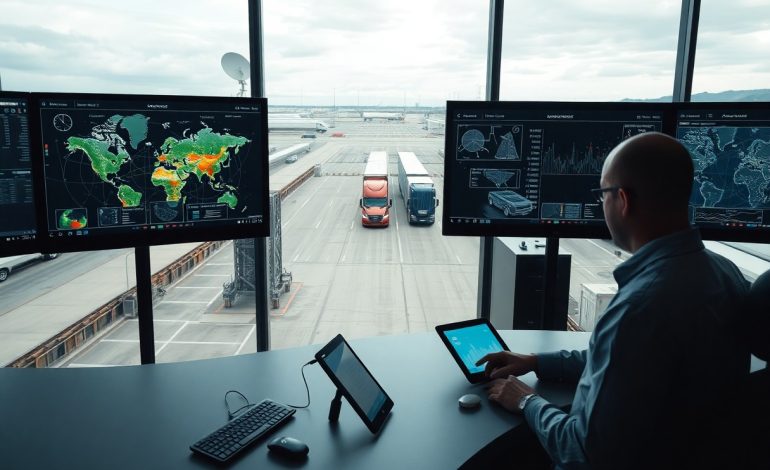
Just moving your fleet to cloud platforms gives you real-time visibility and analytics that cut costs and enable predictive maintenance so you avoid costly breakdowns, but you must address cybersecurity threats to protect telematics and driver data; cloud tools also help you scale operations, optimize routes, enforce compliance, and boost safety and ROI across your fleet.
Types of Cloud Based Platforms
| Public Cloud | Multi-tenant, pay-as-you-go platforms from providers like AWS, Microsoft Azure, and Google Cloud used for telemetry ingestion, analytics, and OTA updates. |
| Private Cloud | Dedicated infrastructure hosted on-premises or in a single-tenant data center offering stronger isolation and control for sensitive fleet management data. |
| Hybrid Cloud | Combines private and public environments so you can keep PII and compliance workloads local while bursting analytics into public clouds. |
| Community Cloud | Shared infrastructure for organizations with common compliance needs (e.g., transportation authorities or hazardous-goods carriers) to collaborate on standards and tooling. |
| Multi‑cloud | Use of two or more public clouds to avoid vendor lock-in, optimize costs, and place services where they perform best for your routes and regions. |
- public cloud – elasticity, global reach, rapid provisioning
- private cloud – isolation, customized security controls, predictable performance
- hybrid cloud – data residency plus scalable analytics
- multi-cloud – redundancy and provider-specific capabilities
Public Cloud Solutions
You can provision streaming ingestion, serverless processing, and ML model training in hours with a public cloud provider; major vendors collectively serve the bulk of enterprise workloads (AWS holds roughly one-third market share, with Azure and GCP following). For fleets, that translates into the ability to scale from a few hundred vehicles to tens of thousands without capital investment, and to use managed services such as managed databases and global CDNs to push maps and firmware updates to vehicles in minutes.
Operationally, public platforms give you cost savings on baseline compute but introduce multi-tenant exposure and data residency considerations: if your routes cross jurisdictions with strict rules on telematics or cargo manifests, you’ll need to map storage regions and SLAs carefully before migrating sensitive telemetry streams.
Private Cloud Solutions
If your operations demand strict control-such as government contracts, hazardous-materials routing, or localized regulatory constraints-you’ll likely favor a private cloud. Deploying on dedicated hardware (or a single-tenant hosted environment) lets you enforce bespoke encryption, retention policies, and network topologies; many large logistics providers use private clouds to run route-optimization engines and telematics storage to ensure deterministic performance.
Expect higher upfront and operational costs versus public offerings, but also predictable latency and the ability to certify systems under industry standards. You can implement appliances like VMware, OpenStack, or vendor-managed solutions (for example, Azure Stack or AWS Outposts variants) to replicate public-cloud APIs while keeping data on isolated infrastructure.
More detail: integration between your private cloud and edge devices typically uses encrypted VPNs or dedicated circuits (MPLS/Direct Connect) and requires you to design replication and failover for analytic workloads so that batch and streaming pipelines stay consistent during outages.
Hybrid Cloud Options
Hybrid architectures let you keep sensitive records and real-time dispatching on a private plane while sending anonymized telemetry to public cloud analytics for heavy batch processing and ML – a common pattern where you need both compliance and scale. Technologies such as AWS Outposts, Azure Stack, and Google Anthos are designed to bridge those environments and simplify orchestration across them.
For fleets, hybrid setups let you perform edge preprocessing in vehicles or edge gateways (reducing bandwidth by 70-90% on raw streams) and then burst aggregated datasets into the public cloud during off-peak windows for model retraining or route-simulation at scale; this model reduces egress costs and keeps per-vehicle latency low for mission-critical functions.
Operational complexity rises: you must manage configuration drift, consistent IAM policies, and cross-environment monitoring with unified observability and SLOs. Thou must map SLAs, data residency and encryption requirements to operational objectives before selecting a platform.
Key Factors in Fleet Management Transformation
You must focus on several specific levers that drive measurable change: telematics, real-time analytics, predictive maintenance, route optimization, connectivity, and API integration. Each of these components feeds the others-telematics supplies the raw data, analytics turn it into actionable insight, and APIs let you operationalize those insights across dispatch, payroll, and maintenance workflows.
- Telematics
- Real-time analytics
- Predictive maintenance
- Route optimization
- Connectivity
- API integration
When implemented together, these factors deliver concrete KPIs: fleets typically see fuel reductions of 10-20%, idle time drops up to 30%, and maintenance-event reductions near 25% with predictive schedules. Assume that you align project metrics to those outcomes and build integrations and data flows that measure them continuously.
Real-time Data Access
You receive location, engine diagnostics (OBD-II/CAN), fuel burn, driver behavior, and sensor telemetry often at intervals of 30-60 seconds for active assets, with event-based pushes for fault codes and harsh events. That granular cadence lets you detect issues early-telemetry-driven alerts can flag engine faults before they escalate, and connected dashcams paired with event triggers have been shown to lower accident-related claims and corrective actions by significant margins.
With live feeds you can implement live rerouting, dynamic ETA updates accurate to within minutes, and automated exception workflows that remove manual decision lag. For example, fleets that combine live traffic, vehicle status, and driver availability routinely reduce late deliveries by up to 25% and shorten average dwell times at terminals; however, you must treat data latency and integrity as a top operational risk and design buffering and validation layers to avoid acting on stale or corrupted signals.
Connectivity and Integration
Your choice of network-cellular LTE/5G, satellite for remote routes, or hybrid architectures-directly affects what you can do with real-time data. 5G and LTE keep video and high-frequency telemetry feasible, while satellite fills coverage gaps for long-haul routes; depend on redundant links and local caching to maintain safety-critical features when connectivity drops.
Integration patterns matter just as much: REST APIs, webhooks, and message brokers enable dispatch, TMS, ERP, and payroll systems to consume telematics and ELD data automatically. That integration can cut administrative processing by up to 40%-60% depending on process maturity, and it lets you enforce compliance and billing rules programmatically to reduce dispute cycles.
More operational detail: adopt standardized payloads (ISO or industry profiles), use MQTT or AMQP for efficient telemetry streaming, implement OAuth2 and TLS for authentication and encryption, and plan for schema evolution so you can swap vendors without rebuilding downstream systems. You should also define SLAs for data delivery latency, retention policies for historical analytics, and a staged rollout that validates end-to-end flows in pilot routes before enterprise-wide deployment; prioritize secure OTA updates and routine penetration testing to mitigate integration surface risks.
Step-by-Step Guide to Implementing Cloud Solutions
Implementation Checklist
| Step | Action & Metrics |
| 1. Assess Fleet Needs | Inventory vehicles/assets, capture mission profiles, list existing telematics/ELD systems; target KPIs: cost-per-mile, utilization %, downtime days. |
| 2. Define Success Criteria | Set measurable goals (e.g., reduce fuel by 10-15%, cut maintenance downtime 20%, improve utilization by 8%); assign owners and timeline. |
| 3. Pilot | Deploy to a representative 5-15% sample of fleet for 6-8 weeks; monitor telemetry, driver acceptance, and integration issues. |
| 4. Select Platform & Vendor | Evaluate features (real-time GPS, route optimization, predictive maintenance), security (SOC 2/ISO 27001), APIs and pricing ($15-$45/veh/mo typical range). |
| 5. Integrate Systems | Connect ERP/TMS/maintenance systems, map data fields, validate data flows; track integration success rate and data latency (<5s target for real-time alerts). |
| 6. Train & Onboard | Run train-the-trainer sessions, create SOPs and quick-reference guides; measure adoption (active users %, alerts acknowledged within 24h). |
| 7. Scale & Optimize | Roll out remaining fleet in waves, analyze ROI quarterly, iterate on routing rules and maintenance triggers. |
Assessing Fleet Needs
Start by cataloging every asset and its operational profile: routes, average daily miles, payloads, and duty cycles. If your fleet includes mixed assets (light vans, class 6-8 trucks, trailers), segment them-having separate KPIs for power units versus trailers often reveals opportunities; for example, trailers equipped with sensors can reduce dwell time at yards by up to 30% in some operations.
Audit existing hardware and data sources next: note OBD-II compatibility, current ELD providers, maintenance history systems, and fuel card integrations. Set baseline metrics-such as fleet-wide utilization (target >70%), mean time between failures (MTBF), and cost per mile-to measure impact; many fleets see a measurable ROI within 6-12 months when these baselines are tracked rigorously.
Choosing the Right Platform
Compare cloud-native SaaS platforms against hybrid or on-prem options based on scale, latency needs, and integration complexity. Prioritize vendors that provide open APIs, SOC 2 Type II or ISO 27001 compliance, and out-of-the-box connectors for major TMS/ERP systems. Expect per-vehicle pricing typically in the range of $15-$45 per vehicle per month, with advanced analytics and AI modules at the higher end.
Evaluate functional fit by running scenario tests: simulate a peak delivery day, a breakdown event, and a compliance audit to see how the platform performs. Vendor SLAs should guarantee data retention and uptime-seek 99.9% uptime and clearly defined incident response times.
For example, a 200-vehicle regional carrier chose a platform with predictive maintenance and saved 12% on fuel and reduced unscheduled maintenance by 20% within the first year after validating these capabilities in a 30-vehicle pilot.
Training and Onboarding
Adopt a phased training plan: begin with a pilot group of managers and 10-15% of drivers, then expand in waves. Use a train-the-trainer model so internal champions can provide ongoing support; drivers typically need 2-4 hours of hands-on training while dispatch and maintenance staff need 4-8 hours. Track adoption with metrics such as active user rate and alert acknowledgment time, aiming for >80% active use within 60 days.
Provide role-based SOPs, quick-reference cards, and short video modules for common tasks (route acceptance, exception handling, logging). Reinforce training with real-world KPIs: tie driver scorecards to safety and efficiency incentives-fleets that couple training with performance incentives often see a 15-25% improvement in on-time rates.
When scaling, run post-rollout audits at 30, 90, and 180 days to capture gaps; use feedback loops to update training materials and adjust system alerts so users aren’t overwhelmed, which reduces false alerts and increases long-term engagement.
Tips for Optimizing Fleet Management with Cloud Technology
Standardize data flows so your cloud-based platforms ingest clean, timestamped records from telematics, ELD devices, fuel cards and maintenance systems; that lets you run consistent queries and reduces integration time from weeks to days. Prioritize KPIs such as fuel consumption per mile, vehicle utilization and on‑time delivery rate so dashboards surface the metrics that move your P&L, and run a 10% pilot fleet for 3-6 months to validate models before full rollout.
- Integrate via APIs to keep fleet management data synchronized across systems.
- Apply role‑based access and end‑to‑end encryption for data security.
- Automate alerts for predictive maintenance and emissions thresholds.
- Use versioned models and A/B testing to quantify savings from route optimization.
Neglecting governance creates the most dangerous failure mode: inconsistent data feeds that produce misleading recommendations and expose you to regulatory risk; implement SLAs with vendors (target 99.9% uptime) and maintain an audit trail for configuration changes to reduce operational friction. This
Utilizing Data Analytics
Aggregate raw telemetry into a cloud data lake, then apply feature engineering to extract inputs like average engine RPM, idle minutes, and brake events per 100 miles; feeding those features into a predictive maintenance model can flag components with rising failure probability before they fail. For example, fleets that piloted predictive algorithms on 10-20% of assets often see measurable reductions in unscheduled repairs within 4-6 months, and you should expect initial precision thresholds around 70-80% that improve as labeled failure data accumulates.
Deploy anomaly detection to surface sudden shifts – spikes in coolant temperature or jump in fuel consumption – and tie alerts to automated work orders so technicians receive a job ticket with diagnostic context. Combine short, rolling windows (7-14 days) for operational alerts with longer windows (90 days) for maintenance trend analysis, and use incremental retraining on new failures to avoid model drift while keeping your data analytics pipeline auditable and repeatable.
Enhancing Driver Communication
Push real‑time ETAs, route updates and in‑cab coaching through a single mobile app or integrated telematics console so drivers get one authoritative source instead of fragmented messages; that reduces missed deliveries and planning churn. Include voice‑enabled inputs and pre‑approved message templates to minimize distraction, and use geofenced triggers to send automated, context‑aware instructions when a vehicle approaches a depot or restricted zone.
Provide structured feedback loops: send weekly performance summaries showing hard metrics like harsh braking events, idle time and on‑time delivery percentage, and pair them with short coaching tips or micro‑training modules accessible from the cab. When you combine this with positive reinforcement – badges, small bonus thresholds tied to safety KPIs – fleets have reported double‑digit declines in risky driving behaviors within months, improving both safety and operating costs.
Scale multilingual messaging and integrate camera analytics for objective incident playback so you can de‑escalate disputes quickly and keep drivers focused on safety while using driver communication channels for operational clarity.
This will help you turn cloud investments into measurable reductions in cost, risk and downtime.
Pros and Cons of Cloud Based Fleet Management
Pros vs Cons
| Pros | Cons |
|---|---|
| Scalability on demand – add vehicles or sites without new servers | Dependency on internet connectivity; remote sites can lose visibility |
| Lower upfront capital expenditure; subscription OPEX model | Ongoing subscription fees and usage charges can exceed expected TCO |
| Real‑time telematics and analytics for faster decisions | Data security and privacy concerns; sensitive fleet/location data exposure |
| Faster feature rollout and centralized updates | Vendor lock‑in risk if APIs and exports are limited |
| Predictive maintenance reduces downtime (often 20-40% fewer breakdowns) | Data quality and integration issues with legacy systems |
| Improved routing and fuel efficiency; some fleets report 10-25% fuel savings | Latency and offline operation challenges for critical real‑time controls |
| Fleet‑wide visibility and consolidated reporting | Regulatory and data‑residency compliance across countries |
| Easy collaboration across teams and remote stakeholders | Training and change management requirements for drivers and dispatch |
| Rapid onboarding and modular integrations with partners | Potential for downtime during provider incidents or upgrades |
| Scalable analytics and AI features without heavy in‑house infra | Hidden integration, customization, or API costs |
Advantages of Cloud Solutions
You gain the ability to scale capacity instantly: adding 50-500 vehicles typically requires only configuration changes rather than new hardware, so your deployment time can drop from months to weeks. Many fleets using cloud telematics report double‑digit improvements in utilization and 10-25% fuel savings through optimized routing, idle reduction, and demand‑based asset allocation.
Besides operational gains, cloud platforms centralize data for advanced analytics and predictive maintenance – for example, implementing condition‑based alerts can cut unscheduled downtime by up to 40% in maintenance‑intensive fleets. You also get continuous feature updates, mobile access for drivers, and easier integration with third‑party services like last‑mile delivery partners and fuel card providers.
Potential Challenges and Risks
You must plan for connectivity constraints: remote yards or cross‑border routes can experience gaps in telematics, and a single provider outage can degrade dispatch and tracking. Aim for providers with clear SLAs (for instance, 99.9% uptime) and support for offline local caching to keep critical functions running during interruptions.
Security and vendor governance are significant concerns. Storing GPS, route, and driver data in the cloud raises exposure to breaches, data residency rules, and third‑party access; without strong contractual controls you risk data leakage and regulatory fines. Vendor lock‑in also shows up financially when custom integrations or export limitations make switching costly.
Mitigate these risks by demanding encryption in transit and at rest, exportable data formats, defined SLAs with penalties, and support for hybrid architectures so you can run imperative systems locally when needed. Additionally, require transparent pricing for APIs and overage charges, and include periodic penetration testing and compliance attestations in your vendor agreements.
Summing up
Following this examination of cloud-based platforms, you can see how real-time telematics, centralized data, and advanced analytics give you full visibility and control over your fleet, enabling predictive maintenance, optimized routing, and streamlined compliance while reducing downtime and operating expenses.
With scalable integrations and API-driven ecosystems, you can onboard vehicles faster, combine disparate data sources, and make evidence-based decisions that shift your role from reactive manager to strategic operator, improving safety, service quality, and long-term efficiency.